Petroselinum crispum 'Forest Green'
Petroselinum crispum 'Forest Green'
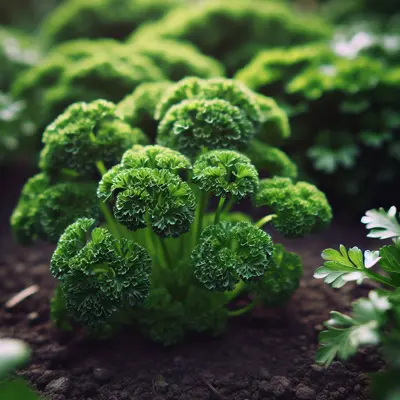
The ultimate curly parsley variety featuring exceptionally dark green, tightly curled leaves that maintain their vibrant color and crisp texture longer than standard varieties. This uniform, compact plant produces abundant harvests of premium-quality leaves perfect for garnishing and cooking, with superior bolt resistance extending the harvest season. Forest Green's attractive appearance and reliable performance make it a favorite among both home gardeners and commercial growers.
Harvest
70-85d
Days to harvest
Sun
Full sun
Zones
2–11
USDA hardiness
Height
0-3 feet
Planting Timeline
Showing dates for Petroselinum crispum 'Forest Green' in USDA Zone 7
All Zone 7 herb →Zone Map
Click a state to update dates
Petroselinum crispum 'Forest Green' · Zones 2–11
Growing Details
Succession Planting
Parsley takes 14–21 days just to germinate, so if you sow one batch and walk away, you'll hit gaps. Start a new round indoors every 3–4 weeks from February through March, then shift to direct sowing through early September — 'Forest Green' handles light frost down to about 28°F and keeps producing well into fall. In zone 7, transplants set out in April and again in late August cover the full season without a midsummer hole.
Back off succession starts when daytime highs are consistently above 85°F — germination stalls and new transplants struggle to get roots down in hot soil. Pick back up in late July for a fall round that will carry through November.
Complete Growing Guide
Forest Green parsley thrives in cool-season gardens and should be planted in early spring or late summer for optimal harvests, as this cultivar demonstrates superior bolt resistance compared to standard varieties—meaning you'll enjoy a longer picking season before it flowers. This cultivar prefers full sun to partial shade with consistently moist, well-draining soil rich in organic matter; unlike generic parsley, Forest Green's compact, uniform growth means it won't sprawl or stretch when given adequate light, keeping plants tidy and productive. While generally pest-resistant, watch for spider mites in hot, dry conditions and ensure good air circulation to prevent fungal issues. The key to maximizing Forest Green's exceptional output is frequent harvesting from the outer stems once plants reach 6-8 inches tall—this encourages bushier growth and prevents the plant from exhausting itself prematurely, resulting in continuous, abundant leaves throughout the season.
Light: Full sun (6 or more hours of direct sunlight a day). Soil: Clay, Loam (Silt), Sand. Soil pH: Acid (<6.0), Neutral (6.0-8.0). Drainage: Good Drainage, Moist. Height: 0 ft. 8 in. - 3 ft. 0 in.. Spread: 0 ft. 8 in. - 1 ft. 0 in.. Spacing: 12 inches-3 feet. Growth rate: Medium. Maintenance: Medium. Propagation: Seed. Regions: Coastal, Mountains, Piedmont.
Harvesting
Harvest Forest Green parsley when the plant reaches 6-8 inches tall and the characteristic dark green, tightly curled leaves feel crisp and full rather than limp or yellowing. For continuous harvests throughout the season, pinch or cut outer stems first, allowing the central growth point to regenerate new foliage repeatedly. Alternatively, cut the entire plant 1-2 inches above soil level for a single heavy harvest, which promotes bushier regrowth. Time your first harvest when the plant is actively growing during mild weather, avoiding cutting during extreme heat or cold when the plant experiences stress and may bolt prematurely, thereby extending your productive window.
The small, ridged seeds are formed in the second year from July to September. The fruit and seeds are poisonous to birds.
Type: Schizocarp.
Harvest time: Fall, Summer
Edibility: Leaves as flavoring and garnish
Storage & Preservation
Fresh Forest Green parsley stores best when treated like cut flowers - trim stem ends and place in a glass of water, covering leaves loosely with a plastic bag before refrigerating. Properly stored, it maintains its exceptional color and crispness for 7-10 days, significantly longer than standard parsley varieties.
For long-term preservation, freezing works exceptionally well with Forest Green's sturdy leaves. Wash, thoroughly dry, and freeze whole stems in freezer bags for up to 8 months. The leaves retain their deep color and much of their texture when frozen. Alternatively, make parsley cubes by chopping leaves and freezing them in olive oil using ice cube trays.
Drying Forest Green produces excellent results due to its low moisture content and tight curl structure. Bundle 6-8 stems and hang in a warm, dark, well-ventilated area for 10-14 days until leaves crumble easily. Store dried parsley in airtight containers away from light for up to one year.
History & Origin
Forest Green represents a modern refinement of curly parsley breeding within the Petroselinum crispum subspecies, though specific documentation of its original breeder and introduction year remains limited in readily available horticultural records. The variety exemplifies contemporary seed company improvements focused on darker foliage coloration, compact plant architecture, and enhanced bolt resistance—traits increasingly prioritized by both commercial producers and home gardeners since the late twentieth century. Like many improved vegetable cultivars, Forest Green likely emerged through systematic selection within established parsley breeding programs, building upon the strong foundation of curly-leafed parsley varieties that have been refined for centuries across European gardening traditions.
Origin: Europe
Advantages
- +Exceptionally dark green, tightly curled leaves stay vibrant longer than standard varieties
- +Superior bolt resistance extends harvest season compared to typical curly parsley
- +Compact, uniform plant produces abundant harvests of premium-quality leaves
- +Attractive appearance makes Forest Green suitable for both ornamental and culinary use
- +Ready to harvest in just 70-85 days with reliable, easy growing performance
Considerations
- -Vulnerable to parsleyworm infestations from black swallowtail caterpillars requiring pest management
- -Susceptible to leaf blight and crown rot in humid or poorly drained conditions
- -Attracts carrot weevils and aphids, necessitating regular monitoring and organic controls
Companion Plants
Parsley near tomatoes and peppers pulls in predatory wasps that hunt hornworms and aphids — it's a functional pairing, not a folk tale. At 6–8 inch spacing, parsley fills bed gaps without competing for root space at the same depth as either crop. Asparagus is worth planting nearby too: parsley has a documented history of repelling asparagus beetles (Criocerus asparagi), and the two crops don't fight each other for water or nutrients given their very different root architectures. Chives and marigolds in the mix add scent-based disruption that slows carrot weevil and aphid pressure — not a guarantee, but a cheap one.
Mint needs a hard boundary — it spreads via underground rhizomes and will swallow a 6-inch parsley plant inside one growing season. Caraway is a slower problem but shares fungal root diseases with parsley and hosts carrot weevil populations that migrate readily between the two. Keep both at least 3–4 feet away, or put them in separate beds.
Plant Together
Tomato
Parsley repels tomato hornworms and other pests while improving tomato flavor
Carrot
Parsley attracts beneficial insects that control carrot fly and other carrot pests
Rose
Parsley attracts hoverflies and parasitic wasps that control aphids on roses
Asparagus
Parsley repels asparagus beetles and provides ground cover without competing for nutrients
Chives
Both herbs have complementary root systems and chives repel aphids that may affect parsley
Marigold
Attracts beneficial insects and repels nematodes that can damage parsley roots
Pepper
Parsley provides ground cover and attracts beneficial insects that control pepper pests
Corn
Parsley grows well in partial shade of corn and attracts beneficial insects
Keep Apart
Lettuce
Competes for similar nutrients and growing space, may stunt lettuce growth
Mint
Aggressive spreader that can overwhelm parsley and compete for nutrients and space
Caraway
May cross-pollinate with parsley if allowed to flower, affecting seed quality
Nutrition Facts
Per 100g serving. % Daily Value based on 2,000 calorie diet. Source: USDA FoodData Central (FDC #172232)
Pests & Disease Resistance
Resistance
Good resistance to common parsley diseases
Common Pests
Aphids, carrot weevil, parsleyworm (black swallowtail caterpillars)
Diseases
Leaf blight, crown rot, damping off
Troubleshooting Petroselinum crispum 'Forest Green'
What you'll see, why it happens, and what to do about it.
Seedlings collapse at the soil line — stems pinch to a dark, water-soaked thread overnight, then fall over
Likely Causes
- Damping off (Pythium spp. or Rhizoctonia solani) — fungal spores naturally present in soil, triggered by high humidity, poor airflow, and overwatering indoors
- Starting seeds in non-sterile garden soil or reused potting mix
What to Do
- 1.Start seeds in fresh, sterile seed-starting mix — not garden soil or last year's potting mix
- 2.Thin seedlings to at least 2 inches apart as soon as they emerge to improve air movement around stems
- 3.Water from below (bottom-watering trays) and run a small fan near your trays to keep surface soil from staying wet
Leaves develop tan or brown water-soaked lesions that spread and kill whole stems, especially in wet weather
Likely Causes
- Leaf blight (Septoria petroselini) — a fungal disease that spreads by rain splash and overhead irrigation
- Crown rot (Sclerotinia sclerotiorum) — more likely if the base of the plant goes soft and white mycelium appears at the crown
What to Do
- 1.Switch to drip irrigation or water at the base — keeping foliage dry is the single biggest control lever here
- 2.Strip and trash (don't compost) affected leaves as soon as you see lesions
- 3.Rotate parsley out of the same bed for at least 2 seasons; both pathogens persist in soil debris
Stems and leaves dotted with clusters of soft, pear-shaped insects; sticky residue coating lower leaves
Likely Causes
- Aphids (commonly green peach aphid, Myzus persicae, or bean aphid, Aphis fabae) — they colonize fast in cool, dry spring weather
- Ant activity nearby, which often signals ants are actively tending aphid colonies for honeydew
What to Do
- 1.Knock aphids off with a firm stream of water from a hose — repeat every 2–3 days until populations crash
- 2.Avoid broad-spectrum sprays that kill parasitic wasps and ladybugs, which are your best long-term control
- 3.If the infestation is heavy, spray insecticidal soap (per label dilution) in the early morning, covering the undersides of leaves
Frequently Asked Questions
How long does Forest Green parsley take to grow from seed?▼
Can you grow Forest Green parsley in containers?▼
Is Forest Green parsley good for beginners?▼
What does Forest Green parsley taste like compared to regular parsley?▼
When should I plant Forest Green parsley seeds?▼
Forest Green vs regular curly parsley - what's the difference?▼
Zone-by-Zone Planting Calendar
| Zone | Indoor Start | Transplant | Direct Sow | Harvest |
|---|---|---|---|---|
| Zone 3 | April – May | June – July | — | July – October |
| Zone 4 | March – April | June – July | — | July – October |
| Zone 5 | March – April | May – June | — | June – October |
| Zone 6 | March – April | May – June | — | June – November |
| Zone 7 | February – March | April – June | — | June – November |
| Zone 8 | February – March | April – May | — | May – December |
| Zone 9 | January – February | March – April | — | April – December |
| Zone 10 | January – January | February – April | — | April – December |
| Zone 2 | April – May | June – August | — | August – September |
| Zone 11 | January – January | January – March | — | March – December |
Growing Guides from Wind River Greens
Sources & References
External authority sources used in compiling this guide.
See the Methodology page for how this data is sourced, what's AI-assisted, and known limitations.