Kelvin
Apium graveolens
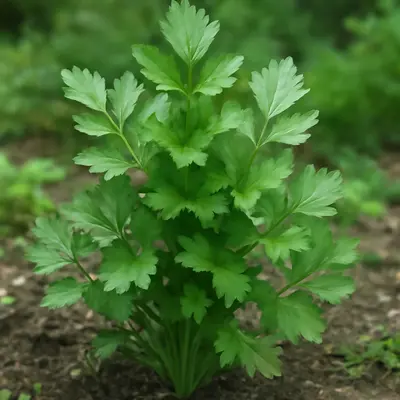
Thick, juicy, and succulent. Petioles and leaves are a healthy dark green and stalks hold well in the field. Kelvin performs well under heat and moisture stress and in soils of average fertility. Upright and uniform. Also available with NOP-compliant pelleting.
Harvest
80d
Days to harvest
Sun
Full sun
Zones
3–6
USDA hardiness
Height
1-3 feet
Planting Timeline
Showing dates for Kelvin in USDA Zone 7
All Zone 7 herb →Zone Map
Click a state to update dates
Kelvin · Zones 3–6
Growing Details
Succession Planting
Kelvin celery takes 80 days to harvest, so succession planting is worth doing if you want a steady supply rather than one big flush. Start seeds indoors every 3-4 weeks from February through March, transplanting out between April and June once nighttime temps stay reliably above 50°F. That gives you two or three overlapping plantings coming in from June through fall.
Stop starting new transplants once daytime highs are consistently hitting 85°F — heat pushes celery toward bitterness and slows stalk development noticeably. In cooler zones (3-5), you may only get one or two rounds before frost shuts things down, so prioritize getting that first transplant out early rather than banking on late-season successions.
Complete Growing Guide
Thick, juicy, and succulent. Petioles and leaves are a healthy dark green and stalks hold well in the field. Kelvin performs well under heat and moisture stress and in soils of average fertility. Upright and uniform. Also available with NOP-compliant pelleting. According to Johnny's Selected Seeds, Kelvin is 80 days to maturity, annual, hybrid (f1).
Light: Full sun (6 or more hours of direct sunlight a day). Soil: High Organic Matter. Soil pH: Neutral (6.0-8.0). Drainage: Good Drainage, Moist. Height: 1 ft. 6 in. - 3 ft. 0 in.. Spread: 1 ft. 0 in. - 1 ft. 6 in.. Spacing: Less than 12 inches. Maintenance: Medium. Propagation: Seed.
Harvesting
Kelvin reaches harvest at 80 days from sowing per Johnny's Selected Seeds. As an annual, harvest continues until frost ends the season.
The fruits are black when ripened. The tiny seeds are ovoid-shaped.
Color: Black. Type: Schizocarp. Length: < 1 inch. Width: < 1 inch.
Harvest time: Fall
Edibility: Celery Seed comes from Wild Celery. The bitter-tasting leaves are inedible.
Storage & Preservation
Harvest Kelvin celery after approximately 80 days and store freshly cut stalks in the refrigerator at 32–40°F with 95% humidity—a perforated plastic bag in the crisper drawer works well. Expect a fresh shelf life of 2–3 weeks when stored properly. For longer preservation, blanch whole stalks for 3 minutes, then freeze in airtight containers or freezer bags for up to eight months. Dried celery can be prepared by slicing stalks thin, air-drying at room temperature on screens, or using a dehydrator set to 95–115°F until completely brittle; store in airtight jars away from light. Kelvin varieties are particularly suited to fermentation—layer sliced stalks with 3–5% salt brine and keep submerged in a cool location for tangy, probiotic-rich celery that stores well for months.
History & Origin
Kelvin is an F1 hybrid developed through controlled cross-pollination. Listed in the Johnny's Selected Seeds catalog.
Origin: Macaronesia to North Africa, Europe to West Himalaya
Advantages
- +Thick, juicy stalks with dark green color appeal to buyers
- +Performs reliably under heat and moisture stress conditions
- +Maintains upright, uniform growth habit for easy harvesting
- +Tolerates average fertility soils without requiring premium inputs
- +Available in organic-certified pelleted seed option
Considerations
- -Eighty-day maturity may conflict with short-season growing regions
- -Requires consistent moisture management despite stress tolerance claims
- -Limited disease resistance profile compared to newer varieties
Companion Plants
Celery does well near tomatoes and peppers for practical reasons — all three want consistent moisture and fertility, so you're managing irrigation similarly across the whole bed anyway. As NC State Extension notes, interplanting crops from different plant families also breaks up dense single-crop blocks, which slows the spread of crop-specific pests before you even notice them. Cabbage and other brassicas work the same way: mixing families keeps any one pest from moving down a clean row unimpeded.
Carrots share a similar root depth (6-8 inches) and don't compete hard for the same soil layers celery occupies. Onions are thought to confuse some flying pests through scent — not a guarantee, but planting density works out and neither crop shades the other badly. Marigolds (Tagetes spp.) along the border attract beneficial insects and, at high enough density, have documented suppressive effects on soil nematode populations.
Rue (Ruta graveolens) releases allelopathic compounds that inhibit germination and slow growth in several vegetables and herbs, celery among them — keep at least a full bed's width between them. Sage competes for similar conditions and has a long-standing reputation for suppressing Apiaceae nearby; I don't plant it within 12 inches of celery. Black walnut (Juglans nigra) produces juglone, a root-zone toxin that affects a broad range of plants — celery is sensitive enough that proximity isn't worth testing, regardless of how far the canopy drip line falls.
Plant Together
Tomatoes
Kelvin improves tomato flavor and repels tomato hornworms and aphids
Peppers
Enhances pepper growth and deters pepper maggots and aphids
Cabbage
Repels cabbage worms, cabbage loopers, and flea beetles
Carrots
Improves carrot flavor and helps deter carrot fly
Lettuce
Provides natural pest control and doesn't compete for nutrients
Onions
Mutual pest deterrence, onions repel aphids while basil deters onion flies
Oregano
Compatible growth habits and combined aromatic pest deterrence
Marigolds
Attract beneficial insects and provide comprehensive pest control
Keep Apart
Black Walnut
Produces juglone which inhibits basil growth and causes wilting
Rue
Allelopathic properties inhibit basil germination and growth
Sage
Competes aggressively for nutrients and may stunt basil growth
Nutrition Facts
Per 100g serving. % Daily Value based on 2,000 calorie diet. Source: USDA FoodData Central (FDC #172232)
Troubleshooting Kelvin
What you'll see, why it happens, and what to do about it.
Seedlings collapse at soil level — stems pinched, dark, and water-soaked — within the first 1-2 weeks after germination
Likely Causes
- Damping off — a complex of soil-borne pathogens (Pythium spp., Rhizoctonia solani) that thrive in cold, wet, poorly drained starting mix
- Overwatering or trays sitting in standing water with no airflow
What to Do
- 1.Toss the affected seedlings and any soil around them — don't replant into the same mix
- 2.Start fresh in a sterile, well-draining seed-starting medium and water only when the surface is dry to the touch
- 3.Run a small fan nearby for 30-60 minutes a day to improve air circulation and dry the surface faster between waterings
Slow, stunted growth with pale yellow-green leaves — plants not sizing up past 4-6 inches by week 6
Likely Causes
- Nitrogen deficiency from depleted or sandy soil with little organic matter
- Overwatering that keeps roots waterlogged and unable to take up nutrients
- Plants placed in fewer than 6 hours of direct sun — celery is a full-sun crop and weak light slows everything down
What to Do
- 1.Side-dress with a balanced fertilizer (10-10-10) or work in a 1-inch layer of finished compost around the base
- 2.Check that beds drain freely — celery wants consistent moisture but not wet feet
- 3.If plants are in part shade, move transplants or flag the bed as a poor location for next season
Leaf margins browning and curling inward, especially on new growth, during dry or hot spells
Likely Causes
- Inconsistent moisture — celery has a shallow root system and dries out faster than deeper-rooted crops
- Heat stress above 85°F, which this hybrid tolerates better than most but still affects outer stalks
What to Do
- 1.Mulch 2-3 inches deep with straw or shredded leaves to hold soil moisture and buffer soil temperature
- 2.Water deeply 2-3 times per week rather than lightly every day — you want moisture 4-6 inches down
- 3.If a heat stretch is coming, 30-40% shade cloth can buy a week or two without significant quality loss
Frequently Asked Questions
How long does Kelvin celery take to grow from planting to harvest?▼
Is Kelvin a good celery variety for beginners?▼
Can you grow Kelvin celery in containers?▼
What does Kelvin celery taste like?▼
When should I plant Kelvin celery seeds?▼
Does Kelvin celery handle heat and drought stress well?▼
Zone-by-Zone Planting Calendar
| Zone | Indoor Start | Transplant | Direct Sow | Harvest |
|---|---|---|---|---|
| Zone 3 | April – May | June – July | — | July – October |
| Zone 4 | March – April | June – July | — | July – October |
| Zone 5 | March – April | May – June | — | June – October |
| Zone 6 | March – April | May – June | — | June – November |
| Zone 7 | February – March | April – June | — | June – November |
| Zone 8 | February – March | April – May | — | May – December |
| Zone 9 | January – February | March – April | — | April – December |
| Zone 10 | January – January | February – April | — | April – December |
Growing Guides from Wind River Greens
Sources & References
External authority sources used in compiling this guide.
- BreederJohnny's Selected Seeds
- USDAUSDA FoodData Central
See the Methodology page for how this data is sourced, what's AI-assisted, and known limitations.