Maiden Grass
Miscanthus sinensis 'Gracillimus'
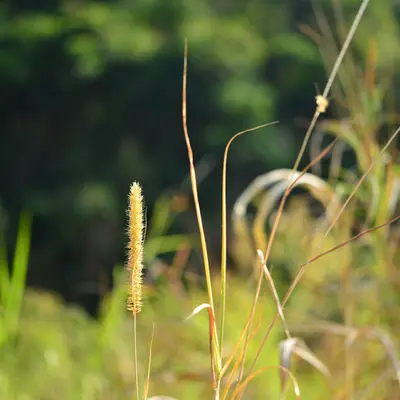
An elegant ornamental grass that creates stunning focal points with its graceful, fountain-like form and silvery plumes that catch the light beautifully. This refined cultivar features narrow, arching leaves with a distinctive white midrib that adds year-round interest to the landscape. Maiden grass provides four-season beauty, from fresh spring growth to gorgeous fall color and winter structure.
Sun
Full sun to partial shade
Zones
5–9
USDA hardiness
Height
4-12 feet
Planting Timeline
Showing dates for Maiden Grass in USDA Zone 7
All Zone 7 grass →Zone Map
Click a state to update dates
Maiden Grass · Zones 5–9
Growing Details
Complete Growing Guide
Light: Full sun (6 or more hours of direct sunlight a day), Partial Shade (Direct sunlight only part of the day, 2-6 hours). Soil: Clay, Loam (Silt), Sand. Drainage: Good Drainage, Moist, Occasionally Dry, Occasionally Wet, Very Dry. Height: 4 ft. 0 in. - 12 ft. 0 in.. Spread: 4 ft. 0 in. - 6 ft. 0 in.. Spacing: 6-feet-12 feet. Growth rate: Medium. Maintenance: High. Propagation: Division.
Harvesting
Color: Cream/Tan. Type: Aggregate, Caryopsis.
Harvest time: Fall, Summer
Storage & Preservation
Maiden grass is an ornamental variety not typically harvested for consumption or fresh storage. However, for maintaining landscape specimens, store potted plants in cool environments (50-65°F) with moderate humidity during dormancy. Dried plumes can be preserved by air-drying in a well-ventilated space away from direct sunlight for 2-3 weeks. For long-term structure interest, allow foliage to persist through winter before spring cutback. Propagation through division in spring ensures plant renewal and longevity in gardens.
History & Origin
Miscanthus sinensis 'Gracillimus', commonly known as Maiden Grass, emerged from the broader cultivation of Miscanthus sinensis varieties in early-to-mid twentieth-century ornamental horticulture, though specific breeder attribution and exact year of introduction remain poorly documented. The cultivar belongs to a lineage of Japanese ornamental grasses that gained prominence in Western gardens during the mid-1900s as landscape designers increasingly valued their architectural form and seasonal interest. Like many named Miscanthus selections, 'Gracillimus' likely arose either through deliberate breeding programs or as a selected seedling within the horticultural trade, but historical records of its origin are fragmentary, reflecting the informal nature of ornamental plant development during that era.
Origin: Asia
Advantages
- +Elegant fountain-like form creates striking focal points in any landscape
- +Silvery plumes catch light beautifully and provide stunning visual interest
- +White midrib on narrow leaves offers year-round ornamental appeal
- +Four-season interest from spring growth through winter structure retention
- +Low maintenance and easy to grow for most gardeners
Considerations
- -Susceptible to rust and leaf spot diseases in humid climates
- -Can spread aggressively if not divided every three to four years
- -Requires full sun exposure to develop best color and form
- -Late to emerge in spring, leaving bare space for weeks
Companion Plants
The prairie-style companions in our database — Purple Coneflower (Echinacea purpurea), Black-Eyed Susan (Rudbeckia fulgida), and Russian Sage (Perovskia atriplicifolia) — make practical sense alongside 'Gracillimus' for a few reasons beyond aesthetics. They share the same tolerance for well-drained soil in the 5.5–7.5 pH range, none of them push deep taproots that would compete with the dense, fibrous root mass a mature Miscanthus clump builds up over 3-5 years, and they won't shade out the grass crown at ground level. The visual contrast matters too — the fine, arching blades of 'Gracillimus' read completely differently against the upright, coarse stems of Echinacea — but the compatibility holds up below the soil surface, not just above it.
Lavender, Catmint, and Ornamental Alliums are worth planting along the front edge because they draw parasitic wasps and hoverflies that keep aphid populations from getting established, and all three settle into the same moderate-to-dry conditions 'Gracillimus' prefers once it's past its first season. Sedum and Autumn Joy Sedum stay compact enough that they won't creep into the crown and trap moisture there.
The three harmful categories are worth taking seriously. Aggressive tree roots — silver maple is a common culprit in residential yards — will physically displace a Miscanthus clump over several years and pull enough moisture to keep the grass from reaching its full 6-8 foot height. Dense groundcovers like pachysandra or vinca mat up at the crown and hold the kind of sustained dampness that feeds Bipolaris leaf spot and Puccinia rust. Water-loving plants simply need soil conditions that 'Gracillimus' doesn't — forcing the pairing means one of them is always losing.
Plant Together
Purple Coneflower
Complementary heights and textures, both drought tolerant with similar growing requirements
Black-Eyed Susan
Provides color contrast while sharing similar sun and soil requirements
Sedum
Creates layered planting with contrasting form, both prefer well-draining soil
Russian Sage
Similar drought tolerance and provides aromatic foliage that deters pests
Ornamental Alliums
Natural pest deterrent properties while creating striking vertical contrast
Lavender
Repels insects naturally and thrives in similar well-draining, sunny conditions
Catmint
Deters rodents and insects while providing complementary blue flowers
Autumn Joy Sedum
Extends seasonal interest and requires minimal water like maiden grass
Keep Apart
Tree Roots
Large tree roots compete aggressively for water and nutrients, stunting grass growth
Dense Groundcovers
Can smother base of grass and prevent proper air circulation
Water-Loving Plants
Conflicting water needs can lead to overwatering maiden grass causing root rot
Pests & Disease Resistance
Resistance
Generally disease resistant
Common Pests
Aphids, scale insects (minor issues)
Diseases
Rust, leaf spot (in humid conditions)
Troubleshooting Maiden Grass
What you'll see, why it happens, and what to do about it.
Orange or rust-colored powdery pustules on leaf blades, typically appearing mid to late summer in humid weather
Likely Causes
- Miscanthus rust (Puccinia miscanthi) — a fungal pathogen that spreads by airspores in warm, wet conditions
- Poor air circulation from overcrowded planting or nearby dense shrubs
What to Do
- 1.Cut the affected culms back hard and dispose of them in the trash, not the compost pile
- 2.Skip overhead irrigation — water at the base early in the day so foliage dries before evening
- 3.Give each clump its full 3-4 feet of spacing; a cramped planting stays wet longer and stays sick longer
Brown or tan irregular spots spreading across leaf blades, concentrated on the lower half of the clump by late summer
Likely Causes
- Leaf spot fungi (Bipolaris or Phyllosticta spp.) — common in humid summers with frequent rain splash
- Mulch piled against the crown, holding moisture where the culms emerge
What to Do
- 1.Pull mulch back 2-3 inches from the crown so the base can dry out between waterings
- 2.Strip and bag the worst-affected leaves rather than letting them fall back into the clump
- 3.On a mature plant this is mostly cosmetic — new growth will flush clean; hold off on fungicide unless it's spreading aggressively
Sticky residue on leaf blades with small clusters of pale or yellow soft-bodied insects near the base of new growth
Likely Causes
- Aphids (commonly Rhopalosiphum spp.) — usually a minor, transient issue on ornamental grasses
- Scale insects — look for waxy brown bumps fixed to the stems, most common on newly divided or drought-stressed plants
What to Do
- 1.Knock aphid colonies off with a firm stream of water from a hose — that's usually enough to break the cycle
- 2.For scale, scrape off visible bumps manually or apply horticultural oil at label rates in early spring before new growth fully emerges
- 3.A 'Gracillimus' under drought stress draws both pests more readily than a well-watered one; consistent soil moisture at 1 inch per week is your first line of defense