Hass Avocado
Persea americana 'Hass'
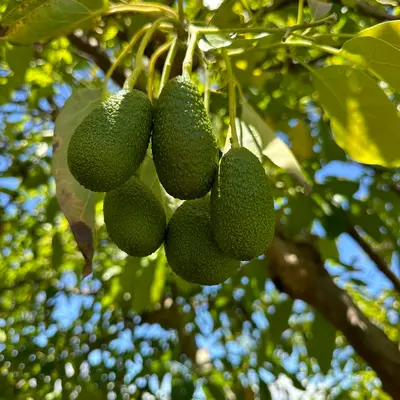
The world's most popular avocado variety, beloved for its rich, creamy texture and nutty flavor that made avocado toast a global phenomenon. This California original produces medium-sized fruits with distinctive pebbly black skin that's easy to recognize when ripe. Perfect for home gardeners in mild climates who want to grow their own supply of this nutritious superfood.
Harvest
240-365d
Days to harvest
Sun
Full sun to partial shade
Zones
10–12
USDA hardiness
Difficulty
Moderate to difficult
Planting Timeline
Showing dates for Hass Avocado in USDA Zone 10
All Zone 10 fruit-tree →Zone Map
Click a state to update dates
Hass Avocado · Zones 10–12
Growing Details
Zone-by-Zone Planting Calendar
| Zone | Indoor Start | Transplant | Direct Sow | Harvest |
|---|---|---|---|---|
| Zone 10 | — | March – April | — | July – December |
Complete Growing Guide
You'll have the best success with Hass avocados if you start with a grafted tree from a reputable nursery. While growing from seed is possible, you'll wait 5-10 years for fruit that likely won't match the parent's quality. Choose a location with morning sun and afternoon shade in hot climates, or full sun in cooler coastal areas.
Prepare your planting site by digging a hole twice as wide as the root ball but only as deep—avocados despise being planted too deeply. Amend heavy clay soils with coarse sand, perlite, and compost to create a raised planting area 12 inches high. In sandy soils, add compost but maintain excellent drainage. The graft union should remain 2-3 inches above soil level.
Fertize young trees monthly from spring through early fall with a balanced citrus fertilizer containing micronutrients, especially zinc and iron. Mature trees need feeding 3-4 times per year. Apply fertilizer in a circle extending to the drip line, never against the trunk.
Water deeply but infrequently, allowing soil to dry between waterings. Newly planted trees need weekly deep watering for the first year. Install drip irrigation rather than sprinklers to keep water off the trunk and prevent root rot. Mulch heavily with wood chips, keeping mulch 6 inches from the trunk.
Prune minimally, only removing dead, crossing, or damaged branches. Never top avocado trees. In windy areas, stake young trees loosely with tree ties that won't girdle the trunk as it grows.
Common mistakes include overwatering (the #1 killer), planting too deeply, using high-nitrogen lawn fertilizer, and excessive pruning. Watch for yellowing leaves between veins—a sign of iron deficiency requiring chelated iron applications.
In USDA zones 9-10, plant in spring after frost danger passes. Zone 9 gardeners should choose cold-hardy rootstock and provide frost protection for young trees. Container growing works well in cooler zones—use at least a 20-gallon pot and move indoors when temperatures drop below 32°F.
Harvesting
Color: Brown/Copper, Green.
Garden value: Edible
Storage & Preservation
Store hard avocados at room temperature to ripen in 3-7 days. Speed ripening by placing in a paper bag with a banana or apple. Once ripe (yielding to gentle pressure), refrigerate for up to a week.
For preservation, scoop ripe flesh and mash with lemon or lime juice (1 tablespoon per avocado) to prevent browning, then freeze in portion-sized containers for up to 6 months. Frozen avocado works well for smoothies and guacamole but loses texture for fresh eating.
Dehydrate thin slices into avocado chips at 115°F for 12-24 hours, or make avocado oil by slow-cooking mashed flesh and straining. Vacuum-seal cubed avocado with citric acid solution for longer freezer storage. Pickled unripe avocados offer another preservation option, maintaining firm texture while adding tangy flavor.
History & Origin
Origin: Central America
Advantages
- +Exceptional flavor with rich, creamy texture and distinctive nutty taste that's superior to most varieties
- +Self-indicating ripeness as skin turns from green to purplish-black when ready to harvest
- +Extended harvest season lasting 6-8 months, providing fresh fruit most of the year
- +Excellent shipping and storage qualities with thick, protective skin that resists bruising
- +Consistent fruit size and shape makes for uniform appearance and easy packing
- +High oil content (up to 20%) provides superior nutritional value and culinary versatility
- +Strong branch structure supports heavy fruit loads without excessive breakage
Considerations
- -Extremely sensitive to overwatering and poor drainage, leading to fatal root rot
- -Cold tender, suffering damage at temperatures below 28-30°F
- -Requires cross-pollination with Type A varieties for optimal fruit set
- -Susceptible to avocado thrips which can scar fruit and reduce quality
- -Slow to establish, often taking 3-4 years from planting to first significant harvest
Companion Plants
Plant Together
Citrus Trees
Share similar water and soil requirements, attract beneficial pollinators
Comfrey
Dynamic accumulator that adds nutrients to soil, improves soil structure
Nasturtiums
Trap crop for aphids and whiteflies, adds nitrogen to soil
Marigolds
Repel nematodes and other soil pests that damage avocado roots
Lavender
Attracts beneficial insects and pollinators, repels pests with strong scent
Rosemary
Deters aphids and other soft-bodied insects, drought tolerant like avocado
Chives
Repel aphids and improve soil health with sulfur compounds
Sweet Alyssum
Attracts beneficial insects like lacewings that control avocado pests
Keep Apart
Black Walnut
Releases juglone toxin that inhibits avocado growth and root development
Eucalyptus
Allelopathic effects suppress nearby plant growth, competes for water
Pine Trees
Acidify soil too much for avocados, needle drop creates unfavorable conditions
Nutrition Facts
Per 100g serving. % Daily Value based on 2,000 calorie diet. Source: USDA FoodData Central (FDC #171706)
Pests & Disease Resistance
Resistance
Moderate resistance to most diseases
Common Pests
Avocado thrips, scale insects, mites, borers
Diseases
Root rot, anthracnose, scab, sunblotch