Burgundy Plum
Prunus salicina 'Burgundy'
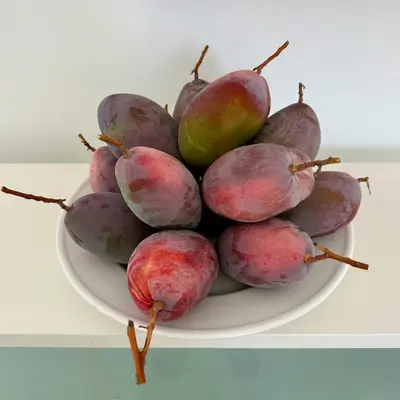
A stunning Japanese plum variety prized for its gorgeous deep red skin and sweet, juicy yellow flesh. Burgundy is self-fertile and incredibly productive, making it ideal for home gardeners who want reliable harvests without needing multiple trees. The fruits are perfect for fresh eating and have excellent storage quality.
Harvest
110-130d
Days to harvest
Sun
Full sun to partial shade
Zones
5–8
USDA hardiness
Height
20-33 feet
Planting Timeline
Showing dates for Burgundy Plum in USDA Zone 7
All Zone 7 fruit-tree →Zone Map
Click a state to update dates
Burgundy Plum · Zones 5–8
Growing Details
Complete Growing Guide
Light: Full sun (6 or more hours of direct sunlight a day), Partial Shade (Direct sunlight only part of the day, 2-6 hours). Soil: Loam (Silt). Soil pH: Acid (<6.0), Alkaline (>8.0), Neutral (6.0-8.0). Drainage: Good Drainage, Moist. Height: 20 ft. 0 in. - 33 ft. 0 in.. Spread: 15 ft. 0 in. - 30 ft. 0 in.. Spacing: 12-24 feet, 24-60 feet. Growth rate: Medium. Propagation: Seed, Stem Cutting. Regions: Coastal, Mountains, Piedmont.
Harvesting
The fruit is a red to purple juicy drupe 1.5 to 3 in. in diameter with yellow-pink flesh. Harvested in the summer
Color: Gold/Yellow, Pink. Type: Drupe. Length: 1-3 inches. Width: 1-3 inches.
Garden value: Edible
Harvest time: Summer
Edibility: Fruits are edible raw or cooked. Fruit can be candied or made into a liqueur, pies, preserves or dried
Storage & Preservation
Fresh Burgundy plums keep best when stored at room temperature for 2-3 days to complete ripening, then refrigerated in the crisper drawer for up to 2 weeks. Maintain 90% humidity by storing in perforated plastic bags, but avoid airtight containers that trap moisture and promote rot.
For long-term preservation, Burgundy plums excel at multiple methods. Freeze whole fruits after washing and removing pits – they maintain excellent texture for smoothies and baking. Can as whole fruits in light syrup or make preserves that showcase their sweet-tart balance. The high sugar content makes them ideal for traditional plum butter or leather. Dehydrate at 135°F for 18-24 hours for chewy dried plums that intensify the variety's rich flavor profile.
History & Origin
Origin: Russia, China, Vietnam, Taiwan
Advantages
- +Attracts: Butterflies, Pollinators
- +Edible: Fruits are edible raw or cooked. Fruit can be candied or made into a liqueur, pies, preserves or dried
Companion Plants
Chives and marigolds are the most practical choices near a plum tree — chives push sulfur compounds that deter aphids and scale insects at close range, while Tagetes patula specifically has solid research behind its ability to suppress root-knot nematodes in the top 12 inches of soil. Comfrey at the drip line earns its spot differently: the taproot goes down 6 feet or more, pulling up calcium and potassium that shallow feeders can't reach, and cut leaves lay down as a decent mulch in July when the tree is sizing fruit. Lavender and nasturtiums draw in parasitic wasps that parasitize oriental fruit moth larvae. Black walnut is the one to keep at least 50-60 feet away — juglone, its root-zone toxin, is particularly damaging to stone fruit rootstocks — and fennel stunts neighboring plants through allelopathic root exudates that interfere with germination and early root development.
Plant Together
Chives
Repels aphids and helps prevent fungal diseases around fruit trees
Comfrey
Deep roots bring nutrients to surface, leaves provide potassium-rich mulch
Nasturtiums
Trap crop for aphids and cucumber beetles, deters ants
Marigolds
Repel nematodes and various harmful insects while attracting beneficial predators
Lavender
Attracts pollinators and beneficial insects while repelling moths and rodents
Clover
Fixes nitrogen in soil and provides living mulch to retain moisture
Tansy
Repels ants, mice, and various flying insects that damage fruit
Dill
Attracts beneficial wasps and predatory insects that control pest populations
Keep Apart
Black Walnut
Produces juglone which is toxic to stone fruit trees and inhibits growth
Fennel
Allelopathic properties inhibit growth of most nearby plants including fruit trees
Eucalyptus
Releases chemicals that suppress growth of other plants and competes for water
Nutrition Facts
Per 100g serving. % Daily Value based on 2,000 calorie diet. Source: USDA FoodData Central (FDC #169949)
Pests & Disease Resistance
Resistance
Good resistance to bacterial spot, moderate resistance to brown rot
Common Pests
Plum curculio, oriental fruit moth, aphids, scale insects
Diseases
Brown rot, black knot, bacterial spot, leaf curl
Troubleshooting Burgundy Plum
What you'll see, why it happens, and what to do about it.
Small crescent-shaped scars on developing fruit skin, with a sunken dimple and a worm inside when you cut it open
Likely Causes
- Plum curculio (Conotrachelus nenuphar) — adult weevil cuts a crescent to lay eggs as soon as fruit sets
- Missed the 2-week window after petal fall when adults are most active
What to Do
- 1.Kaolin clay spray applied at petal fall and reapplied every 7-10 days gives the best non-chemical barrier
- 2.Shake branches over a white sheet early morning — curculio adults drop and play dead, so you can collect and destroy them
- 3.Clean up dropped fruit daily; larvae pupate in the soil beneath the tree and emerge next season
Fruit rotting rapidly on the tree — brown, soft patches that spread and turn into a tan powdery fuzz within 2-3 days
Likely Causes
- Brown rot (Monilinia fructicola) — the single most common plum killer in humid climates, spores move fast in warm wet weather above 60°F
- Dense canopy that slows drying after rain
What to Do
- 1.Thin fruit to 4-6 inches apart by late June so air can move through the canopy
- 2.Remove and bag any mummified fruit from last season before bloom — those dried-up fruit are the primary inoculum source
- 3.Apply a copper-based fungicide at pink bud stage and again at petal fall if your area typically gets wet springs
Hard, warty black swellings on branches that enlarge year after year, eventually girdling the limb
Likely Causes
- Black knot (Dibotryon morbosum) — a fungal disease that spreads via spores in spring; once established the galls are permanent
- Infected wild plum or cherry trees within a few hundred feet acting as a spore reservoir
What to Do
- 1.Prune out affected wood at least 4 inches below where the gall starts — cut into clean, light-colored wood
- 2.Sterilize your pruners with 70% isopropyl alcohol between every cut, and burn or bag the removed wood (don't compost it)
- 3.Prune during dry weather in late winter before bud break to limit spore exposure on fresh cuts
Shoot tips dying back in a shepherd's crook shape, with small brown-centered lesions on nearby leaves or fruit skin
Likely Causes
- Oriental fruit moth (Grapholita molesta) — larvae bore into new shoots first, then switch to fruit as the season progresses
- Bacterial spot (Xanthomonas arboricola pv. pruni) — causes similar-looking shot-hole lesions on leaves, often confused for insect damage
What to Do
- 1.Hang 1-2 oriental fruit moth pheromone traps per tree by tight-cluster stage to monitor flight pressure and time interventions
- 2.For bacterial spot, avoid overhead irrigation and apply copper bactericide at bud swell; once the season is wet it's hard to catch up
- 3.Clip out wilted shoot tips and dispose of them in the trash — larvae are still inside and will complete development if left on the ground
Frequently Asked Questions
How long does Burgundy plum take to produce fruit?▼
Can you grow Burgundy plum trees in containers?▼
What does Burgundy plum taste like compared to other plums?▼
When should I plant Burgundy plum trees?▼
How much space does a Burgundy plum tree need?▼
Is Burgundy plum good for beginner fruit growers?▼
Zone-by-Zone Planting Calendar
Growing Guides from Wind River Greens
Sources & References
External authority sources used in compiling this guide.
See the Methodology page for how this data is sourced, what's AI-assisted, and known limitations.