Sugar Enhanced (SE) Butter and Sugar
Zea mays 'Butter and Sugar'
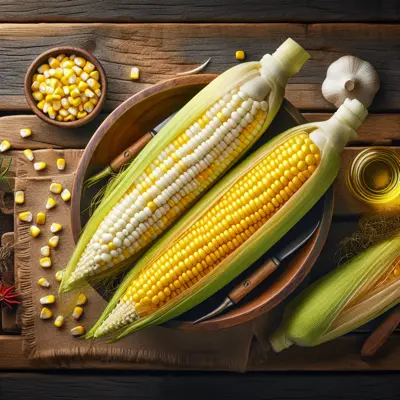
A beloved bicolor sweet corn that combines the best of yellow and white kernels on the same ear. This sugar-enhanced variety offers excellent flavor that's sweeter than standard corn but not as intense as supersweets, with kernels that stay tender longer after harvest. The attractive yellow and white pattern makes it as beautiful as it is delicious.
Harvest
75-80d
Days to harvest
Sun
Full sun
Zones
2–11
USDA hardiness
Height
5-8 feet
Planting Timeline
Showing dates for Sugar Enhanced (SE) Butter and Sugar in USDA Zone 7
All Zone 7 corn →Zone Map
Click a state to update dates
Sugar Enhanced (SE) Butter and Sugar · Zones 2–11
Growing Details
Succession Planting
Direct sow every 14-18 days starting when soil hits 60°F — typically around April 1 in zone 7, late April in zone 6 — and make your last sowing by late June so ears can finish before the first fall frost. Each planting needs to be at least 25-30 feet from the previous one, or timed so tasseling dates are 14+ days apart; two plantings tasseling at the same time will cross-pollinate and produce uneven kernel fill. NC State Extension's IPM guidance notes that early sweet corn harvested before July 15 tends to dodge peak corn earworm pressure, so front-loading your plantings in April and May is the smarter call if earworm has been a consistent problem.
Three sowings — early April, mid-May, and mid-to-late June — will give you a solid 6-8 week harvest window. A fourth planting after July 1 in zone 7 usually isn't worth it: corn sown that late tassels during the hottest, driest stretch of summer, pollination suffers, and you'll get patchy ears at best.
Complete Growing Guide
Sugar-enhanced corn requires careful isolation from other corn varieties to prevent cross-pollination that would diminish sweetness, so plant at least 250 feet away from field corn or supersweet types. This bicolor variety matures in 75-80 days and prefers warm soil above 60°F, so wait until soil temperatures stabilize before direct seeding. SE varieties like 'Butter and Sugar' occupy a middle ground between standard and supersweet corn—they're slower to convert sugars to starch than supersweets, meaning you have a wider harvest window of 3-4 days rather than 1-2 days, a significant advantage for home gardeners. Provide full sun, consistent moisture (1-2 inches weekly), and rich soil amended with compost. Watch for corn earworm and fall armyworm, especially in mid-to-late summer, and scout regularly. The moderate difficulty rating reflects its need for proper spacing and fertility; provide adequate nitrogen at knee-high stage to maximize kernel development on these tall 5-8 foot plants.
Light: Full sun (6 or more hours of direct sunlight a day). Soil: Clay, High Organic Matter, Loam (Silt). Soil pH: Acid (<6.0), Neutral (6.0-8.0). Drainage: Good Drainage. Height: 5 ft. 0 in. - 8 ft. 0 in.. Spread: 1 ft. 0 in. - 2 ft. 0 in.. Spacing: 12 inches-3 feet. Growth rate: Rapid. Maintenance: Medium. Propagation: Seed. Regions: Coastal, Mountains, Piedmont.
Harvesting
Harvest Butter and Sugar when the silks have turned brown and dry, the ear feels full and plump when gently squeezed, and both the yellow and white kernels have filled out completely with a slight gloss. The ears typically mature in clusters rather than all at once, making this variety ideal for succession harvesting—pick the largest ears first and return every two to three days to gather the next tier of mature ears, extending your harvest window significantly. A key timing tip: test readiness by carefully peeling back a small section of husk to check kernel maturity; the kernels should be tender with a milky juice when punctured with a fingernail, ensuring peak sweetness and creamy texture before the sugars convert to starch.
Color: Gold/Yellow. Type: Caryopsis. Length: > 3 inches. Width: 1-3 inches.
Garden value: Edible, Showy
Harvest time: Fall
Edibility: Edibile
Storage & Preservation
Use fresh Sugar Enhanced Butter and Sugar corn within 24-48 hours of harvest for optimal sweetness, storing unhusked ears in the refrigerator at 32-35°F to slow sugar conversion. Keep husks on until ready to use, as they help retain moisture and sweetness.
For freezing, blanch whole kernels in boiling water for 4 minutes, then immediately plunge into ice water. Cut kernels from cob and freeze in sealed bags for up to 12 months. Alternatively, freeze whole ears after blanching for 6-8 minutes.
This variety excels for canning—process pint jars in a pressure canner at 11 pounds pressure for 55 minutes. The balanced sweetness and tender texture make it ideal for corn relish and pickled corn preparations. Avoid dehydrating this variety as the high moisture content and sugar levels don't preserve well through drying methods.
History & Origin
The exact origin and breeding history of 'Butter and Sugar' remain somewhat obscure in published horticultural records, though the variety emerged as part of the broader post-1950s development of bicolor sweet corn hybrids in North America. The naming reflects its dual-kernel phenotype—combining yellow and white kernels—which became increasingly popular among home gardeners seeking visual appeal alongside superior sweetness. The sugar-enhanced (SE) gene technology represents a refinement of earlier efforts to extend kernel tenderness and boost sucrose content beyond standard corn varieties. While specific breeder attribution and introduction year are not well documented in readily available sources, 'Butter and Sugar' likely derives from conventional breeding programs at major seed companies rather than university breeding lines, establishing itself as a market-driven cultivar that capitalized on growing consumer interest in premium sweet corn during the late twentieth century.
Origin: Mexico
Advantages
- +Bicolor kernels provide visual appeal and attractive presentation on plate
- +Sugar-enhanced variety tastes sweeter than standard corn with balanced flavor
- +Kernels remain tender longer after harvest than most corn varieties
- +Medium maturity at 75-80 days fits well into succession planting schedules
Considerations
- -Susceptible to Stewart's wilt and gray leaf spot diseases in humid climates
- -Moderate growing difficulty requires more attention than standard corn varieties
- -Multiple pest pressures including earworm and corn borer demand active management
Companion Plants
Pole beans fix atmospheric nitrogen and feed it into the soil, which corn burns through fast during its vegetative push. Squash fills the ground layer below, shading out weeds and slowing moisture loss from bare soil. They're competing for space but drawing on different resources — which is why three-sisters plantings actually work instead of just looking good in diagrams. One thing to keep in mind with SE hybrids specifically: NC State Extension flags that supersweet (sh2) corn loses its flavor when cross-pollinated by non-SE types nearby. SE is less sensitive than sh2, but you still don't want field corn tasseling 50 feet away.
Marigolds (Tagetes spp.) and nasturtiums are worth tucking in at the row ends. Marigolds are documented to deter aphids and certain soil nematodes. Nasturtiums act as a trap crop — aphids will colonize them preferentially, pulling pressure off corn stalks and concentrating the problem somewhere you can actually address it. Sunflowers planted on the north side add height without shading the corn and give predatory wasps a staging area.
Tomatoes are the pairing to skip, and the reason is pest load, not competition. The UGA Vegetable Garden Calendar lists the tomato fruitworm and corn earworm as the same insect — Helicoverpa zea — so putting these two crops side by side just doubles the target area for a pest that's already hard to manage. Black walnut (Juglans nigra) is a harder constraint: it releases juglone from its roots and decomposing hulls, a compound that stunts or kills a wide range of vegetables. Corn planted inside the drip line of a mature black walnut is unlikely to thrive regardless of how well everything else is managed.
Plant Together
Beans
Fix nitrogen in soil that corn needs, while corn provides natural trellis support
Squash
Ground cover reduces weeds and retains moisture, part of Three Sisters planting
Marigolds
Repel corn earworms, aphids, and other harmful insects with strong scent
Nasturtiums
Trap crop for aphids and cucumber beetles, deters corn borers
Sunflowers
Attract beneficial insects and provide windbreak protection for corn
Dill
Attracts beneficial wasps that prey on corn earworms and aphids
Parsley
Attracts hoverflies and parasitic wasps that control corn pests
Cucumbers
Compatible growth habits and help maximize garden space efficiently
Keep Apart
Tomatoes
Both are heavy nitrogen feeders creating competition, tomato hornworms may spread to corn
Black Walnut Trees
Release juglone toxin that inhibits corn growth and development
Brassicas
Cabbage family plants can stunt corn growth through allelopathic compounds
Nutrition Facts
Per 100g serving. % Daily Value based on 2,000 calorie diet. Source: USDA FoodData Central (FDC #168538)
Pests & Disease Resistance
Resistance
Moderate resistance to northern corn leaf blight
Common Pests
Corn earworm, European corn borer, corn rootworm, birds
Diseases
Stewart's wilt, common rust, gray leaf spot
Troubleshooting Sugar Enhanced (SE) Butter and Sugar
What you'll see, why it happens, and what to do about it.
Silks turn brown and kernels at the tip are eaten out or filled with frass — noticed at harvest
Likely Causes
- Corn earworm (Helicoverpa zea) — larvae enter through the silk channel and feed down toward the tip
- European corn borer (Ostrinia nubilalis) — can also tunnel into ears, though more often seen in stalks first
What to Do
- 1.Apply a few drops of mineral oil to the silks 3-5 days after silks emerge — this suffocates young larvae before they reach the ear
- 2.Time plantings so ears are harvested before July 15; NC State Extension's IPM guidance notes that early sweet corn crops tend to have lower earworm pressure than late ones
- 3.For heavy pressure, apply Bacillus thuringiensis (Bt) to silks every 2-3 days during silking — it's labeled for earworm and won't harm beneficials
Seedlings wilt and die within 1-2 weeks of emergence; surviving plants are stunted with yellow-streaked leaves
Likely Causes
- Stewart's wilt (Pantoea stewartii) — a bacterial disease transmitted by corn flea beetles that overwinter in mild winters
- Corn flea beetle feeding — tiny rectangular feeding scars on leaves are often the first clue the vector is present
What to Do
- 1.Check seed packets: SE hybrids vary in Stewart's wilt tolerance, so choose a rated variety if flea beetles were bad last season
- 2.Pull and trash seedlings showing systemic streaking — they won't recover and will serve as a reservoir
- 3.Control flea beetles with pyrethrin or spinosad at first sign of feeding; reducing the vector population limits new infections
Rectangular tan lesions with wavy margins running parallel to leaf veins, appearing mid-season on lower leaves and moving up
Likely Causes
- Gray leaf spot (Cercospora zeae-maydis) — favored by warm nights above 60°F and high humidity or heavy dew
- Dense plantings that trap moisture and restrict airflow
What to Do
- 1.Space plants at least 12 inches apart in rows 30-36 inches wide — crowding is the main thing you can control at planting time
- 2.Avoid overhead irrigation in the evening; drip tape or morning watering lets foliage dry before nightfall
- 3.Rotate corn out of the same bed for at least 2 seasons — the fungus overwinters on debris in the soil
Pustules of orange-red powder on upper and lower leaf surfaces, showing up mid-to-late season
Likely Causes
- Common rust (Puccinia sorghi) — airborne spores, spreads fast in cool (60-77°F) wet conditions
- Southern rust (Puccinia polysora), referenced in NC State's CDIN-002, which looks similar but prefers warmer conditions and is often more aggressive late in the season
What to Do
- 1.Scout weekly starting around day 45 — catching rust early gives you more options
- 2.If pressure is light and plants are within 2 weeks of harvest, hold off on spraying; the crop will finish before yield is significantly impacted
- 3.For heavy early infection, apply a fungicide labeled for corn rust (azoxystrobin or propiconazole); a single application at first sign usually holds it
Frequently Asked Questions
How long does Sugar Enhanced Butter and Sugar corn take to grow?▼
Can you grow Sugar Enhanced Butter and Sugar corn in containers?▼
What's the difference between Sugar Enhanced and supersweet corn varieties?▼
When should I plant Sugar Enhanced Butter and Sugar corn?▼
Is Sugar Enhanced Butter and Sugar corn good for beginners?▼
How do you know when Sugar Enhanced Butter and Sugar corn is ready to harvest?▼
Zone-by-Zone Planting Calendar
| Zone | Indoor Start | Transplant | Direct Sow | Harvest |
|---|---|---|---|---|
| Zone 1 | — | — | July – August | October – August |
| Zone 2 | — | — | June – August | October – September |
| Zone 11 | — | — | January – March | May – June |
| Zone 12 | — | — | January – March | May – June |
| Zone 13 | — | — | January – March | May – June |
| Zone 3 | — | — | June – July | September – October |
| Zone 4 | — | — | June – July | September – October |
| Zone 5 | — | — | May – June | September – October |
| Zone 6 | — | — | May – June | August – October |
| Zone 7 | — | — | April – June | August – September |
| Zone 8 | — | — | April – May | July – September |
| Zone 9 | — | — | March – April | June – August |
| Zone 10 | — | — | February – April | June – July |
Growing Guides from Wind River Greens
Sources & References
External authority sources used in compiling this guide.
See the Methodology page for how this data is sourced, what's AI-assisted, and known limitations.