Early Sunglow
Zea mays 'Early Sunglow'
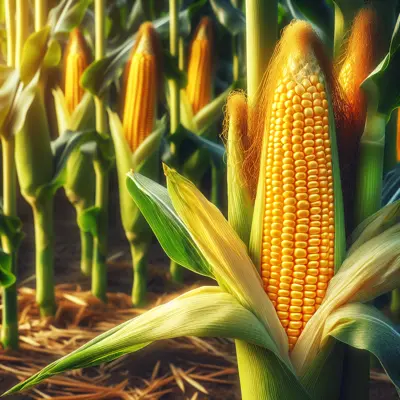
A reliable early-season sweet corn that delivers impressive flavor despite its quick maturity. This variety produces tender, golden kernels with excellent sweetness that holds well after harvest. Perfect for northern gardeners with shorter seasons or anyone wanting fresh corn on the table quickly.
Harvest
62-65d
Days to harvest
Sun
Full sun
Zones
2–11
USDA hardiness
Height
5-8 feet
Planting Timeline
Showing dates for Early Sunglow in USDA Zone 7
All Zone 7 corn →Zone Map
Click a state to update dates
Early Sunglow · Zones 2–11
Growing Details
Succession Planting
Early Sunglow's 62-65 day window means a single planting all hits eating stage within roughly a week — if you want fresh ears across the whole summer, stagger your sowings. Direct sow every 14-18 days from your last frost date through early July in zone 7; the UGA Extension calendar recommends a third planting in May of crops first started in April, and corn fits that schedule cleanly. Stop by early July — anything sown later won't reach full eating quality before cool nights knock back flavor and kernel development.
NC State Extension IPM makes a specific case for front-loading plantings: sweet corn harvested before July 15 tends to dodge peak corn earworm pressure, so there's a pest-management reason to weight your sowings toward spring rather than spreading them evenly. Each sowing also needs enough of a block for wind pollination — a single row or two will give you poorly filled ears regardless of timing. Aim for at least a 4×10 foot block per sowing at minimum.
Complete Growing Guide
Early Sunglow's 62-65 day maturity demands precise timing: sow seeds only after soil reaches 60°F and all frost danger passes, as cool soil will cause rot and germination failure. This cultivar excels in full sun with consistent moisture but is prone to silk emergence delays if temperatures fluctuate dramatically during grain-fill, so maintain steady watering rather than erratic deep soakings. Unlike later varieties, Early Sunglow's compact 5-8 foot stalks make it susceptible to lodging in windy sites—stake or plant in sheltered locations. Watch for corn borers, which can quickly damage the smaller stalks and reduce kernel quality. One essential tip: plant in blocks of at least three rows spaced 30 inches apart rather than single rows, as this improves pollination and ensures full, uniform ear development on this early-maturing type. Harvest when silks brown completely, typically 18-20 days after silk emergence.
Light: Full sun (6 or more hours of direct sunlight a day). Soil: Clay, High Organic Matter, Loam (Silt). Soil pH: Acid (<6.0), Neutral (6.0-8.0). Drainage: Good Drainage. Height: 5 ft. 0 in. - 8 ft. 0 in.. Spread: 1 ft. 0 in. - 2 ft. 0 in.. Spacing: 12 inches-3 feet. Growth rate: Rapid. Maintenance: Medium. Propagation: Seed. Regions: Coastal, Mountains, Piedmont.
Harvesting
Harvest Early Sunglow ears when the husks turn bright green and feel slightly damp, with silks darkening to brown and kernels filling completely to the ear's tip. Gently squeeze the ear—it should feel plump and full without any gaps between kernels. This variety produces multiple ears per stalk, so pick continuously as ears mature rather than waiting for all to ripen simultaneously, which extends your harvest window. A valuable timing tip: harvest in early morning when kernels are coolest and most crisp, then refrigerate immediately to preserve the exceptional sweetness that makes Early Sunglow worth growing, since sugars convert to starch quickly at room temperature.
Color: Gold/Yellow. Type: Caryopsis. Length: > 3 inches. Width: 1-3 inches.
Garden value: Edible, Showy
Harvest time: Fall
Edibility: Edibile
Storage & Preservation
Fresh Early Sunglow corn is best used immediately but can be stored unhusked in the refrigerator for up to 3 days. Keep husks on and store in perforated plastic bags to maintain humidity while allowing air circulation.
For longer storage, blanch whole ears in boiling water for 4 minutes, cool in ice water, then cut kernels from cobs and freeze in airtight containers for up to 12 months. Early Sunglow's tender kernels also excel when pressure canned—process pints for 55 minutes at 10 pounds pressure. The variety's good sugar retention makes it excellent for corn relish or pickled corn salad. Avoid dehydrating as the kernels become tough and lose their characteristic sweetness.
History & Origin
Early Sunglow emerged from mid-twentieth-century American corn breeding efforts focused on developing early-maturing sweet corn varieties suitable for northern climates and short growing seasons. While specific breeder attribution and exact introduction year remain incompletely documented in readily available sources, the variety reflects the systematic work of seed companies and agricultural institutions during the 1950s-1960s era when earlier-ripening cultivars were increasingly prioritized. The "Sunglow" lineage connects to broader breeding programs that selected for rapid maturity without sacrificing kernel tenderness and sugar content, traits essential for commercial viability and home gardener appeal in regions with frost constraints.
Origin: Mexico
Advantages
- +Matures in just 62-65 days, ideal for short growing seasons
- +Golden kernels maintain sweetness and tenderness after harvest
- +Excellent flavor rivals later-maturing varieties despite early maturity
- +Easy to grow, making it perfect for beginner gardeners
- +Quick harvest means fresh corn on the table rapidly
Considerations
- -Susceptible to southern corn leaf blight in humid climates
- -Vulnerable to multiple pest species including corn earworm and rootworm
- -Prone to common smut fungal infection under wet conditions
- -Lower overall yield compared to full-season sweet corn varieties
Companion Plants
Bush beans and pole beans do real work here — nitrogen fixation directly offsets corn's heavy feeding demands over a 62-65 day sprint, and pairing them with summer squash completes the classic Three Sisters setup: the squash canopy shades out weeds and slows soil moisture loss without competing for vertical space. Nasturtiums act as a trap crop for aphids, keeping them off the corn. Fennel is broadly allelopathic to most vegetables and should stay at least 10 feet away; brassicas draw on the same soil nutrients corn needs and will slow establishment if planted too close. Black walnut produces juglone in its root zone and should be kept well clear of any vegetable bed.
Plant Together
Lettuce
Benefits from corn's partial shade during hot weather, maximizing space use
Bush Beans
Fix nitrogen in soil that corn can utilize, while corn provides natural support
Pole Beans
Climb corn stalks for support while fixing nitrogen to benefit corn growth
Summer Squash
Large leaves provide ground cover to retain moisture and suppress weeds
Nasturtiums
Attract beneficial insects and repel cucumber beetles and corn earworms
Marigolds
Deter corn earworms, aphids, and nematodes with their strong scent
Dill
Attracts beneficial predatory insects that control corn pests like aphids
Sunflowers
Attract pollinators and beneficial insects while providing windbreak protection
Keep Apart
Black Walnut
Releases juglone toxin that severely stunts corn growth and development
Fennel
Inhibits corn growth through allelopathic compounds released by roots
Brassicas
Compete heavily for nitrogen and can stunt corn growth in early stages
Tomatoes
Both are heavy nitrogen feeders creating intense competition for nutrients
Nutrition Facts
Per 100g serving. % Daily Value based on 2,000 calorie diet. Source: USDA FoodData Central (FDC #168538)
Pests & Disease Resistance
Resistance
Good resistance to northern corn leaf blight and rust
Common Pests
Corn earworm, European corn borer, corn rootworm, raccoons
Diseases
Southern corn leaf blight, common smut, corn rust
Troubleshooting Early Sunglow
What you'll see, why it happens, and what to do about it.
Silks and ear tips show feeding damage or small caterpillars tunneling into the ear tip at harvest
Likely Causes
- Corn earworm (Helicoverpa zea) — moths lay eggs directly on silks, larvae feed down into the ear
- Late harvest timing that allows larvae to establish deeper in the ear
What to Do
- 1.Apply a few drops of mineral oil to the silk right after it browns — this smothers newly hatched larvae before they tunnel in
- 2.Follow a spray schedule timed to silk emergence if earworm pressure is high in your area; the UGA Pest Management Handbook gives specific timing guidance for corn earworm
- 3.Plant early and aim to harvest before July 15; NC State Extension IPM notes that early sweet corn plantings harvested before mid-July tend to see less earworm damage
Stalks have ragged holes bored through them; plants may lean or snap at mid-stalk around day 40-55
Likely Causes
- European corn borer (Ostrinia nubilalis) — larvae bore into stalks and ears, weakening the plant structurally
- Dense planting that makes it harder to spot egg masses on leaf undersides early
What to Do
- 1.Scout the undersides of leaves for flat, overlapping egg masses starting around 3-4 weeks after germination and crush any you find
- 2.Bacillus thuringiensis (Bt) applied at silk emergence can reduce larval establishment — time it to when you first see feeding notches on leaves
- 3.Remove and destroy infested stalks at season's end rather than composting them, to cut down on overwintering populations
Large, irregular galls — white or silver when young, turning black and powdery at maturity — on ears, tassels, or stalks
Likely Causes
- Common smut (Ustilago maydis) — a soil-borne fungus that enters through wounds; drought stress followed by rain favors it
- Physical injury from cultivation tools, hail, or insect feeding that opens entry points for the spores
What to Do
- 1.Cut off and bag galls before they go black and rupture — once spores release into the soil, that bed stays contaminated for multiple seasons
- 2.Rotate corn out of that bed for at least 2 years; NC State's Plant Disease and Insect Clinic notes smut persists in soil long-term
- 3.Back off on high-nitrogen side-dressing — excess nitrogen pushes the kind of lush, fast-expanding tissue that smut exploits
Tan or brown lesions with dark borders spreading across leaves, starting low on the plant and climbing in humid weather above 70°F
Likely Causes
- Southern corn leaf blight (Cochliobolus heterostrophus) — fungal pathogen that moves via airborne spores in warm, wet conditions
- Corn rust (Puccinia sorghi or Puccinia polysora) — produces smaller brick-red pustules rather than blotches; can look similar at first glance
What to Do
- 1.Strip and trash badly affected lower leaves to slow spore spread — don't put them in the compost
- 2.Give plants their full 8-12 inch spacing; crowded rows trap humidity and accelerate both pathogens
- 3.Till residue under after harvest and rotate out of corn for at least one season, since both fungi overwinter in plant debris
Frequently Asked Questions
How long does Early Sunglow corn take to grow?▼
Can you grow Early Sunglow corn in containers?▼
When should I plant Early Sunglow corn?▼
What does Early Sunglow corn taste like?▼
Is Early Sunglow good for beginners?▼
How many ears does Early Sunglow produce per plant?▼
Zone-by-Zone Planting Calendar
| Zone | Indoor Start | Transplant | Direct Sow | Harvest |
|---|---|---|---|---|
| Zone 1 | — | — | July – August | October – August |
| Zone 2 | — | — | June – August | September – September |
| Zone 11 | — | — | January – March | April – June |
| Zone 12 | — | — | January – March | April – June |
| Zone 13 | — | — | January – March | April – June |
| Zone 3 | — | — | June – July | September – October |
| Zone 4 | — | — | June – July | August – October |
| Zone 5 | — | — | May – June | August – October |
| Zone 6 | — | — | May – June | August – September |
| Zone 7 | — | — | April – June | July – September |
| Zone 8 | — | — | April – May | July – August |
| Zone 9 | — | — | March – April | June – July |
| Zone 10 | — | — | February – April | May – July |
Growing Guides from Wind River Greens
Sources & References
External authority sources used in compiling this guide.
See the Methodology page for how this data is sourced, what's AI-assisted, and known limitations.