How Sweet It Is
Zea mays 'How Sweet It Is'
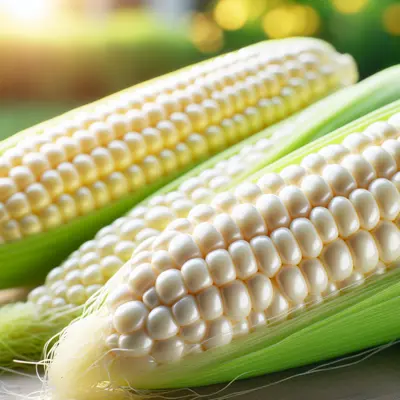
This pure white supersweet corn lives up to its name with incredibly tender kernels that practically melt in your mouth and sweetness that stays fresh for days after harvest. The compact 6-foot plants are perfect for smaller gardens while still producing full-sized ears with excellent tip fill and uniformity. How Sweet It Is has become a favorite among home gardeners who want maximum sweetness in a manageable plant size that's easy to grow and harvest.
Harvest
87-92d
Days to harvest
Sun
Full sun
Zones
2–11
USDA hardiness
Height
5-8 feet
Planting Timeline
Showing dates for How Sweet It Is in USDA Zone 7
All Zone 7 corn →Zone Map
Click a state to update dates
How Sweet It Is · Zones 2–11
Growing Details
Succession Planting
Direct sow after your last frost date, once soil temps hit at least 60°F — How Sweet It Is germinates poorly in cold soil and the seeds tend to rot rather than sprout. In zone 7, that puts you somewhere around April 1 through the end of June. With 87-92 days to harvest, a sowing at the very end of June puts you right at the edge of first fall frost, so don't push past that. Two or three successions spaced about 3 weeks apart — early April, mid-May, early June — will stretch your harvest window instead of dumping everything at once. The UGA Vegetable Garden Calendar specifically calls out a third corn planting in May, so that mid-season sow is well-supported.
One logistical wrinkle: each succession needs its silk window isolated from the others. Either put 250 feet between plantings or stagger them by at least 14 days. If two successions silk at the same time and cross-pollinate, the supersweet trait collapses — which is the one thing that makes this variety worth growing over a standard sweet corn.
Complete Growing Guide
This supersweet cultivar requires consistent warmth and will sit dormant if soil temperatures fall below 60°F, so wait until late spring to plant and consider using row covers early to maintain soil heat. The compact 6-foot stature makes it vulnerable to wind damage and lodging, especially when ears fill heavily, so plant in sheltered locations or provide support in exposed gardens. Supersweet varieties like this one are particularly attractive to corn earworms and fall armyworms—monitor closely and consider bagging developing ears with paper bags tied at the base for organic control. Isolate plantings from standard and field corn by at least 250 feet to prevent cross-pollination that ruins the eating quality. For maximum sweetness retention, harvest in early morning when sugar content peaks, and refrigerate immediately; waiting even a few hours allows sugars to convert to starch, negating this variety's main advantage.
Light: Full sun (6 or more hours of direct sunlight a day). Soil: Clay, High Organic Matter, Loam (Silt). Soil pH: Acid (<6.0), Neutral (6.0-8.0). Drainage: Good Drainage. Height: 5 ft. 0 in. - 8 ft. 0 in.. Spread: 1 ft. 0 in. - 2 ft. 0 in.. Spacing: 12 inches-3 feet. Growth rate: Rapid. Maintenance: Medium. Propagation: Seed. Regions: Coastal, Mountains, Piedmont.
Harvesting
Peak readiness for How Sweet It Is arrives when silks turn brown and dry while kernels reach full, plump size with milky juice when pierced—the ears should feel heavy and firm rather than soft or underfilled. This variety produces continuously over several weeks, allowing staggered harvesting rather than a single glut, which suits smaller gardens perfectly. For optimal sweetness retention, harvest in early morning when sugar content peaks, then refrigerate immediately since even a few hours at room temperature causes sugars to convert to starch. Twist ears downward at a sharp angle to cleanly separate from the stalk, taking care not to strip the husks, and expect full-sized ears on these compact 6-foot plants through the entire production window.
Color: Gold/Yellow. Type: Caryopsis. Length: > 3 inches. Width: 1-3 inches.
Garden value: Edible, Showy
Harvest time: Fall
Edibility: Edibile
Storage & Preservation
Store unhusked ears immediately in the refrigerator at 32-35°F to preserve maximum sweetness—How Sweet It Is retains its sugar content better than standard varieties but still benefits from prompt cooling. Keep husks on until ready to use, and consume within 5-7 days for peak flavor.
For long-term storage, blanch husked ears in boiling water for 4-6 minutes depending on size, then plunge into ice water before freezing. The supersweet kernels freeze exceptionally well, maintaining their tender texture for up to 12 months. You can also cut kernels from cobs and freeze in portion-sized containers. Pressure canning works well for this variety—process pints for 55 minutes at 10 pounds pressure. Avoid dehydrating as the high sugar content doesn't dry well and becomes chewy.
History & Origin
The specific origins of 'How Sweet It Is' are not well documented in readily available horticultural records, making its breeding history somewhat obscure. However, this variety belongs to the supersweet corn lineage that emerged prominently in the late twentieth century, likely developed through commercial seed breeding programs focused on maximizing sugar content and kernel tenderness. The variety's characteristics—exceptional sweetness retention and compact plant stature—suggest deliberate selection within modern hybrid breeding lines, possibly by a major seed company, though definitive attribution to a particular breeder, institution, or introduction year remains unclear in public documentation.
Origin: Mexico
Advantages
- +Exceptionally sweet flavor that maintains freshness for days after harvest
- +Compact 6-foot plants fit perfectly in smaller garden spaces
- +Full-sized ears with excellent tip fill and uniformity despite compact size
- +Tender kernels have a melting texture that appeals to most palates
- +Moderate difficulty makes it accessible to home gardeners of varying experience
Considerations
- -Susceptible to multiple serious diseases including northern corn leaf blight
- -Vulnerable to several damaging pests like corn earworm and corn borer
- -Requires 87-92 days to maturity, limiting planting windows in short seasons
- -Higher maintenance needed to manage pest and disease pressure effectively
Companion Plants
The classic Three Sisters planting — corn, beans, squash — works as well here as anywhere. Bush beans and pole beans fix atmospheric nitrogen through root nodules, which feeds a heavy feeder like corn without extra synthetic fertilizer. Winter squash sprawls underneath and shades out weeds, while its prickly leaves make it harder for raccoons to move through the planting. The sequence matters: get the corn in first, let it reach about 6 inches, then add the beans, then the squash a week after that so nothing gets shaded out early.
Marigolds and nasturtiums at the perimeter draw parasitic wasps that go after corn earworm larvae and aphid colonies. Nasturtiums in particular tend to pull aphids onto themselves and off the corn. Keep them at the edges rather than interplanted — corn is wind-pollinated and needs to be sown in a solid grid of at least 4 rows to set ears reliably. Sunflowers placed at the north end bring in beneficials without shading the corn block.
Two plants to keep at a hard distance: any other corn variety, and black walnut. NC State Extension is clear that supersweet types like How Sweet It Is are cross-pollinated easily by standard sweet, popcorn, or field corn — and a cross-pollinated ear tastes like mediocre field corn after a 90-day wait. The recommended isolation distance is 250 feet, or stagger planting dates by at least 14 days so silk windows don't overlap. Black walnut produces juglone, a root toxin that leaches roughly 50-60 feet from the trunk and will stunt corn planted anywhere in that zone.
Plant Together
Bush Beans
Fix nitrogen in soil that corn can utilize, classic Three Sisters companion
Pole Beans
Climb corn stalks for support while fixing nitrogen to benefit corn
Winter Squash
Large leaves suppress weeds and retain soil moisture, completes Three Sisters guild
Marigolds
Repel corn earworm, aphids, and nematodes with strong scent
Nasturtiums
Act as trap crop for aphids and squash bugs, repel corn borers
Dill
Attracts beneficial insects that prey on corn pests like aphids
Sunflowers
Attract beneficial insects and birds that eat corn pests
Cucumbers
Benefit from corn's wind protection and shade during hot weather
Keep Apart
Black Walnut
Produces juglone which is toxic to corn and inhibits growth
Tomatoes
Both are heavy feeders competing for nutrients, attract similar pests like corn earworm
Fennel
Allelopathic properties inhibit corn germination and growth
Nutrition Facts
Per 100g serving. % Daily Value based on 2,000 calorie diet. Source: USDA FoodData Central (FDC #168538)
Pests & Disease Resistance
Resistance
Resistant to Stewart's wilt, moderate resistance to rust diseases
Common Pests
Corn earworm, Japanese beetles, corn borer, aphids
Diseases
Northern corn leaf blight, gray leaf spot, crazy top
Troubleshooting How Sweet It Is
What you'll see, why it happens, and what to do about it.
Silks and ear tips riddled with feeding damage, frass visible inside the husk at harvest
Likely Causes
- Corn earworm (Helicoverpa zea) — moths lay eggs directly on fresh silks, larvae burrow down into the ear
- European corn borer (Ostrinia nubilalis) — secondary entry through the shank or stalk, can meet earworm damage inside the same ear
What to Do
- 1.Apply a few drops of mineral oil to the silks 3-5 days after they emerge — this suffocates early-instar larvae before they reach the kernels
- 2.The UGA Pest Management Handbook recommends following a timed spray schedule once silks appear; Bt (Bacillus thuringiensis) applied every 3-4 days to fresh silks is effective and won't harm beneficials
- 3.At harvest, just cut off the damaged tip — the rest of the ear is usually fine
Long tan or gray lesions running parallel to leaf veins, starting on lower leaves and moving up the plant by mid-season
Likely Causes
- Northern corn leaf blight (Exserohilum turcicum) — fungal spores spread by wind and rain splash, favored by cool nights below 65°F and wet weather
- Gray leaf spot (Cercospora zeae-maydis) — produces narrower, more rectangular lesions; thrives in high humidity and poor airflow from dense planting
What to Do
- 1.Space plants no closer than 8 inches apart and orient rows to catch prevailing wind — airflow cuts disease pressure significantly
- 2.Rotate out of corn (and other Zea species) for at least 2 seasons; both pathogens overwinter in corn residue, so till it under or remove it after harvest
- 3.If blight reaches the ear leaf or above before silking, a fungicide application (chlorothalonil or a strobilurin) at tasseling can protect yield — after that point it's mostly cosmetic
Frequently Asked Questions
How long does How Sweet It Is corn take to grow?▼
Can you grow How Sweet It Is corn in containers?▼
What does How Sweet It Is corn taste like?▼
When should I plant How Sweet It Is corn?▼
Is How Sweet It Is good for beginners?▼
How do you prevent cross-pollination with How Sweet It Is corn?▼
Zone-by-Zone Planting Calendar
| Zone | Indoor Start | Transplant | Direct Sow | Harvest |
|---|---|---|---|---|
| Zone 3 | — | — | June – July | October – October |
| Zone 4 | — | — | June – July | September – October |
| Zone 5 | — | — | May – June | September – October |
| Zone 6 | — | — | May – June | September – October |
| Zone 7 | — | — | April – June | August – October |
| Zone 8 | — | — | April – May | August – September |
| Zone 9 | — | — | March – April | July – August |
| Zone 10 | — | — | February – April | June – August |
| Zone 1 | — | — | July – August | November – August |
| Zone 2 | — | — | June – August | October – September |
| Zone 11 | — | — | January – March | May – July |
| Zone 12 | — | — | January – March | May – July |
| Zone 13 | — | — | January – March | May – July |
Growing Guides from Wind River Greens
Sources & References
External authority sources used in compiling this guide.
See the Methodology page for how this data is sourced, what's AI-assisted, and known limitations.