Bodacious
Zea mays 'Bodacious'
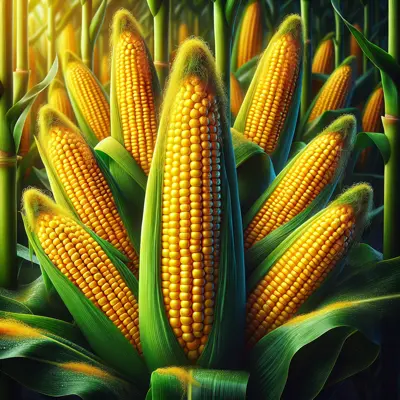
True to its bold name, Bodacious delivers outstanding performance with remarkable heat tolerance and disease resistance that makes it ideal for challenging growing conditions. This reliable hybrid produces consistently sweet, yellow ears even when temperatures soar, making it a favorite among Southern gardeners and anyone dealing with hot summers. Its robust nature and dependable yields prove that great corn can thrive even in tough conditions.
Harvest
75-80d
Days to harvest
Sun
Full sun
Zones
2–11
USDA hardiness
Height
5-8 feet
Planting Timeline
Showing dates for Bodacious in USDA Zone 7
All Zone 7 corn →Zone Map
Click a state to update dates
Bodacious · Zones 2–11
Growing Details
Succession Planting
Direct sow Bodacious every 14-18 days from your last frost date through early June — in zone 7 that's roughly April 1 through June 10. At 75-80 days to harvest, a first sowing comes in around mid-July and a late-May sowing wraps up in late August. The UGA Vegetable Garden Calendar flags May as the right window for a third corn planting, which fits neatly into this cadence.
Stop sowing once daytime highs are consistently above 90°F, or whenever 80 days out would push your harvest past the first fall frost. Corn pollen loses viability above roughly 95°F, so any planting that silks during peak summer heat will give you poor kernel fill. Each succession block should be at least a 4×4 arrangement — 16 plants minimum — to get adequate cross-pollination within the block.
Complete Growing Guide
Plant Bodacious in late spring after soil warms to 60°F, as this heat-loving hybrid actually germinates better in warmer conditions than cool-season varieties. Space seeds 8–10 inches apart in full sun with well-draining soil rich in organic matter, and ensure consistent moisture during establishment and silking. While Bodacious resists common Southern diseases like rust and leaf blights better than standard hybrids, monitor for spider mites during extended heat waves, which can stress plants despite the variety's drought tolerance. This cultivar won't bolt prematurely in heat like some sweet corns, but staggered plantings every two weeks ensure continuous harvest rather than one concentrated crop. A practical tip: mulch heavily around plants to retain soil moisture and keep roots cooler during peak summer temperatures, which paradoxically improves kernel sweetness and ear development even in extreme heat.
Light: Full sun (6 or more hours of direct sunlight a day). Soil: Clay, High Organic Matter, Loam (Silt). Soil pH: Acid (<6.0), Neutral (6.0-8.0). Drainage: Good Drainage. Height: 5 ft. 0 in. - 8 ft. 0 in.. Spread: 1 ft. 0 in. - 2 ft. 0 in.. Spacing: 12 inches-3 feet. Growth rate: Rapid. Maintenance: Medium. Propagation: Seed. Regions: Coastal, Mountains, Piedmont.
Harvesting
Bodacious corn reaches peak harvest readiness when the husks turn deep green and feel slightly damp, with silk browning to dark brown and kernels that yield slightly to thumbnail pressure without bursting. The ears should feel full and plump, typically measuring 8-9 inches long, with kernels that are bright yellow and milky inside when a kernel is punctured. This variety produces ears in succession rather than all at once, so plan for continuous harvesting over two to three weeks by checking plants every two to three days once silking begins. For optimal sweetness, pick ears in early morning before temperatures peak, as Bodacious's sugars are highest before heat stress of the day begins.
Color: Gold/Yellow. Type: Caryopsis. Length: > 3 inches. Width: 1-3 inches.
Garden value: Edible, Showy
Harvest time: Fall
Edibility: Edibile
Storage & Preservation
Fresh Bodacious corn stores best with husks left on, kept in the refrigerator for up to one week. Remove husks only just before cooking to maintain moisture and sweetness. For longer storage, blanch ears in boiling water for 4-6 minutes depending on size, then plunge into ice water before cutting kernels from cob and freezing in portion-sized bags.
Bodacious excels for canning due to its firm kernel structure that holds up well to processing. Use standard boiling water bath methods for whole kernel or cream-style corn. The variety's natural sweetness intensifies slightly during canning, making it superior to field corn for preservation. You can also dehydrate kernels at 125°F for 12-18 hours to create your own corn meal or storage corn that rehydrates well in soups and stews.
History & Origin
While detailed historical records for 'Bodacious' remain limited, this variety emerged from modern hybrid corn breeding programs focused on heat and disease tolerance—traits increasingly prioritized for Southern and hot-climate agriculture. The variety likely descends from germplasm developed through university extension services and commercial seed companies working throughout the late 20th century to address challenges in hot, humid growing regions. Its lineage reflects deliberate selection for consistent performance under thermal stress, a hallmark of mid-to-late 1900s breeding objectives. Specific breeder attribution and introduction year are not well documented in readily available sources, though the variety's nomenclature and performance characteristics suggest development within commercial seed breeding networks rather than heritage or heirloom tradition.
Origin: Mexico
Advantages
- +Exceptional heat tolerance makes it ideal for Southern gardens and hot climates
- +Maintains sweet flavor and tenderness even when temperatures soar significantly
- +Resistant to most major corn diseases ensuring reliable harvests
- +Medium maturity at 75-80 days fits many growing season lengths
- +Easy to grow hybrid suitable for begeners and experienced gardeners
Considerations
- -Susceptible to corn earworm and European corn borer infestations requiring management
- -Occasionally affected by corn smut despite overall disease resistance
- -Requires consistent moisture and warm soil for optimal performance
Companion Plants
The Three Sisters — corn, beans, and squash together — works because each plant is pulling a different job. Beans fix atmospheric nitrogen and deliver it to the soil, which matters a lot for a hybrid like Bodacious that feeds heavily all season. Squash spreads wide at ground level, shading out weeds and slowing moisture loss, so you're not fighting two problems at once. Plant the corn first, let it reach 6-8 inches, then add beans and squash so the corn isn't crowded before it can compete.
Nasturtiums and marigolds are worth putting around the outside of a corn block. French marigolds (Tagetes patula) produce root exudates that suppress some soil nematode populations — not a complete fix, but a useful one in beds you're cycling through multiple crops. Nasturtiums act as a trap crop for aphids, pulling pressure away from the corn and concentrating it in one spot. Sunflowers along the north edge give parasitic wasps — the ones that attack European corn borer larvae — habitat nearby without shading the corn out.
Skip tomatoes as a neighbor. Corn earworm and tomato fruitworm are the same insect (Helicoverpa zea), so planting the two crops adjacent doubles the target area and makes population management harder. Brassicas are a similar mismatch in hot weather — their water demand competes directly with corn at a time when corn needs consistent soil moisture to set kernels. Black walnut produces juglone, a compound that's toxic to a wide range of plants; corn shows moderate sensitivity, so keep plantings well outside the drip line.
Plant Together
Beans
Fix nitrogen in soil that corn can utilize, part of the Three Sisters planting method
Nasturtiums
Trap crop for aphids and cucumber beetles, deters corn earworms
Marigolds
Repel corn earworms, aphids, and nematodes with their strong scent
Squash
Ground cover suppresses weeds and retains soil moisture, completes the Three Sisters
Sunflowers
Attract beneficial insects and can serve as natural corn supports when planted strategically
Dill
Attracts beneficial insects like ladybugs and parasitic wasps that control corn pests
Lettuce
Benefits from corn's shade and doesn't compete for nutrients due to shallow roots
Cucumbers
Can climb corn stalks for support while corn provides partial shade
Keep Apart
Tomatoes
Both are heavy nitrogen feeders creating competition, and corn can harbor tomato fruitworm
Brassicas
Corn can stunt growth of cabbage family plants and both compete for similar nutrients
Black Walnut Trees
Release juglone which is toxic to corn and inhibits growth and development
Nutrition Facts
Per 100g serving. % Daily Value based on 2,000 calorie diet. Source: USDA FoodData Central (FDC #168538)
Pests & Disease Resistance
Resistance
Excellent resistance to Stewart's wilt and common rust. Good resistance to northern corn leaf blight and gray leaf spot.
Common Pests
Corn earworm, European corn borer, lesser cornstalk borer
Diseases
Occasionally affected by smut, resistant to most major corn diseases
Troubleshooting Bodacious
What you'll see, why it happens, and what to do about it.
Silks and ear tips eaten, with frass (dark, crumbly pellets) visible inside the husks at harvest
Likely Causes
- Corn earworm (Helicoverpa zea) — moth lays eggs on fresh silks, larvae feed down into the ear
- European corn borer (Ostrinia nubilalis) — can also tunnel into ears, though more commonly damages stalks
What to Do
- 1.Apply Bacillus thuringiensis (Bt) or spinosad directly to the silks every 3-5 days starting when silks first emerge and continuing for 10-14 days
- 2.For small plantings, put a rubber band or clothes pin on each husk tip after silks brown to physically block entry
- 3.Follow the UGA Pest Management Handbook spray schedule for corn earworm — timing to silk emergence is everything
Stalks tunneled out near the base, plants toppling or wilting suddenly in hot, dry weather
Likely Causes
- Lesser cornstalk borer (Elasmopalpus lignosellus) — larvae bore into stalks at or below the soil line, most severe during dry spells on sandy soils
What to Do
- 1.Keep soil consistently moist during dry stretches — lesser cornstalk borer pressure drops sharply with adequate irrigation
- 2.Control grass weeds in and around the planting, since they host the pest between corn crops
- 3.Inspect young plants under 12 inches tall at the soil line weekly; infestations caught early can be managed with a soil-applied pyrethroid
Large gray-to-black galls forming on ears, tassels, or stalks — galls start white and firm, then burst into a cloud of dark spores
Likely Causes
- Common smut (Ustilago maydis) — a fungal pathogen that invades young, rapidly dividing tissue; more common after hail, insect feeding, or any mechanical wound that breaks the surface
- Hot, dry conditions followed by rain can trigger heavy outbreaks
What to Do
- 1.Cut galls off before they rupture — bag them and put them in the trash, not the compost; Ustilago spores persist in soil for years
- 2.NC State's Plant Disease and Insect Clinic notes smut doesn't mean the whole planting is lost — ears without galls are fine to harvest normally
- 3.Rotate corn out of that bed for at least 2 seasons and avoid overhead irrigation that splashes soil onto wounded tissue
Frequently Asked Questions
How long does Bodacious corn take to grow from seed to harvest?▼
Can you grow Bodacious corn in containers or pots?▼
Is Bodacious corn good for beginners?▼
What does Bodacious corn taste like compared to other sweet corn?▼
When should I plant Bodacious corn for the best results?▼
How heat tolerant is Bodacious corn compared to other varieties?▼
Zone-by-Zone Planting Calendar
| Zone | Indoor Start | Transplant | Direct Sow | Harvest |
|---|---|---|---|---|
| Zone 3 | — | — | June – July | September – October |
| Zone 4 | — | — | June – July | September – October |
| Zone 5 | — | — | May – June | September – October |
| Zone 6 | — | — | May – June | August – October |
| Zone 7 | — | — | April – June | August – September |
| Zone 8 | — | — | April – May | July – September |
| Zone 9 | — | — | March – April | June – August |
| Zone 10 | — | — | February – April | June – July |
| Zone 1 | — | — | July – August | October – August |
| Zone 2 | — | — | June – August | October – September |
| Zone 11 | — | — | January – March | May – June |
| Zone 12 | — | — | January – March | May – June |
| Zone 13 | — | — | January – March | May – June |
Growing Guides from Wind River Greens
Sources & References
External authority sources used in compiling this guide.
See the Methodology page for how this data is sourced, what's AI-assisted, and known limitations.