Honey Select
Zea mays 'Honey Select'
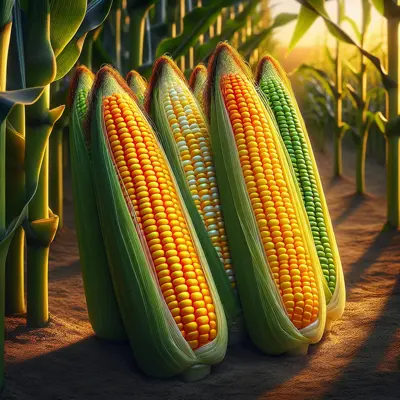
This award-winning hybrid delivers the ultimate sweet corn experience with its incredible sugar content and extended harvest window. Honey Select produces beautiful bicolor ears that stay sweet and tender longer than most varieties, giving you more time to enjoy the perfect harvest. The combination of exceptional sweetness, crisp texture, and reliable performance makes this a top choice for serious corn lovers.
Harvest
79-82d
Days to harvest
Sun
Full sun
Zones
2–11
USDA hardiness
Height
5-8 feet
Planting Timeline
Showing dates for Honey Select in USDA Zone 7
All Zone 7 corn →Zone Map
Click a state to update dates
Honey Select · Zones 2–11
Growing Details
Succession Planting
Direct sow Honey Select every 14-18 days starting around April 15 in zone 7, and keep going through mid-June — three plantings is usually the practical limit before summer heat starts affecting pollination and kernel fill. The UGA Vegetable Garden Calendar recommends a third corn planting in May, which fits that cadence well. Each block needs at least 4 rows wide (not long single rows) to ensure adequate wind pollination, so plan your bed layout before you start staggering dates.
Stop sowing by June 15. At 79-82 days to harvest, a mid-June sowing puts you at early September — about as late as you want to push it. Corn that tassels when daytime highs are consistently above 95°F runs into heat stress during pollination; silk and pollen shed can fall out of sync, and you end up with poorly filled ears. Early-planted blocks also catch lower earworm pressure, which makes that first April sowing worth prioritizing.
Complete Growing Guide
This bicolor hybrid's extended harvest window is its signature trait, but it demands consistent soil moisture from pollination through maturity to prevent premature kernel starch conversion and loss of sweetness. Plant in full sun with well-draining, fertile soil enriched with compost; Honey Select performs best when soil temperatures reach 65°F and nighttime lows stay above 50°F, so resist early planting despite its 79-82 day maturity. While generally robust, this variety shows moderate susceptibility to corn earworm and fall armyworm—scout regularly and consider protective row covers until tasseling. The extended sugar retention means ears maintain peak tenderness for 7-10 days after silking, but harvest promptly once kernels milk, as delayed picking causes sugar conversion to starch faster than other varieties. Space plants 8-12 inches apart in rows 30-36 inches wide to ensure adequate air circulation and reduce disease pressure.
Light: Full sun (6 or more hours of direct sunlight a day). Soil: Clay, High Organic Matter, Loam (Silt). Soil pH: Acid (<6.0), Neutral (6.0-8.0). Drainage: Good Drainage. Height: 5 ft. 0 in. - 8 ft. 0 in.. Spread: 1 ft. 0 in. - 2 ft. 0 in.. Spacing: 12 inches-3 feet. Growth rate: Rapid. Maintenance: Medium. Propagation: Seed. Regions: Coastal, Mountains, Piedmont.
Harvesting
Harvest Honey Select when silks turn dark brown and ears feel full and firm to the touch, with kernels that yield slightly to thumb pressure without bursting. The bicolor kernels should display a creamy yellow base with deeper gold tips, indicating peak sugar conversion. Unlike single-harvest varieties, Honey Select's extended maturity window allows for successive picking over two to three weeks as ears reach full size. For optimal sweetness, harvest in early morning before heat builds, as sugars are most concentrated after the cool night. Check ears every two to three days once silks begin browning, and pick promptly when conditions align to capture the honey-like flavor and crisp texture this variety is bred to deliver.
Color: Gold/Yellow. Type: Caryopsis. Length: > 3 inches. Width: 1-3 inches.
Garden value: Edible, Showy
Harvest time: Fall
Edibility: Edibile
Storage & Preservation
Use Honey Select corn within 2-3 days of harvest for peak sweetness, though this variety retains sugar content better than most. Store unhusked ears in the refrigerator at 32-35°F with high humidity — wrap in damp paper towels and place in perforated plastic bags. Never store at room temperature, as corn converts sugar to starch rapidly.
For freezing, blanch whole kernels for 4 minutes or whole small ears for 7-8 minutes, then plunge in ice water. Package in freezer bags, removing as much air as possible. Frozen corn maintains quality for 8-12 months. For canning, use a pressure canner only — corn is a low-acid food requiring 100 minutes at 11 PSI for pints. The honey-like sweetness of this variety makes it excellent for corn relish and pickled corn salad preparations.
History & Origin
Documentation on the specific origin of Honey Select corn is limited in publicly available sources. The variety appears to have emerged from modern hybrid breeding programs focused on enhancing sweetness and kernel tenderness in bicolor corn during the late 20th century, likely developed by a major seed company, though the exact breeder and introduction year remain unclear. Its development reflects broader industry trends toward su (super-sweet) and se (sugar-enhanced) gene selection that gained prominence in the 1980s and 1990s. The variety's award recognition suggests commercial introduction by an established seed house, but definitive documentation of its parentage, breeding lineage, or inaugural release date is not readily accessible in horticultural records.
Origin: Mexico
Advantages
- +Exceptional sweetness with honey-like flavor makes Honey Select uniquely delicious
- +Beautiful bicolor ears stay sweet and tender significantly longer than competitors
- +Award-winning hybrid offers reliable performance with moderate growing difficulty
- +Extended harvest window provides more flexibility for picking perfect ears
- +Crisp, juicy texture delivers superior eating quality for fresh consumption
Considerations
- -Vulnerable to multiple pests including corn earworm and fall armyworm
- -Susceptible to three serious diseases: gray leaf spot, rust, and blight
- -Medium-long maturity of 79-82 days requires patience in shorter seasons
Companion Plants
Bush beans are Honey Select's most productive neighbor. They fix atmospheric nitrogen directly into the soil, and corn burns through nitrogen fast — that demand spikes hard from germination to tassel. Summer squash fills in at ground level, shading out weeds and slowing soil moisture loss between waterings. It's the old Three Sisters layout stripped down to two, and in practice it works. Marigolds (Tagetes patula specifically) and nasturtiums draw in parasitic wasps that prey on earworm and armyworm larvae — and in zone 7 Georgia, where corn earworm pressure runs high from June through August, having that insect habitat within 10-15 feet of your corn block is worth more than it sounds.
Keep Black Walnut at least 50-60 feet away — the juglone leaching from its roots stunts corn. Tomatoes look like a fine pairing on paper, but Helicoverpa zea uses both as hosts, so planting them side by side just gives the moth two adjacent feeding stations. Brassicas compete hard for phosphorus and nitrogen in the same root zone, and they pull in cabbage loopers and imported cabbageworms you don't want anywhere near your corn rows. NC State Extension also flags that Honey Select, as a Triplesweet variety, needs at least 400 feet of isolation from field corn or popcorn — cross-pollination degrades the sugar profile before you ever pick an ear.
Plant Together
Bush Beans
Fix nitrogen in soil that corn can utilize, while corn provides natural support structure
Summer Squash
Large leaves suppress weeds and retain soil moisture, completes the Three Sisters planting
Nasturtiums
Trap crop for cucumber beetles and aphids, repels corn earworm moths
Marigolds
Repel corn earworms, aphids, and nematodes with their strong scent
Sunflowers
Attract beneficial insects and birds that eat corn pests, similar growing requirements
Radishes
Break up compacted soil with taproots, mature quickly before corn needs full space
Sweet Alyssum
Ground cover that attracts beneficial insects like lacewings and parasitic wasps
Dill
Attracts beneficial insects that prey on corn borers and aphids
Keep Apart
Black Walnut
Releases juglone toxin that severely stunts corn growth and development
Tomatoes
Both are heavy nitrogen feeders creating competition, shared susceptibility to corn earworm
Brassicas
Cabbage family plants can stunt corn growth through root competition and allelopathic compounds
Nutrition Facts
Per 100g serving. % Daily Value based on 2,000 calorie diet. Source: USDA FoodData Central (FDC #168538)
Pests & Disease Resistance
Resistance
Excellent resistance to Stewart's wilt and common rust. Good tolerance to northern corn leaf blight.
Common Pests
Corn earworm, fall armyworm, European corn borer, cucumber beetles
Diseases
Gray leaf spot, common rust, northern corn leaf blight
Troubleshooting Honey Select
What you'll see, why it happens, and what to do about it.
Silks turn brown and kernels at the tip of the ear are eaten out or riddled with frass, discovered at harvest
Likely Causes
- Corn earworm (Helicoverpa zea) — larvae enter through the silk channel and feed downward toward the tip
- Fall armyworm (Spodoptera frugiperda) — similar damage, often more aggressive later in the season
What to Do
- 1.Apply a few drops of vegetable oil mixed with Bt (Bacillus thuringiensis) directly into the silk channel 3-5 days after silks emerge — repeat every 5-7 days through silk brown-down
- 2.Plant early (late April in zone 7) to get ahead of peak earworm pressure, which builds as the season heats up
- 3.At harvest, snap off the damaged tip — the rest of the ear is usually fine
Tan rectangular lesions running along leaf veins, starting on lower leaves and moving upward around tasseling time
Likely Causes
- Northern corn leaf blight (Exserohilum turcicum) — favored by warm nights and heavy dew, common in humid summers
- Gray leaf spot (Cercospora zeae-maydis) — nearly identical rectangular lesions; hard to tell apart without a lab, and the management is the same either way
What to Do
- 1.Stick to 30-36 inch row spacing — crowded blocks hold moisture longer and both pathogens thrive in that wet microclimate
- 2.Strip and trash (not compost) the worst lower leaves once you spot early lesions
- 3.Remove or till under stalks after harvest, since both pathogens overwinter in residue; rotate corn out of the same bed for at least 2 seasons
Small circular to oval pustules — orangey-red on the upper leaf surface, paler tan underneath — spreading fast in mid-summer
Likely Causes
- Common rust (Puccinia sorghi) — wind-borne spores spread rapidly in warm, humid conditions; NC State Extension lists this as a standard sweet corn disease concern in the Southeast
What to Do
- 1.Light rust on a plant past day 60 with ears already filling rarely tanks yield — check the ear before reaching for a sprayer
- 2.If caught early on young plants, apply a copper-based fungicide every 7-10 days to slow spread
- 3.Honey Select has no rust resistance bred in, so note this bed for next season and look at trial data for tolerant Triplesweet alternatives
Frequently Asked Questions
How long does Honey Select corn take to grow?▼
Can you grow Honey Select corn in containers?▼
What does Honey Select corn taste like?▼
When should I plant Honey Select corn?▼
Is Honey Select good for beginners?▼
How do I know when Honey Select corn is ready to harvest?▼
Zone-by-Zone Planting Calendar
| Zone | Indoor Start | Transplant | Direct Sow | Harvest |
|---|---|---|---|---|
| Zone 1 | — | — | July – August | October – August |
| Zone 2 | — | — | June – August | October – September |
| Zone 11 | — | — | January – March | May – June |
| Zone 12 | — | — | January – March | May – June |
| Zone 13 | — | — | January – March | May – June |
| Zone 3 | — | — | June – July | September – October |
| Zone 4 | — | — | June – July | September – October |
| Zone 5 | — | — | May – June | September – October |
| Zone 6 | — | — | May – June | August – October |
| Zone 7 | — | — | April – June | August – September |
| Zone 8 | — | — | April – May | July – September |
| Zone 9 | — | — | March – April | June – August |
| Zone 10 | — | — | February – April | June – July |
Growing Guides from Wind River Greens
Sources & References
External authority sources used in compiling this guide.
See the Methodology page for how this data is sourced, what's AI-assisted, and known limitations.