Mirai
Zea mays 'Mirai'
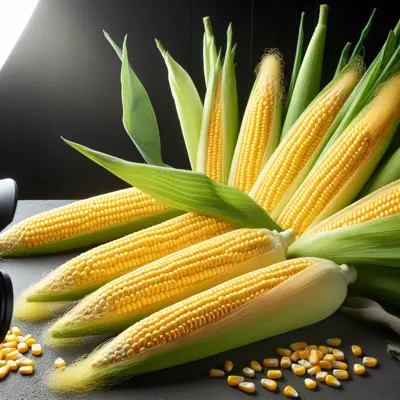
A revolutionary yellow sweet corn hybrid that represents the cutting edge of corn breeding, combining incredible tenderness with sweetness that intensifies rather than diminishes after harvest. Mirai produces beautiful golden ears with exceptional kernel quality and extended harvest window, staying tender and sweet longer than traditional varieties. This Japanese-developed variety has quickly gained popularity among discerning gardeners who want the absolute best in sweet corn technology and flavor.
Harvest
82-85d
Days to harvest
Sun
Full sun
Zones
2–11
USDA hardiness
Height
5-8 feet
Planting Timeline
Showing dates for Mirai in USDA Zone 7
All Zone 7 corn →Zone Map
Click a state to update dates
Mirai · Zones 2–11
Growing Details
Succession Planting
Mirai runs 82–85 days from direct sow, which doesn't leave room for many rounds — but two solid successions are realistic in zone 7. Get your first block in when soil temps reach 60°F, typically early to mid-April. Follow with a second sowing 3 weeks later. The UGA Vegetable Garden Calendar recommends a third planting in May, which can work if you count back 85 days from your first expected frost — mid-October across most of zone 7 — and the math still clears.
Stop sowing by mid-June. Corn that tassels in the hottest stretch of August, when daytime highs push above 95°F, sets kernels poorly — the pollen desiccates before it can do its job. Also, stagger blocks by at least 3 weeks or 300 feet; plantings too close in time will shed pollen together and cross-pollinate, which degrades the sugary shrunken-2 trait that makes Mirai worth growing in the first place.
Complete Growing Guide
Mirai's extended harvest window requires staggered planting every two weeks rather than a single sowing to maximize your sweet period, since this variety's peak tenderness window lasts longer than traditional corn but still demands attention to picking at optimal maturity. Plant in full sun with rich, well-draining soil and consistent moisture—Mirai's superior kernel quality depends on steady watering without waterlogging. Watch for corn earworm pressure, which targets premium sweet corn varieties aggressively; pre-emptive Bt applications at silk emergence significantly reduce damage. This hybrid shows minimal tendency toward bolting or excessive stretch even in heat, but mature plants reaching 5–8 feet may require staking in windy locations. For best results, harvest ears when silks have just darkened and kernels release a milky liquid when pierced, as this cultivar's sweetness continues developing briefly after picking.
Light: Full sun (6 or more hours of direct sunlight a day). Soil: Clay, High Organic Matter, Loam (Silt). Soil pH: Acid (<6.0), Neutral (6.0-8.0). Drainage: Good Drainage. Height: 5 ft. 0 in. - 8 ft. 0 in.. Spread: 1 ft. 0 in. - 2 ft. 0 in.. Spacing: 12 inches-3 feet. Growth rate: Rapid. Maintenance: Medium. Propagation: Seed. Regions: Coastal, Mountains, Piedmont.
Harvesting
Harvest Mirai ears when the silk turns dark brown and the husk feels full and slightly damp, with kernels that yield gently to thumb pressure and display deep golden color. Unlike traditional varieties, Mirai's peak sweetness actually develops after harvest, so picking at the milk stage rather than waiting for full maturity ensures optimal flavor development. Plan for continuous harvesting over two to three weeks rather than a single picking, as ears mature sequentially up the stalk. The critical timing tip: harvest in early morning when sugars are most concentrated, and use the thumbnail-nick test on a sample ear to confirm milky juice before committing to your full harvest.
Color: Gold/Yellow. Type: Caryopsis. Length: > 3 inches. Width: 1-3 inches.
Garden value: Edible, Showy
Harvest time: Fall
Edibility: Edibile
Storage & Preservation
Store freshly harvested Mirai corn in the refrigerator immediately, keeping husks on to maintain moisture and sweetness. Unlike traditional sweet corn that loses sugar rapidly, Mirai's advanced genetics maintain sweetness for 7-10 days when properly stored at 32-35°F with high humidity.
For freezing, blanch husked ears in boiling water for 4-6 minutes depending on size, then plunge into ice water before cutting kernels from cob. Mirai's tender kernels freeze exceptionally well, maintaining their creamy texture for up to 12 months.
Whole ears can be frozen directly in husks after removing outer leaves—this method preserves Mirai's signature tenderness better than blanching. For canning, use only tested pressure canning recipes due to corn's low acidity. Mirai's natural sweetness intensifies during the canning process, making it ideal for preserving. The variety's exceptional kernel quality also makes it excellent for dehydrating into corn flour or meal.
History & Origin
Mirai is a Japanese-developed sweet corn hybrid that emerged from modern breeding programs focused on enhancing post-harvest sweetness retention—a trait that distinguishes it from traditional sweet corn varieties that begin losing sugar content immediately after harvest. While specific breeder names and exact development dates are not widely documented in readily available sources, the variety represents the output of contemporary Japanese corn breeding expertise, particularly known for innovations in vegetable crop improvement. The cultivar's introduction to Western markets reflects Japan's reputation for precision agriculture and advanced hybrid development. Its rapid adoption among specialty growers suggests deliberate breeding for superior kernel tenderness and sustained sweetness, though detailed parentage and breeding lineage remain proprietary information typical of commercial hybrid varieties.
Origin: Mexico
Advantages
- +Sweetness intensifies after harvest unlike most sweet corn varieties
- +Exceptional kernel tenderness combined with ultra-sweet flavor profile
- +Extended harvest window means longer peak eating quality period
- +Japanese breeding technology delivers cutting-edge hybrid vigor and reliability
Considerations
- -Vulnerable to Stewart's wilt and multiple leaf blight diseases
- -Moderate difficulty level requires more attentive growing management skills
- -Susceptible to corn earworm and European corn borer damage
Companion Plants
The Three Sisters combination — beans, corn, and squash — holds up for practical reasons. Pole beans fix nitrogen at their roots, which Mirai pulls through fast (plan to side-dress with a balanced fertilizer around day 30 and again at tassel). Squash spreads underneath, shading out weeds and slowing moisture loss from the soil surface. Marigolds, specifically French types (Tagetes patula), are worth a border row — they draw in parasitic wasps and hoverflies that suppress aphid populations, which can build up on corn leaf undersides without much notice. Sunflowers on the north edge pull in those same beneficial insects without shading the corn block.
Tomatoes are the main one to keep out. In our zone 7 Georgia garden, both go in around the same time and will fight hard for the same water and fertility — but the rotation problem is worse than the competition. NC State Extension's disease management guidance specifically flags planting fruit crops back-to-back as undermining long-term soil health, and corn and tomatoes share enough overlapping pest pressure to make it a bad habit. Brassicas attract the corn flea beetle that vectors Stewart's wilt, so don't put them adjacent to a corn block either. Black walnut is a hard stop regardless — juglone leaches from the root zone and will stunt corn planted anywhere near the canopy drip line.
Plant Together
Beans
Fix nitrogen in soil that corn heavily uses, part of Three Sisters planting method
Squash
Large leaves provide ground cover, suppress weeds, and retain soil moisture
Marigolds
Repel corn earworms, aphids, and other harmful insects with natural compounds
Nasturtiums
Act as trap crops for aphids and cucumber beetles, attracting them away from corn
Sunflowers
Attract beneficial insects and can serve as natural trellises for climbing beans
Dill
Attracts beneficial insects like ladybugs and parasitic wasps that control corn pests
Cucumbers
Benefit from corn's tall structure for partial shade and wind protection
Sweet Alyssum
Attracts beneficial insects and provides ground cover without competing for nutrients
Keep Apart
Tomatoes
Both are heavy feeders competing for nutrients, and corn earworms also attack tomatoes
Brassicas
Corn can stunt growth of cabbage family plants through allelopathic effects
Black Walnut
Releases juglone toxin that severely inhibits corn growth and development
Nutrition Facts
Per 100g serving. % Daily Value based on 2,000 calorie diet. Source: USDA FoodData Central (FDC #168538)
Pests & Disease Resistance
Resistance
Excellent resistance to northern corn leaf blight and rust diseases
Common Pests
Corn earworm, European corn borer, corn rootworm, birds
Diseases
Stewart's wilt, gray leaf spot, southern corn leaf blight
Troubleshooting Mirai
What you'll see, why it happens, and what to do about it.
Silks and ear tips show feeding damage — chewed or matted silk, brown frass packed into the ear tip at harvest
Likely Causes
- Corn earworm (Helicoverpa zea) — the same caterpillar the UGA Pest Management calendar lists as 'tomato fruitworm'; moth lays eggs directly on fresh silk
- European corn borer (Ostrinia nubilalis) — larvae enter through the shank or tunnel down the stalk
What to Do
- 1.Apply a few drops of mineral oil to the silk at the tip of each ear 3–5 days after silks emerge — this suffocates young earworm larvae before they get deep
- 2.Check ears at 82 days and harvest promptly; earworm damage compounds the longer the ear stays on the stalk
- 3.For heavy pressure, apply Bt (Bacillus thuringiensis) to the silk zone every 3–4 days while silk is green and fresh, following the Georgia Pest Management Handbook schedule
Pale green to yellow streaking on leaves of young plants, followed by wilting and plant death — symptoms appearing within the first 30 days after emergence
Likely Causes
- Stewart's wilt (Pantoea stewartii) — bacterial disease vectored by the corn flea beetle (Chaetocnema pulicaria); infection risk tracks directly with how mild the previous winter was
- Corn flea beetle feeding alone — tiny rectangular notches chewed into leaves, distinct from disease but often present simultaneously
What to Do
- 1.Scout for corn flea beetles as soon as seedlings emerge; heavy flea beetle pressure in the first 2 weeks is your early warning for Stewart's wilt
- 2.Mirai is not listed as Stewart's wilt-resistant — if you've had wilt problems in a bed before, pull that ground out of corn for at least 2 seasons; NC State Extension recommends a 3-to-4-year rotation sequence for soil-borne disease management
- 3.Don't push planting into cold soil — seedlings in soil below 55°F are slower to outgrow the vulnerable window, and the corn flea beetle is most active when plants are small and struggling
Frequently Asked Questions
How long does Mirai corn take to grow from seed to harvest?▼
Is Mirai corn good for beginners?▼
Can you grow Mirai corn in containers?▼
What does Mirai corn taste like compared to regular sweet corn?▼
When should I plant Mirai corn seeds?▼
Does Mirai corn need to be isolated from other corn varieties?▼
Zone-by-Zone Planting Calendar
| Zone | Indoor Start | Transplant | Direct Sow | Harvest |
|---|---|---|---|---|
| Zone 1 | — | — | July – August | October – August |
| Zone 2 | — | — | June – August | October – September |
| Zone 11 | — | — | January – March | May – June |
| Zone 12 | — | — | January – March | May – June |
| Zone 13 | — | — | January – March | May – June |
| Zone 3 | — | — | June – July | September – October |
| Zone 4 | — | — | June – July | September – October |
| Zone 5 | — | — | May – June | September – October |
| Zone 6 | — | — | May – June | August – October |
| Zone 7 | — | — | April – June | August – September |
| Zone 8 | — | — | April – May | July – September |
| Zone 9 | — | — | March – April | June – August |
| Zone 10 | — | — | February – April | June – July |
Growing Guides from Wind River Greens
Sources & References
External authority sources used in compiling this guide.
See the Methodology page for how this data is sourced, what's AI-assisted, and known limitations.