Jubilee
Zea mays 'Jubilee'
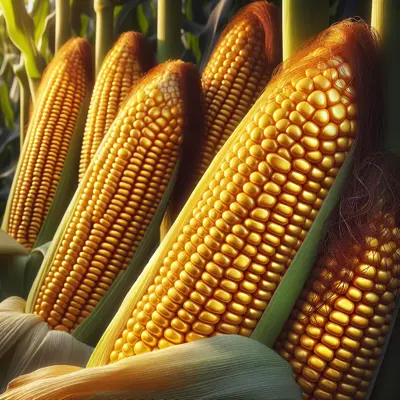
A time-tested yellow sweet corn that has been a garden favorite since the 1960s for its reliable performance and excellent flavor. This variety produces large, well-filled ears with tender, sweet kernels that have just the right balance of sweetness and corn taste. Jubilee is known for its consistent germination and strong disease resistance, making it perfect for both beginners and experienced gardeners.
Harvest
85-90d
Days to harvest
Sun
Full sun
Zones
2–11
USDA hardiness
Height
5-8 feet
Planting Timeline
Showing dates for Jubilee in USDA Zone 7
All Zone 7 corn →Zone Map
Click a state to update dates
Jubilee · Zones 2–11
Growing Details
Succession Planting
Direct sow Jubilee every 14-21 days from your last frost date through early June in zone 7. That usually works out to three plantings: one in early April, one in early May (which the UGA Vegetable Garden Calendar specifically flags as a third planting of corn), and one in early June. Each planting delivers a roughly 1-2 week harvest window, so staggering them gets you fresh ears from late July through September rather than 200 ears ripening the same week.
Stop sowing by mid-June. Jubilee needs 85-90 days, so a June 15 sow pushes silks out in late August when corn earworm moth pressure peaks and heat can interfere with pollination. If you want a late-season planting, get seed in the ground by late May to give yourself a cushion before the average mid-October first frost in zone 7 — tight, but workable.
Complete Growing Guide
Jubilee's 85–90 day maturity makes it ideal for succession planting every two weeks in short-season climates, as it reaches full sweetness before late-summer heat stress triggers kernel toughening. This cultivar thrives in warm soil (minimum 60°F, ideally 70°F+) and benefits from consistent moisture during silking and ear fill—inconsistent watering can reduce kernel tenderness more noticeably in Jubilee than in some modern hybrids. While its disease resistance is genuinely strong, watch for corn earworm damage to developing silks, which can ruin the ear tips; hand-pick or apply targeted Bt spray at silk emergence. Jubilee's relatively modest plant height (5–8 feet) makes it less susceptible to lodging than taller varieties, but staking in windy sites remains wise. For maximum flavor development, harvest when silk is fully brown but kernels still release milky sap when punctured—overmaturity is this variety's only real weakness, dulling its signature tenderness within days.
Light: Full sun (6 or more hours of direct sunlight a day). Soil: Clay, High Organic Matter, Loam (Silt). Soil pH: Acid (<6.0), Neutral (6.0-8.0). Drainage: Good Drainage. Height: 5 ft. 0 in. - 8 ft. 0 in.. Spread: 1 ft. 0 in. - 2 ft. 0 in.. Spacing: 12 inches-3 feet. Growth rate: Rapid. Maintenance: Medium. Propagation: Seed. Regions: Coastal, Mountains, Piedmont.
Harvesting
Jubilee corn reaches peak harvest readiness when the husks turn from green to pale brown and the silks darken to brown or black, typically 20-24 days after pollination. Gently squeeze the ear through the husk—the kernels should feel plump and full without any gaps, and a thumbnail should puncture the kernel with a creamy liquid inside. This variety produces ears in succession rather than all at once, so plan for continuous harvesting over two to three weeks by checking plants every two to three days. For optimal sweetness, pick ears in early morning when sugar content peaks, twisting and pulling firmly downward to detach them cleanly from the stalk.
Color: Gold/Yellow. Type: Caryopsis. Length: > 3 inches. Width: 1-3 inches.
Garden value: Edible, Showy
Harvest time: Fall
Edibility: Edibile
Storage & Preservation
Fresh Jubilee corn loses sweetness rapidly after harvest — use it within 24 hours for peak flavor. Store unhusked ears in the refrigerator at 32-35°F with high humidity to slow sugar conversion to starch. The husks help retain moisture and sweetness.
For freezing, blanch whole ears for 7-11 minutes depending on size, then cool in ice water before cutting kernels from cobs. Jubilee's tender kernels freeze exceptionally well and maintain good texture for up to 12 months.
For canning, Jubilee's sweet flavor concentrates beautifully. Process whole kernel corn in a pressure canner following USDA guidelines — never attempt water bath canning with corn. You can also dehydrate kernels for storage, though this works better for flour corn than sweet varieties like Jubilee.
History & Origin
Jubilee corn emerged during the 1960s as part of the broader expansion of sweet corn varieties by American seed companies seeking to improve home garden yields. While specific breeder attribution and exact introduction year remain undocumented in readily available horticultural records, Jubilee represents the mid-century breeding philosophy emphasizing reliable germination and disease resistance alongside flavor quality. The variety likely descended from earlier yellow dent corn lines developed through conventional breeding techniques, fitting within the era's push toward standardized, regionally adapted cultivars. Its sustained popularity through subsequent decades suggests successful breeding fundamentals, though comprehensive historical documentation of its parentage and originating institution has not been widely preserved in mainstream seed cataloging archives.
Origin: Mexico
Advantages
- +Jubilee's 85-90 day maturity fits most growing seasons perfectly
- +Excellent flavor balance makes Jubilee superior to many modern hybrids
- +Reliable germination and disease resistance reduce beginner gardener failures
- +Large, well-filled ears provide consistent harvests year after year
Considerations
- -Southern corn leaf blight and gray leaf spot require vigilant monitoring
- -Raccoons find Jubilee ears particularly attractive, demanding protective fencing
- -Corn earworm and European corn borer pressure necessitates regular pest management
Companion Plants
The Three Sisters combination — corn, beans, and squash — holds up for mechanical reasons worth understanding. Bush beans or pole beans fix atmospheric nitrogen, which Jubilee burns through fast as a heavy feeder. Even a modest nitrogen contribution from beans planted 6-8 inches from the stalks reduces how often you need to side-dress with fertilizer. Winter squash sprawls underneath, shading the soil enough to suppress weeds and hold moisture during dry spells that tank sweet corn quality right when the ears are filling out. Pole beans will also climb the corn stalks once the corn clears 12-15 inches, so you're running two crops up the same vertical space.
Marigolds and nasturtiums earn their spot around the perimeter of the block, though not for the same reasons. Marigolds won't stop corn earworm — that pest flies in regardless — but they pull in predatory insects that keep aphid populations from exploding on young plants. Nasturtiums work differently: they attract aphids onto themselves and away from surrounding crops. Treat them as a sacrificial trap crop. Don't expect a force field; expect a buffer.
Tomatoes are the planting mistake most worth avoiding near corn. They draw from the same water and nutrient pool, and crowding the two together cuts airflow enough to make gray leaf spot (Cercospora zeae-maydis) worse in both crops simultaneously. Fennel is a separate problem — it releases allelopathic compounds from its roots that stunt a wide range of vegetables — so keep it at the far edge of the garden, at least 24 inches away from the corn block and preferably further.
Plant Together
Bush Beans
Fix nitrogen in soil which corn needs for healthy growth
Winter Squash
Large leaves suppress weeds and retain soil moisture around corn stalks
Marigolds
Repel corn earworms, aphids, and other harmful insects
Nasturtiums
Act as trap crop for aphids and cucumber beetles, attract beneficial insects
Pole Beans
Climb corn stalks for support while fixing nitrogen in the soil
Dill
Attracts beneficial insects like lacewings that prey on corn pests
Sunflowers
Attract beneficial insects and birds that eat corn pests
Radishes
Help break up compacted soil and deter corn borers when planted nearby
Keep Apart
Black Walnut
Releases juglone toxin that severely stunts corn growth and development
Tomatoes
Both attract corn earworms and compete for similar nutrients
Fennel
Allelopathic properties inhibit corn germination and growth
Nutrition Facts
Per 100g serving. % Daily Value based on 2,000 calorie diet. Source: USDA FoodData Central (FDC #168538)
Pests & Disease Resistance
Resistance
Good resistance to bacterial wilt and northern corn leaf blight
Common Pests
Corn earworm, European corn borer, corn rootworm, raccoons
Diseases
Southern corn leaf blight, common rust, gray leaf spot
Troubleshooting Jubilee
What you'll see, why it happens, and what to do about it.
Silks and ear tips chewed, brown frass visible at the tip of the husk around day 75-85
Likely Causes
- Corn earworm (Helicoverpa zea) — moth lays eggs directly on the silks, larvae feed down into the ear
- European corn borer (Ostrinia nubilalis) — also enters through the silk channel or bores into the stalk
What to Do
- 1.Apply a few drops of mineral oil to the silks 3-5 days after they emerge — this suffocates newly hatched larvae before they reach the ear
- 2.Follow the Georgia Pest Management Handbook spray schedule for corn earworm if pressure is heavy; timing to silk emergence is critical
- 3.At harvest, cut off the damaged tip — earworm damage is cosmetic and the rest of the ear is usually fine
Tan to brown lesions with dark borders spreading across leaves in humid weather, plants looking scorched by midsummer
Likely Causes
- Southern corn leaf blight (Bipolaris maydis) — favored by warm nights above 68°F and prolonged leaf wetness
- Gray leaf spot (Cercospora zeae-maydis) — rectangular gray-tan lesions, also humidity-driven
What to Do
- 1.Keep spacing at the wider end — 12 inches between plants, 30-36 inches between rows — to get air moving through the block
- 2.Rotate this bed out of corn for at least 2-3 seasons; NC State Extension's IPM guidance notes that continuous corn in the same spot allows pathogen load to build in crop debris
- 3.Strip and trash heavily infected lower leaves — don't put them in the compost
Orange-red pustules on leaf surfaces, usually appearing in mid to late summer
Likely Causes
- Common rust (Puccinia sorghi) — spores spread by wind, worse in cool nights between 60-70°F with heavy dew
- Southern rust (Puccinia polysora) — similar pustules but more orange and concentrated on the upper leaf surface; covered in NC State's CDIN-002
What to Do
- 1.Light rust on a few leaves won't kill your yield — hold off if the ears are already sizing up
- 2.If infection is heavy before tasseling, a labeled fungicide (chlorothalonil or azoxystrobin) applied at first sign can slow progression
- 3.A mid-April direct sow in zone 7 puts Jubilee's 85-90 day window finishing in late July, ahead of the worst late-summer rust pressure
Whole ears stripped or stalks knocked flat overnight
Likely Causes
- Raccoons — they can smell ripe corn from a distance and are strong enough to pull stalks to the ground
- Deer — will strip ears clean and browse the upper leaves
What to Do
- 1.A single-strand electric fence set at 6 inches off the ground is the most reliable deterrent for raccoons — run it starting a week before expected harvest
- 2.If electric fencing isn't an option, harvest the moment silks turn brown and dry — don't let ripe ears hang overnight
- 3.Plan your fencing around the entire block rather than individual rows; block planting of at least 4 rows is already what you need for good pollination, so the perimeter is easy to define
Frequently Asked Questions
How long does Jubilee corn take to grow from seed to harvest?▼
Is Jubilee corn good for beginners?▼
Can you grow Jubilee corn in containers?▼
What does Jubilee corn taste like compared to supersweet varieties?▼
When should I plant Jubilee corn in my area?▼
How many ears does each Jubilee corn plant produce?▼
Zone-by-Zone Planting Calendar
| Zone | Indoor Start | Transplant | Direct Sow | Harvest |
|---|---|---|---|---|
| Zone 3 | — | — | June – July | September – October |
| Zone 4 | — | — | June – July | September – October |
| Zone 5 | — | — | May – June | September – October |
| Zone 6 | — | — | May – June | August – October |
| Zone 7 | — | — | April – June | August – September |
| Zone 8 | — | — | April – May | July – September |
| Zone 9 | — | — | March – April | June – August |
| Zone 10 | — | — | February – April | June – July |
| Zone 1 | — | — | July – August | October – August |
| Zone 2 | — | — | June – August | October – September |
| Zone 11 | — | — | January – March | May – June |
| Zone 12 | — | — | January – March | May – June |
| Zone 13 | — | — | January – March | May – June |
Growing Guides from Wind River Greens
Sources & References
External authority sources used in compiling this guide.
See the Methodology page for how this data is sourced, what's AI-assisted, and known limitations.