Incredible
Zea mays var. saccharata 'Incredible'
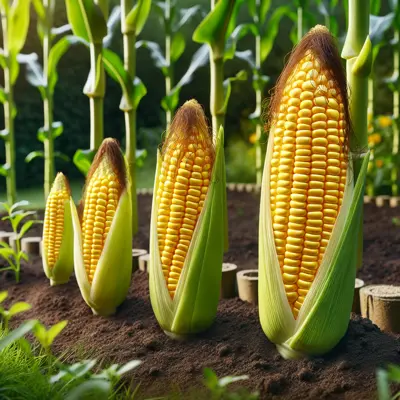
Living up to its name, Incredible is a supersweet hybrid that produces consistently large ears packed with exceptionally sweet, tender kernels. This reliable performer offers excellent disease resistance and strong stalks that resist lodging, making it perfect for areas with challenging weather. The sugar content remains high even days after harvest, giving home gardeners more flexibility in their harvest timing.
Harvest
85-90d
Days to harvest
Sun
Full sun
Zones
2–11
USDA hardiness
Height
5-8 feet
Planting Timeline
Showing dates for Incredible in USDA Zone 7
All Zone 7 corn →Zone Map
Click a state to update dates
Incredible · Zones 2–11
Growing Details
Succession Planting
Direct sow Incredible every 14-18 days starting when soil temperatures reach 60°F — check the soil with a thermometer, not the calendar. Each block needs at least 4 rows to pollinate well, so keep succession plantings in compact blocks rather than scattering single rows. Stop sowing by late June; corn started after that will tassel and silk during the hottest stretch of summer, and at 85-90 days to harvest, late-June sowings push right against the first frost window.
Plan for 2-3 blocks total across the season. Don't shrink later blocks to save space — undersized plantings pollinate poorly and produce ears with gaps in the kernel rows.
Complete Growing Guide
Plant Incredible in full sun with rich, well-draining soil amended with compost, spacing seeds 8-10 inches apart in rows 30-36 inches wide once soil reaches 60°F. This supersweet hybrid's extended sugar retention—a key advantage over standard varieties—means you can harvest over a longer window, but sow in succession every two weeks for continuous production rather than single plantings. The variety's strong stalks resist lodging in wind-prone areas, though it still benefits from support in exposed sites. Watch for corn earworm and fall armyworm, which target supersweets particularly; apply Bt (Bacillus thuringiensis) preventatively around tassel emergence. At 85-90 days, Incredible reaches maturity quickly, so mark planting dates carefully for staggered harvests. One essential practice: isolate Incredible at least 250 feet from field corn or other supersweet varieties to prevent cross-pollination, which will ruin the exceptional sweetness.
Light: Full sun (6 or more hours of direct sunlight a day). Soil: Clay, High Organic Matter, Loam (Silt). Soil pH: Acid (<6.0), Neutral (6.0-8.0). Drainage: Good Drainage. Height: 5 ft. 0 in. - 8 ft. 0 in.. Spread: 1 ft. 0 in. - 2 ft. 0 in.. Spacing: 12 inches-3 feet. Growth rate: Rapid. Maintenance: Medium. Propagation: Seed. Regions: Coastal, Mountains, Piedmont.
Harvesting
Harvest Incredible ears when the husks turn dark green and feel slightly damp, with silk browning to chocolate color and kernels showing the characteristic dimple at the crown that marks peak sugar content. Ears reach full size around 85–90 days but continue producing throughout the season, allowing for continuous picking rather than a single harvest window. Check ears every two to three days once silks brown, as Incredible's exceptional sugar retention means you can safely harvest over an extended period without losing sweetness, giving you flexibility to pick ears as needed for meals rather than all at once.
Color: Gold/Yellow. Type: Caryopsis. Length: > 3 inches. Width: 1-3 inches.
Garden value: Edible, Showy
Harvest time: Fall
Edibility: Edibile
Storage & Preservation
Store fresh Incredible corn unhusked in the refrigerator immediately after harvest, where it maintains quality for 5-7 days – longer than most corn varieties due to its supersweet genetics. Keep husks on and place ears in perforated plastic bags to maintain moisture while allowing air circulation. For best flavor, avoid storing at room temperature, as even this variety will lose some sweetness over time.
For freezing, blanch husked ears in boiling water for 4-6 minutes depending on size, then plunge into ice water before cutting kernels from cob. Incredible freezes exceptionally well, maintaining its sweet flavor and tender texture for up to 12 months. Alternatively, freeze whole blanched ears wrapped individually in plastic wrap for grilling later.
Dehydrating kernels creates excellent additions to soups and stews – slice kernels from cobs and dry at 125°F until brittle. The variety's high sugar content makes it particularly suitable for corn relish and pickled corn recipes, where the sweetness balances vinegar and spices beautifully.
History & Origin
Documentation of Incredible's specific breeder, release year, and origin point is limited in publicly available sources. However, as a supersweet hybrid corn variety, Incredible belongs to the shrunken gene (sh2) breeding lineage that revolutionized sweet corn development in the late twentieth century. The variety likely emerged from commercial seed company breeding programs, possibly during the 1990s-2000s expansion of supersweet cultivar development. Like many modern supersweet hybrids, Incredible's parentage traces to decades of selection for enhanced sugar content, kernel tenderness, and disease resistance within established corn breeding programs, though the specific institutional or company origins remain undocumented in accessible records.
Origin: Mexico
Advantages
- +Exceptional sweetness and tenderness makes Incredible outstanding for fresh eating.
- +Extended harvest window allows flexibility since sugar content stays high days after picking.
- +Strong stalks effectively resist lodging in high-wind or heavy-rain conditions.
- +Excellent disease resistance reduces fungal problems like smut and gray leaf spot.
- +Mid-season maturity at 85-90 days fits most growing regions well.
Considerations
- -Vulnerable to corn earworm and European corn borer requiring vigilant pest monitoring.
- -Wildlife pressure from raccoons and birds necessitates protective barriers or netting.
- -Supersweet varieties often struggle in cool soil and short-season climates.
- -Disease susceptibility to southern rust increases in humid or wet growing conditions.
Companion Plants
The Three Sisters planting — corn, beans, and squash together — holds up for real reasons. Beans fix atmospheric nitrogen through root nodules and feed the corn without a mid-season side-dress. Squash spreads at ground level, shading the soil enough to cut moisture loss and crowd out weeds. Corn needs consistent water across its full 85-90 days, so anything that slows evaporation is doing useful work. Plant beans about a week after the corn so the stalks have a head start before they're drafted as a trellis.
Nasturtiums and marigolds earn their spot by drawing in aphid predators — parasitic wasps and hoverflies that also knock back other soft-bodied pests on the corn. Marigolds with extended plantings are also known to suppress root-knot nematode populations in the top few inches of soil, which matters in any bed that's previously grown cucumbers or struggled with nematode pressure. Dill and sweet alyssum do similar work — both pull in beneficial insects, and neither competes meaningfully with corn's root system at the depths corn actually feeds.
Tomatoes are a bad pairing not because of chemical interference but because corn earworm (Helicoverpa zea) hits both crops hard, and growing them side by side concentrates the pest population in one spot while both plants drain the same heavy load of nitrogen and water. Fennel is allelopathic to most vegetables and slows growth in neighboring plants through root exudates — it belongs in its own isolated patch. Black walnut produces juglone, which moves through the soil and can stunt corn planted within the drip line; give any walnut tree at least 50-60 feet of clearance.
Plant Together
Beans
Fix nitrogen in soil that corn can utilize, part of traditional Three Sisters planting
Squash
Large leaves provide ground cover and moisture retention, completes Three Sisters guild
Nasturtiums
Trap crop for cucumber beetles and squash bugs, deters corn earworm
Marigolds
Repel corn earworm, aphids, and nematodes with strong scent
Sunflowers
Attract beneficial insects and provide windbreak protection for corn
Dill
Attracts beneficial wasps that parasitize corn borers and other pests
Sweet Alyssum
Attracts hover flies and other beneficial insects that control aphids
Radishes
Break up compacted soil and may deter corn borers when interplanted
Keep Apart
Tomatoes
Both are heavy nitrogen feeders creating competition, tomato hornworms may spread to corn
Black Walnut Trees
Release juglone toxin that inhibits corn growth and development
Fennel
Allelopathic compounds inhibit corn germination and growth
Nutrition Facts
Per 100g serving. % Daily Value based on 2,000 calorie diet. Source: USDA FoodData Central (FDC #168538)
Pests & Disease Resistance
Resistance
Excellent resistance to northern corn leaf blight, rust, and bacterial wilt
Common Pests
Corn earworm, European corn borer, birds, raccoons
Diseases
Common smut, gray leaf spot, southern rust
Troubleshooting Incredible
What you'll see, why it happens, and what to do about it.
Silks turning brown and kernels chewed or missing at the tip of the ear, discovered at harvest
Likely Causes
- Corn earworm (Helicoverpa zea) — moths lay eggs on fresh silks, larvae tunnel straight down into the ear
- European corn borer (Ostrinia nubilalis) — also enters through the silk channel or bores directly through the husk
What to Do
- 1.Apply a few drops of mineral oil with a dropper to the silk channel 3-5 days after silks emerge — this suffocates newly hatched larvae before they reach the kernels
- 2.Clip and check silks every 2-3 days during pollination; if earworm pressure is high, Bt (Bacillus thuringiensis) sprayed directly on silks at silk emergence gives decent knockdown
- 3.Accept that some tip damage is almost unavoidable — just break off the top inch at shuck and move on
A swollen, gray-to-black powdery gall erupting from the ear, stalk, or tassel
Likely Causes
- Common smut (Ustilago maydis) — a soil- and air-borne fungus that invades through wounds or natural openings, especially in hot, dry weather followed by rain
- Mechanical wounding from cultivation or hail that gives the fungus an entry point
What to Do
- 1.Pull galls before they rupture and turn powdery black — bag them immediately and put them in the trash, not the compost; once spores spread, they persist in that soil for years
- 2.Don't wound stalks with a hoe or tiller any closer than 6 inches to the plant base
- 3.Rotate corn out of that bed for at least 2 seasons; smut spore load doesn't drop overnight, but reducing it each year makes a difference
Tan to brown rectangular lesions running parallel to leaf veins on mid and upper leaves, appearing mid-season
Likely Causes
- Gray leaf spot (Cercospora zeae-maydis) — favored by high humidity, warm nights, and poor airflow; most common in dense plantings
- Southern rust (Puccinia polysora) — produces smaller, orange-to-tan pustules, typically showing up later in the season; NC State Extension's CDIN-002 notes it's most aggressive in warm, humid conditions
What to Do
- 1.Space plants at least 8-10 inches apart in blocks rather than single rows — blocks improve pollination AND airflow
- 2.Avoid overhead irrigation in the evening; water at the base in the morning so foliage dries quickly
- 3.If southern rust covers more than 50% of leaf area before silking, a fungicide application (propiconazole or azoxystrobin) at silking can protect yield — check your local extension office on labeled rates
Frequently Asked Questions
How long does Incredible corn take to grow from seed to harvest?▼
Can you grow Incredible corn in containers or pots?▼
Is Incredible corn good for beginners?▼
What does Incredible corn taste like compared to other varieties?▼
When should I plant Incredible corn in my area?▼
How do I protect Incredible corn from raccoons and other pests?▼
Zone-by-Zone Planting Calendar
| Zone | Indoor Start | Transplant | Direct Sow | Harvest |
|---|---|---|---|---|
| Zone 3 | — | — | June – July | September – October |
| Zone 4 | — | — | June – July | September – October |
| Zone 5 | — | — | May – June | September – October |
| Zone 6 | — | — | May – June | August – October |
| Zone 7 | — | — | April – June | August – September |
| Zone 8 | — | — | April – May | July – September |
| Zone 9 | — | — | March – April | June – August |
| Zone 10 | — | — | February – April | June – July |
| Zone 1 | — | — | July – August | October – August |
| Zone 2 | — | — | June – August | October – September |
| Zone 11 | — | — | January – March | May – June |
| Zone 12 | — | — | January – March | May – June |
| Zone 13 | — | — | January – March | May – June |
Growing Guides from Wind River Greens
Sources & References
External authority sources used in compiling this guide.
See the Methodology page for how this data is sourced, what's AI-assisted, and known limitations.