Honey 'N Pearl
Zea mays 'Honey 'N Pearl'
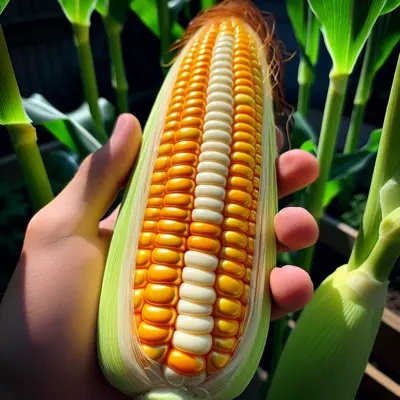
A premium triplesweet hybrid that delivers extraordinary sweetness and crisp texture that holds for days after harvest. This bicolor variety produces consistently large ears with tender kernels that convert sugars slowly, maintaining their incredible taste longer than standard varieties. The perfect choice for gardeners who want restaurant-quality corn from their backyard.
Harvest
79-84d
Days to harvest
Sun
Full sun
Zones
2–11
USDA hardiness
Height
5-8 feet
Planting Timeline
Showing dates for Honey 'N Pearl in USDA Zone 7
All Zone 7 corn →Zone Map
Click a state to update dates
Honey 'N Pearl · Zones 2–11
Growing Details
Succession Planting
Direct sow Honey 'N Pearl in zone 7 starting around April 1, once soil temps hold above 60°F, then drop a second sowing roughly 3 weeks later — around April 22. A third planting in mid-May, which the UGA Vegetable Garden Calendar specifically recommends for successive corn plantings, stretches your harvest across August and into September. Stop by early June. Ears from a late-June sowing will silk in August heat and land squarely in peak corn earworm migration, and pollination turns unreliable above 95°F anyway.
Each planting needs to be a block at least 4 rows wide — corn is wind-pollinated, and a single long row is why you end up with those rows of missing kernels at harvest. Four rows by 10 feet is a workable minimum. Sow 1 inch deep, space 8–12 inches apart, and if two seedlings come up in the same spot, pull the weaker one rather than letting them compete.
Complete Growing Guide
This triplesweet hybrid's slow sugar conversion is its greatest asset and its primary consideration: plant "Honey 'N Pearl" in succession every two weeks if you want continuous harvests, since the kernels maintain peak sweetness for only a narrow window rather than deteriorating quickly like standard varieties. Choose a location with full sun and well-draining soil rich in organic matter, as the large ears demand consistent moisture without waterlogging. Because this cultivar produces taller stalks (5-8 feet), provide sturdy support or plant in areas protected from strong winds to prevent lodging. Watch for corn earworm, which targets premium sweet varieties more aggressively than field corn—scout regularly and consider pheromone traps as preventive measures. A practical tip: harvest in early morning when kernels are firmest, and refrigerate immediately; the slow sugar conversion means these ears actually improve slightly over 24-48 hours in cold storage, unlike traditional corn varieties.
Light: Full sun (6 or more hours of direct sunlight a day). Soil: Clay, High Organic Matter, Loam (Silt). Soil pH: Acid (<6.0), Neutral (6.0-8.0). Drainage: Good Drainage. Height: 5 ft. 0 in. - 8 ft. 0 in.. Spread: 1 ft. 0 in. - 2 ft. 0 in.. Spacing: 12 inches-3 feet. Growth rate: Rapid. Maintenance: Medium. Propagation: Seed. Regions: Coastal, Mountains, Piedmont.
Harvesting
Harvest "Honey 'N Pearl" when silks turn dark brown and kernels display a milky fluid when punctured, typically 79-84 days after planting. The ears should feel full and firm from top to bottom, with kernels that resist the thumbnail test. This bicolor variety produces multiple ears per stalk, allowing for staggered harvesting over several weeks rather than a single picking. For peak sweetness, pick in early morning after dew dries but before heat builds, as the slow sugar conversion means even slightly immature ears retain excellent flavor. Twist ears downward sharply to detach cleanly from the stalk, being careful not to damage the plant for subsequent harvests.
Color: Gold/Yellow. Type: Caryopsis. Length: > 3 inches. Width: 1-3 inches.
Garden value: Edible, Showy
Harvest time: Fall
Edibility: Edibile
Storage & Preservation
Use Honey 'N Pearl within 24 hours of harvest for peak sweetness, though this variety holds its quality better than most. Store unhusked ears in the refrigerator at 32-35°F with high humidity—wrap in damp paper towels and place in perforated plastic bags. Properly stored, it maintains good eating quality for 5-7 days.
For freezing, blanch whole kernels for 4 minutes or cut corn for 2 minutes, then cool immediately in ice water. Honey 'N Pearl's tender kernels freeze exceptionally well and retain their bicolor appearance. You can also freeze whole ears after blanching for 7-11 minutes depending on size.
This variety excels for canning using a pressure canner—the firm kernels hold their shape well. For unique preservation, try making corn relish or pickled corn salad, where the bicolor appearance creates attractive presentations. Dehydrating works well too; blanch briefly, cut kernels, and dry until leathery for long-term storage.
History & Origin
Honey 'N Pearl represents a modern advancement in triplesweet corn breeding, developed within the commercial seed industry's push toward extended sugar retention in sweet corn hybrids. While specific breeder attribution and introduction year are not well documented in readily available sources, this variety exemplifies the triplesweet category that emerged in the late 20th century through breeding programs focused on combining multiple sweetness genes—typically su, se, and sh2 alleles—to achieve both intense flavor and slower sugar conversion. The variety's development likely traces to major seed companies' research into bicolor corn, capitalizing on consumer demand for premium, long-lasting sweet corn suitable for home gardeners seeking commercial-quality produce.
Origin: Mexico
Advantages
- +Triplesweet genetics deliver exceptional sweetness that surpasses standard corn varieties.
- +Large, consistent bicolor ears provide impressive yields for home gardeners.
- +Kernels maintain crisp texture and flavor for days after harvest.
- +Sugar-to-starch conversion happens slowly, preserving taste quality longer than competitors.
- +Easy to grow with straightforward cultivation requirements for beginners.
Considerations
- -Susceptible to multiple pest pressures including corn earworm and fall armyworm.
- -Vulnerable to Stewart's wilt and gray leaf spot fungal diseases.
- -Longer maturation window of 79-84 days requires extended growing season.
- -Premium genetics may command higher seed costs than standard corn varieties.
Companion Plants
Beans and corn have been grown together for centuries because it actually works: pole beans or bush beans fix nitrogen at their roots, and Honey 'N Pearl is a heavy feeder that will use every bit of it. Winter squash or pumpkins fill in the ground layer, shading out weeds and slowing moisture loss from bare soil. Around here in the southeast, a row of marigolds (Tagetes patula specifically) along the block's edge does double duty — thiophene compounds released from their roots suppress nematodes, and the flowers draw parasitic wasps that go after corn earworm egg masses. Keep tomatoes well clear of your corn block; they share the same pest, Helicoverpa zea, and putting both crops adjacent just gives that moth one big target. Fennel is allelopathic and stunts most vegetables within a few feet, so grow it in a container if you grow it at all.
Plant Together
Bush Beans
Fix nitrogen in soil that corn can utilize, and corn provides support structure
Pole Beans
Climb corn stalks for support while fixing nitrogen that feeds the corn
Winter Squash
Large leaves shade soil to retain moisture and suppress weeds around corn
Pumpkins
Ground cover that conserves soil moisture and prevents weeds
Sunflowers
Attract beneficial insects and birds that control corn pests
Marigolds
Repel corn rootworm and other harmful insects with natural compounds
Nasturtiums
Trap crop for aphids and cucumber beetles, protecting corn
Dill
Attracts beneficial predatory wasps that control corn borers and armyworms
Keep Apart
Black Walnut
Releases juglone toxin that stunts corn growth and reduces yields
Tomatoes
Both are heavy nitrogen feeders that compete for nutrients, and attract similar pests
Fennel
Allelopathic plant that inhibits corn germination and growth through chemical compounds
Nutrition Facts
Per 100g serving. % Daily Value based on 2,000 calorie diet. Source: USDA FoodData Central (FDC #169118)
Pests & Disease Resistance
Resistance
Good resistance to northern corn leaf blight and common rust
Common Pests
Corn earworm, European corn borer, fall armyworm, aphids
Diseases
Stewart's wilt, gray leaf spot, common smut
Troubleshooting Honey 'N Pearl
What you'll see, why it happens, and what to do about it.
Silks and ear tips chewed, with frass (dark, granular droppings) packed inside the husk at harvest
Likely Causes
- Corn earworm (Helicoverpa zea) — moths lay eggs directly on fresh silks, larvae feed down into the ear
- Late planting that puts silk emergence into peak earworm migration, typically after July 15 in Georgia
What to Do
- 1.Apply a few drops of mineral oil with a dropper to each ear's silk 3-5 days after silks first appear — this suffocates young larvae before they reach the kernels
- 2.Time your first sowing so ears are harvested before July 15; NC State Extension's IPM guidelines note that early sweet corn plantings significantly reduce earworm pressure
- 3.For heavy pressure, Bt (Bacillus thuringiensis) sprayed directly onto fresh silks every 2-3 days during silk emergence will knock back larvae before they burrow in
Pale green to yellow streaking on leaves of young seedlings, plants stunted and wilting rapidly within 2-3 weeks of emergence
Likely Causes
- Stewart's wilt (Pantoea stewartii) — bacterial disease vectored by corn flea beetles that overwinter in mild winters
- Cool, wet spring that slows plant growth while flea beetle populations are already active
What to Do
- 1.Pull and trash affected plants immediately — there is no chemical cure once a plant is systemically infected
- 2.Control corn flea beetles with a pyrethroid applied at emergence if beetle pressure is visible; fewer beetles means less bacterial transmission
- 3.In future seasons, wait until soil hits 60°F consistently before sowing — seedlings that establish fast can outpace early flea beetle feeding, which limits how much bacteria gets moved plant to plant
Frequently Asked Questions
How long does Honey N Pearl corn take to grow?▼
Can you grow Honey N Pearl corn in containers?▼
Is Honey N Pearl good for beginners?▼
What does Honey N Pearl corn taste like?▼
When should I plant Honey N Pearl corn?▼
How do you know when Honey N Pearl corn is ready to pick?▼
Zone-by-Zone Planting Calendar
| Zone | Indoor Start | Transplant | Direct Sow | Harvest |
|---|---|---|---|---|
| Zone 1 | — | — | July – August | October – August |
| Zone 2 | — | — | June – August | October – September |
| Zone 11 | — | — | January – March | May – June |
| Zone 12 | — | — | January – March | May – June |
| Zone 13 | — | — | January – March | May – June |
| Zone 3 | — | — | June – July | September – October |
| Zone 4 | — | — | June – July | September – October |
| Zone 5 | — | — | May – June | September – October |
| Zone 6 | — | — | May – June | August – October |
| Zone 7 | — | — | April – June | August – September |
| Zone 8 | — | — | April – May | July – September |
| Zone 9 | — | — | March – April | June – August |
| Zone 10 | — | — | February – April | June – July |
Growing Guides from Wind River Greens
Sources & References
External authority sources used in compiling this guide.
See the Methodology page for how this data is sourced, what's AI-assisted, and known limitations.