Honey and Cream
Zea mays 'Honey and Cream'
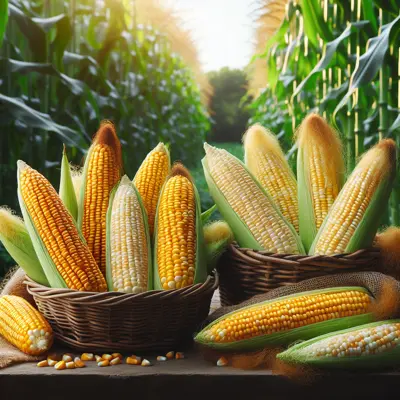
A stunning bicolor sweet corn that delivers the best of both worlds with its mix of golden yellow and creamy white kernels. This reliable hybrid produces consistently sweet, tender ears that maintain their quality longer than many varieties. Perfect for gardeners who want impressive visual appeal without sacrificing flavor.
Harvest
78-82d
Days to harvest
Sun
Full sun
Zones
2–11
USDA hardiness
Height
5-8 feet
Planting Timeline
Showing dates for Honey and Cream in USDA Zone 7
All Zone 7 corn →Zone Map
Click a state to update dates
Honey and Cream · Zones 2–11
Growing Details
Succession Planting
Direct sow Honey and Cream every 14–18 days from your last frost date through early June. With 78–82 days to harvest, a June 1 sowing in zone 7 should come in by mid-August — about as late as you want to push before fall nights start affecting ear fill. For your first planting, NC State Extension's IPM guidance specifically recommends timing sweet corn so harvest lands before July 15 to reduce corn earworm exposure; later successions will need closer silk monitoring.
One thing that catches people off guard: corn is wind-pollinated, so a thin stand silking over 10 days produces poorly filled ears. Sow each succession in a block at least 4×4 feet rather than a long single row. Stop new sowings once daytime highs are running consistently above 90°F — germination drops sharply at soil temperatures above 95°F, and plants that struggle to establish in that heat rarely catch up.
Complete Growing Guide
This hybrid's 78-82 day maturity means you'll want to stagger plantings every two weeks rather than direct-sowing all at once, ensuring a continuous harvest during peak sweetness rather than a single glut. "Honey and Cream" thrives in full sun with consistent moisture—inconsistent watering can split kernels or create tough, starchy texture that undermines the variety's signature tenderness. While generally disease-resistant, this cultivar shows moderate susceptibility to corn smut in humid conditions; remove affected ears promptly and improve air circulation between plants. The bicolor kernels are notably susceptible to bird and raccoon damage once silks emerge, so netting or fencing becomes essential during the final three weeks before maturity. A practical trick: harvest in early morning when kernels are plump with overnight moisture, and use the thumbnail test—a kernel should release sweet milk when punctured, indicating peak flavor.
Light: Full sun (6 or more hours of direct sunlight a day). Soil: Clay, High Organic Matter, Loam (Silt). Soil pH: Acid (<6.0), Neutral (6.0-8.0). Drainage: Good Drainage. Height: 5 ft. 0 in. - 8 ft. 0 in.. Spread: 1 ft. 0 in. - 2 ft. 0 in.. Spacing: 12 inches-3 feet. Growth rate: Rapid. Maintenance: Medium. Propagation: Seed. Regions: Coastal, Mountains, Piedmont.
Harvesting
Peak readiness for Honey and Cream arrives when the silks turn dark brown and dry, the cob feels full and rounded beneath your fingers, and the kernels display that distinctive two-tone coloring with the yellow and cream sections both plump and milky. Gently peel back a small section of husk to verify kernel maturity—they should release a milky liquid when pierced. This variety produces multiple ears per stalk, making it ideal for continuous harvesting rather than a single picking; monitor secondary ears as they reach maturity over several weeks. Harvest in early morning when kernels are coolest and juiciest, twisting ears downward and away from the stalk with a quick snap motion to avoid damaging the plant.
Color: Gold/Yellow. Type: Caryopsis. Length: > 3 inches. Width: 1-3 inches.
Garden value: Edible, Showy
Harvest time: Fall
Edibility: Edibile
Storage & Preservation
Use Honey and Cream corn immediately after harvest for peak sweetness, as sugar converts to starch rapidly at room temperature. If you must store fresh ears, keep husks on and refrigerate immediately at 32-35°F with high humidity. Fresh ears maintain quality for 3-5 days maximum when properly refrigerated.
For freezing, blanch whole ears in boiling water for 7-9 minutes depending on size, then plunge into ice water. Cut kernels from cob or freeze whole ears in freezer bags. Frozen corn keeps 8-12 months. This variety also cans beautifully using pressure canning methods—its tender kernels hold their texture well. For unique preservation, try pickling the young ears when they're 2-3 inches long, or dehydrate kernels for winter soups and stews.
History & Origin
While detailed documentation on the specific origins of 'Honey and Cream' is limited, this bicolor sweet corn represents the result of deliberate hybrid breeding programs that became prominent in American seed companies during the late twentieth century. The variety emerges from the broader development of bicolor corn cultivars, which gained popularity among home gardeners seeking visual novelty alongside reliable sweetness. The combination of yellow and white kernel genetics reflects decades of work by plant breeders at major seed houses to stabilize favorable traits including sugar content, kernel tenderness, and plant vigor. Like many modern sweet corn hybrids, 'Honey and Cream' likely descends from carefully selected inbred lines refined through conventional breeding methods rather than from a single identifiable origin point.
Origin: Mexico
Advantages
- +Bicolor kernels provide stunning visual appeal at harvest and on the table
- +Sweet, tender, juicy kernels maintain quality longer than many competing varieties
- +Moderate 78-82 day maturity fits well into most growing seasons
- +Easy to grow with reliable hybrid vigor and consistent performance
Considerations
- -Susceptible to Stewart's wilt, gray leaf spot, and common smut diseases
- -Corn earworm and European corn borer require active pest management monitoring
- -Needs consistent soil moisture and fertility for optimal bicolor kernel development
Companion Plants
Bush beans or pole beans are worth growing alongside Honey and Cream for a concrete reason: legumes fix atmospheric nitrogen through Rhizobium bacteria in their root nodules, and sweet corn pulls hard on soil nitrogen all season — somewhere around 1.5–2 lbs of actual N per 100 square feet. Winter squash fills the ground layer with broad leaves that shade out weeds and cut down on how fast the bed dries out between waterings. Marigolds, specifically Tagetes patula, produce thiophene compounds in their roots that suppress soil nematodes with repeated plantings — useful if that bed has any history of root-knot pressure.
Keep tomatoes on the opposite end of the garden. Both crops draw Helicoverpa zea (corn earworm, or tomato fruitworm — same moth, different host), and the UGA pest calendar flags it under both names for good reason. Planting them adjacent doubles the attractant in one spot and makes population control much harder. Black walnut is a separate problem entirely: its roots and decomposing hulls release juglone, an allelopathic compound that stunts or kills most vegetable crops, corn included, within the root zone.
Plant Together
Bush Beans
Fix nitrogen in soil that corn can utilize, classic Three Sisters companion
Pole Beans
Climb corn stalks for support while fixing nitrogen in the soil
Winter Squash
Large leaves shade soil and suppress weeds, completes Three Sisters planting
Marigolds
Repel corn earworms, aphids, and other harmful insects
Nasturtiums
Act as trap crop for aphids and cucumber beetles, repel squash bugs
Sunflowers
Attract beneficial insects and can provide windbreak for corn
Dill
Attracts beneficial insects that prey on corn pests like aphids
Parsley
Attracts beneficial insects and doesn't compete heavily for nutrients
Keep Apart
Black Walnut
Releases juglone toxin that stunts corn growth and reduces yields
Tomatoes
Both are heavy nitrogen feeders creating competition, shared pest attraction
Brassicas
Heavy nitrogen feeders that compete with corn for nutrients
Nutrition Facts
Per 100g serving. % Daily Value based on 2,000 calorie diet. Source: USDA FoodData Central (FDC #168538)
Pests & Disease Resistance
Resistance
Good resistance to common rust and northern corn leaf blight
Common Pests
Corn earworm, European corn borer, corn rootworm, flea beetles
Diseases
Stewart's wilt, gray leaf spot, common smut
Troubleshooting Honey and Cream
What you'll see, why it happens, and what to do about it.
Silks and ear tips chewed, with frass (dark, crumbly droppings) packed between the husk leaves, noticed around harvest time
Likely Causes
- Corn earworm (Helicoverpa zea) — moth lays eggs directly on fresh silks, larvae tunnel into the ear tip
- Late planting that pushes silking into peak earworm pressure (after mid-July)
What to Do
- 1.Apply a few drops of mineral oil to the tip of each ear right after silks brown and pollination is complete — it suffocates young larvae before they burrow deep
- 2.Time your first planting to hit harvest before July 15, as NC State Extension's IPM guidance notes that early sweet corn is significantly less exposed to peak earworm pressure
- 3.For later sowings, scout silks every 2–3 days and apply Bt (Bacillus thuringiensis) sprays targeted at the silk zone
Irregular, swollen gray-to-black galls — anywhere from marble- to fist-sized — appearing on ears, tassels, or stalk nodes
Likely Causes
- Common smut (Ustilago maydis) — a soil-borne fungus that enters through wounds made by insects, hail, or cultivation equipment
- Hot, dry stretches followed by rain stress the plant and open entry points
What to Do
- 1.Cut off and bag galls before they rupture — once the silver skin turns black and powdery, spores are already airborne
- 2.Trash the bags, not the compost pile; Ustilago maydis spores persist in soil for several years
- 3.Rotate corn out of that bed for at least 2 seasons and avoid cultivating close to stalk bases to reduce wounding
Frequently Asked Questions
How long does Honey and Cream corn take to grow?▼
Can you grow Honey and Cream corn in containers?▼
What does Honey and Cream corn taste like?▼
When should I plant Honey and Cream corn?▼
Is Honey and Cream corn good for beginners?▼
How do you know when Honey and Cream corn is ready to pick?▼
Zone-by-Zone Planting Calendar
| Zone | Indoor Start | Transplant | Direct Sow | Harvest |
|---|---|---|---|---|
| Zone 1 | — | — | July – August | October – August |
| Zone 2 | — | — | June – August | October – September |
| Zone 11 | — | — | January – March | May – June |
| Zone 12 | — | — | January – March | May – June |
| Zone 13 | — | — | January – March | May – June |
| Zone 3 | — | — | June – July | September – October |
| Zone 4 | — | — | June – July | September – October |
| Zone 5 | — | — | May – June | September – October |
| Zone 6 | — | — | May – June | August – October |
| Zone 7 | — | — | April – June | August – September |
| Zone 8 | — | — | April – May | July – September |
| Zone 9 | — | — | March – April | June – August |
| Zone 10 | — | — | February – April | June – July |
Growing Guides from Wind River Greens
Sources & References
External authority sources used in compiling this guide.
See the Methodology page for how this data is sourced, what's AI-assisted, and known limitations.