Avalon
Zea mays 'Avalon'
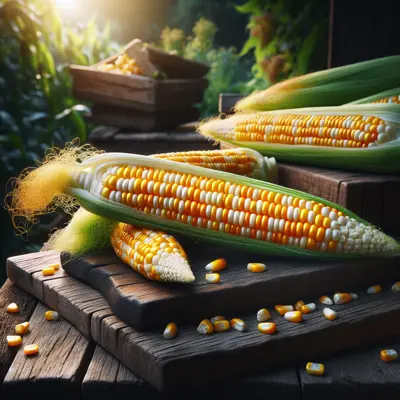
A premium bicolor supersweet corn that delivers restaurant-quality flavor and appearance to the home garden. Known for its exceptional sweetness and crisp texture, Avalon produces beautiful ears with excellent kernel retention and superior eating quality. This variety excels in both cool and warm growing conditions, making it reliable across different climates.
Harvest
75-78d
Days to harvest
Sun
Full sun
Zones
2–11
USDA hardiness
Height
5-8 feet
Planting Timeline
Showing dates for Avalon in USDA Zone 7
All Zone 7 corn →Zone Map
Click a state to update dates
Avalon · Zones 2–11
Growing Details
Succession Planting
Direct sow Avalon starting around April 1 in zone 7, once soil temps reach 60°F — germination drops off sharply below that and you'll get gaps in the stand. Make a second sowing 14-18 days later, and a third in late May; the UGA Vegetable Garden Calendar specifically calls out a third corn planting in May, which fits Avalon's 75-78 day window and pushes that final harvest into early September. Stop sowing by June 10 in zone 7 — anything started after that point risks running into the first fall frost before the ears fill out.
Complete Growing Guide
Avalon's 75-78 day maturity makes succession planting possible in most regions—sow every two weeks from late spring through midsummer to extend your harvest window. This bicolor supersweet requires consistent soil moisture and performs best in full sun with well-draining, fertile soil rich in organic matter. The variety shows excellent disease resistance to common corn ailments but remains susceptible to corn borers and earworms, so scout regularly and consider preventive netting or organic controls like Bt spray. Avalon exhibits strong kernel retention on the cob, meaning you'll have fewer fallen kernels at harvest, but avoid harvesting too early—wait until silks brown and kernels milk when squeezed for peak sweetness. Plant in blocks of at least three rows rather than single rows to ensure reliable pollination and full ear development, which is especially important for maximizing this cultivar's exceptional sweetness and crisp texture.
Light: Full sun (6 or more hours of direct sunlight a day). Soil: Clay, High Organic Matter, Loam (Silt). Soil pH: Acid (<6.0), Neutral (6.0-8.0). Drainage: Good Drainage. Height: 5 ft. 0 in. - 8 ft. 0 in.. Spread: 1 ft. 0 in. - 2 ft. 0 in.. Spacing: 12 inches-3 feet. Growth rate: Rapid. Maintenance: Medium. Propagation: Seed. Regions: Coastal, Mountains, Piedmont.
Harvesting
Avalon corn reaches peak harvest maturity when silks turn dark brown and ears feel full and firm to the gentle squeeze, with kernels plump enough to release milky liquid when punctured. The ears should measure 8 to 9 inches long with kernels in tightly packed rows showing the characteristic bicolor pattern of cream and golden yellow. This variety produces continuous flowering along the stalk, allowing for staged harvesting over several weeks rather than a single concentrated picking, which extends your fresh corn season considerably. For optimal sweetness, harvest in early morning after the night's cooler temperatures, as sugars peak before daytime heat converts them to starch.
Color: Gold/Yellow. Type: Caryopsis. Length: > 3 inches. Width: 1-3 inches.
Garden value: Edible, Showy
Harvest time: Fall
Edibility: Edibile
Storage & Preservation
Use fresh Avalon corn immediately for best flavor, as supersweet varieties retain their sweetness better than standard corn but still begin converting sugars to starch after harvest. Store unhusked ears in the refrigerator for up to one week, keeping husks on to preserve moisture and sweetness.
For freezing, blanch whole kernels in boiling water for 4 minutes, then immediately plunge into ice water. Drain thoroughly and freeze in portions. Alternatively, freeze whole ears after blanching for 6-8 minutes—this method works exceptionally well with Avalon's tender kernels.
Can kernels using a pressure canner following USDA guidelines, though freezing better preserves Avalon's signature crisp texture. For a gourmet preservation method, cut kernels from cobs and dehydrate at 135°F for 8-12 hours to create intensely flavored corn for soups and stews. The high sugar content in Avalon makes it particularly suitable for dehydrating, creating almost candy-like dried kernels.
History & Origin
The exact origin of 'Avalon' corn remains poorly documented in public breeding records, though its development aligns with late 20th-century advances in supersweet corn breeding by major seed companies. As a bicolor supersweet variety, 'Avalon' likely derives from established sh2 (shrunken-2) gene breeding lines that revolutionized home gardening corn in the 1970s and 1980s. The variety's demonstrated adaptability across climate zones suggests selection within professional breeding programs focused on broad environmental tolerance. While specific breeder attribution and introduction year are not readily available in horticultural databases, 'Avalon' represents the culmination of decades of germplasm work in combining exceptional sweetness with agronomic reliability—a hallmark of modern commercial seed development.
Origin: Mexico
Advantages
- +Exceptional sweetness and crisp texture deliver genuine restaurant-quality flavor
- +Bicolor kernels provide beautiful appearance for fresh market or display
- +Reliable performance across cool and warm growing conditions
- +Moderate difficulty makes Avalon accessible to most home gardeners
- +Excellent kernel retention prevents common shriveling in storage
Considerations
- -Susceptible to multiple serious pests including corn earworm and borers
- -Vulnerable to bacterial stalk rot which can devastate entire plantings
- -Moderate difficulty and multiple disease issues require attentive management
- -Gray leaf spot fungus can reduce plant vigor in humid climates
Companion Plants
Beans and squash are the classic three-sisters partners for good reason — beans fix atmospheric nitrogen that corn pulls heavily from the soil, and squash canopy leaves spread out at 12-18 inches, suppressing weeds and slowing moisture loss from the bed. Marigolds and nasturtiums attract parasitic wasps and other predatory insects that reduce aphid pressure and cut into earworm egg survival rates. Keep tomatoes out of the corn block: both crops compete for the same nutrients at similar root depths, and corn earworm (Helicoverpa zea) is genetically identical to the tomato fruitworm — planting them adjacent just gives the moth a bigger, easier target. Fennel inhibits germination and root development in most vegetables and has no place near a corn planting.
Plant Together
Beans
Fixes nitrogen in soil that corn needs, creates classic Three Sisters partnership
Squash
Large leaves suppress weeds and retain soil moisture, completes Three Sisters guild
Marigolds
Repels corn earworms, aphids, and other harmful insects
Nasturtiums
Acts as trap crop for aphids and cucumber beetles, deters corn borers
Sunflowers
Provides natural windbreak and attracts beneficial insects
Dill
Attracts beneficial wasps that prey on corn pests like aphids
Basil
Repels thrips and aphids while attracting beneficial pollinators
Radishes
Helps break up compacted soil and deters corn rootworms
Keep Apart
Tomatoes
Both are heavy feeders competing for nutrients, corn attracts tomato fruitworms
Black Walnut
Releases juglone which is toxic to corn and inhibits growth
Fennel
Allelopathic properties inhibit corn germination and growth
Nutrition Facts
Per 100g serving. % Daily Value based on 2,000 calorie diet. Source: USDA FoodData Central (FDC #168538)
Pests & Disease Resistance
Resistance
Good resistance to common rust and moderate resistance to northern corn leaf blight
Common Pests
Corn earworm, fall armyworm, European corn borer, wireworms
Diseases
Common smut, gray leaf spot, bacterial stalk rot
Troubleshooting Avalon
What you'll see, why it happens, and what to do about it.
Silks and ear tips chewed out, leaving frass and a fat caterpillar buried in the tip at harvest
Likely Causes
- Corn earworm (Helicoverpa zea) — moths lay eggs directly on fresh silks
- Fall armyworm (Spodoptera frugiperda) — secondary invader that follows earworm damage into the ear
What to Do
- 1.Apply a few drops of mineral oil to the silk channel 3-5 days after silks emerge — this suffocates young larvae before they reach the ear
- 2.Check silks daily starting around day 60 and pull off any egg masses you spot on the outer husks
- 3.If pressure is heavy, Bt (Bacillus thuringiensis) applied to silks targets young larvae before they tunnel in; follow the spray schedule in the Georgia Pest Management Handbook for timing
Swollen, grayish-white galls on ears, stalks, or tassels — galls eventually turn black and powdery inside
Likely Causes
- Common smut (Ustilago maydis) — a fungus that enters through wounds or young tissue; spores persist in soil for years
- Mechanical damage from cultivation, hail, or insect feeding that opens entry points
What to Do
- 1.Cut off and bag every gall before it ruptures and releases spores — trash them, don't compost
- 2.Rotate this bed out of corn for at least 3-4 years; a short one-season break won't clear the spore load
- 3.Switch to drip or furrow watering to reduce the wet-tissue conditions that let spores germinate on wounded cells
Stalks collapsing or rotting at the base around day 60-70, foul smell, water-soaked discoloration at the nodes
Likely Causes
- Bacterial stalk rot (Erwinia chrysanthemi) — thrives in hot, wet conditions and enters through roots or wounded tissue
- Waterlogged or poorly drained soil that stresses the root zone and speeds bacterial spread
What to Do
- 1.Pull and destroy affected plants the same day you find them — this moves fast in a block planting
- 2.Raise beds or add compost to open up drainage before the next planting; infection accelerates when daytime temps stay above 85°F and water sits at the crown
- 3.Rotate the bed out of corn for at least 3 years, consistent with NC State Extension guidance on soil-borne bacterial pathogens
Frequently Asked Questions
How long does Avalon corn take to grow from seed to harvest?▼
Can you grow Avalon corn in containers?▼
What does Avalon corn taste like compared to regular corn?▼
Is Avalon corn good for beginner gardeners?▼
When should I plant Avalon corn in my area?▼
How far apart should Avalon corn be planted from other corn varieties?▼
Zone-by-Zone Planting Calendar
| Zone | Indoor Start | Transplant | Direct Sow | Harvest |
|---|---|---|---|---|
| Zone 1 | — | — | July – August | October – August |
| Zone 2 | — | — | June – August | October – September |
| Zone 11 | — | — | January – March | May – June |
| Zone 12 | — | — | January – March | May – June |
| Zone 13 | — | — | January – March | May – June |
| Zone 3 | — | — | June – July | September – October |
| Zone 4 | — | — | June – July | September – October |
| Zone 5 | — | — | May – June | August – October |
| Zone 6 | — | — | May – June | August – October |
| Zone 7 | — | — | April – June | August – September |
| Zone 8 | — | — | April – May | July – September |
| Zone 9 | — | — | March – April | June – August |
| Zone 10 | — | — | February – April | June – July |
Growing Guides from Wind River Greens
Sources & References
External authority sources used in compiling this guide.
See the Methodology page for how this data is sourced, what's AI-assisted, and known limitations.