Ambrosia
Zea mays 'Ambrosia'
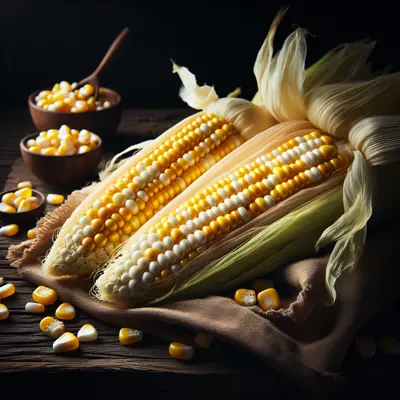
A supersweet bicolor corn that lives up to its heavenly name with incredibly tender, crisp kernels that burst with sweetness. This variety maintains its sugar content much longer than standard sweet corn, staying sweet for days after harvest when properly stored. The striking yellow and white kernel pattern makes it as visually appealing as it is delicious on the dinner table.
Harvest
75-80d
Days to harvest
Sun
Full sun
Zones
2–11
USDA hardiness
Height
5-8 feet
Planting Timeline
Showing dates for Ambrosia in USDA Zone 7
All Zone 7 corn →Zone Map
Click a state to update dates
Ambrosia · Zones 2–11
Growing Details
Succession Planting
In zone 7, direct sow Ambrosia every 14–18 days starting when soil temps hit 65°F — typically around April 15 — through late June. Each succession block needs at least 4 rows to pollinate properly; corn moves pollen by wind, not insects, so a single skinny row produces poorly filled ears no matter how healthy the plants are. Two or three successions is realistic: mid-April, early May, and a final one in late May or early June, which lines up with the third-planting window the UGA Vegetable Garden Calendar marks for corn and squash.
Stop sowing by June 20. Ambrosia's 75–80 day clock puts a late-June planting at harvest right around Labor Day — that's workable. Push the last sowing into July and you're racing a wet fall that can rot ears on the stalk before the sugars peak.
Complete Growing Guide
Ambrosia's extended sugar retention demands careful harvest timing and immediate refrigeration—pick ears in early morning when kernels are fully plump, as this bicolor hybrid maintains peak sweetness for days unlike standard varieties, but only with prompt cooling to slow respiration. Plant in full sun with consistent moisture during pollination stages, as water stress can reduce kernel tenderness and create tough, mealy texture. This cultivar shows moderate susceptibility to corn earworm and European corn borer, so scout weekly and consider preventive netting during silking; it's generally disease-resistant but may experience leaf blotch in humid climates with poor air circulation. The 75–80 day maturity suits most regions, but in short-season areas start seeds indoors to maximize your window. Thin seedlings to one plant every 8 inches in double rows 30 inches apart—Ambrosia's height (5–8 feet) requires sturdy support in windy sites, preventing lodging that compromises kernel development.
Light: Full sun (6 or more hours of direct sunlight a day). Soil: Clay, High Organic Matter, Loam (Silt). Soil pH: Acid (<6.0), Neutral (6.0-8.0). Drainage: Good Drainage. Height: 5 ft. 0 in. - 8 ft. 0 in.. Spread: 1 ft. 0 in. - 2 ft. 0 in.. Spacing: 12 inches-3 feet. Growth rate: Rapid. Maintenance: Medium. Propagation: Seed. Regions: Coastal, Mountains, Piedmont.
Harvesting
Harvest Ambrosia corn when the husks turn dark green and feel slightly damp, with silks that have darkened to brown or black, typically occurring 75-80 days after planting. Gently squeeze the ear to confirm the kernels are plump and firm, and peek inside the husk to verify the characteristic bicolor kernels are fully filled to the ear's tip. This variety produces multiple ears per stalk, allowing for continuous harvesting over several weeks rather than a single picking. For maximum sweetness retention, harvest in early morning before heat builds, as cooler temperatures help preserve the exceptional sugar content that distinguishes Ambrosia from standard varieties. Immediate refrigeration after picking locks in flavor and extends the corn's remarkable ability to maintain tenderness and sweetness for days.
Color: Gold/Yellow. Type: Caryopsis. Length: > 3 inches. Width: 1-3 inches.
Garden value: Edible, Showy
Harvest time: Fall
Edibility: Edibile
Storage & Preservation
Ambrosia's supersweet genetics allow it to maintain quality longer than standard corn varieties, but proper storage is still crucial. Keep unhusked ears in the refrigerator at 32-35°F with high humidity—wrap in damp paper towels or store in perforated plastic bags. Properly stored, Ambrosia retains excellent eating quality for 5-7 days, significantly longer than regular sweet corn.
For longer preservation, blanch whole kernels for 4 minutes, then freeze in portion-sized bags. The high sugar content makes Ambrosia exceptional for freezing—it maintains texture and sweetness remarkably well. Alternatively, pressure can whole kernel corn following USDA guidelines. Avoid dehydrating this variety, as the high moisture content makes it prone to spoilage, and drying destroys the tender texture that makes Ambrosia special. For best results, freeze corn at peak ripeness within 2-3 hours of harvest.
History & Origin
Ambrosia corn was introduced by Cornell University's breeding program as part of their supersweet corn development initiative in the 1990s. The variety descends from the broader supersweet (sh2) corn breeding line, which revolutionized sweet corn cultivation by extending sugar retention after harvest through enhanced genetic mechanisms. While specific breeder attribution remains sparse in readily available documentation, Ambrosia represents the commercial refinement of decades of applied genetics focused on bicolor kernel aesthetics and prolonged sweetness. The variety capitalizes on supersweet genetics that slow the conversion of sugars to starch, allowing harvested ears to maintain their characteristic flavor for extended periods compared to standard sweet corn varieties.
Origin: Mexico
Advantages
- +Exceptional sweetness and crispness make Ambrosia superior to standard sweet corn varieties
- +Bicolor kernels provide striking visual appeal alongside outstanding flavor for market appeal
- +Extended sugar retention keeps corn sweet for days after harvest when refrigerated
- +Medium maturity at 75-80 days allows reasonable harvest window in most climates
- +Tender kernel texture delivers premium eating quality that justifies premium pricing
Considerations
- -Susceptible to multiple serious diseases including Stewart's wilt and southern corn leaf blight
- -High pest pressure from corn earworm and European corn borer requires vigilant management
- -Moderate growing difficulty means Ambrosia demands more care than standard corn varieties
- -Wildlife attraction from raccoons and birds necessitates protective measures during season
Companion Plants
Beans, squash, and corn form the Three Sisters combination, and the mechanics are real. Beans fix atmospheric nitrogen, which Ambrosia pulls hard on across its 75–80 day run. Squash sprawls at ground level and shades out weeds; the prickly foliage also discourages raccoons from walking through the planting — not a perfect deterrent, but raccoons prefer easier routes. French marigolds (Tagetes patula) at the block edge draw in parasitic wasps that attack European corn borer larvae. Around here in the Georgia piedmont, nasturtiums are worth tucking in as a trap crop: aphids pile onto them and leave the corn alone, and you can yank the nasturtium plants once they've done their job.
Tomatoes need their own separate bed, not because they look bad together but because corn earworm (Helicoverpa zea) is the exact same moth that attacks tomato fruit — plant them side by side and you're running a pest hotel with two buffet lines. Fennel is allelopathic and stunts most neighboring vegetables through root exudates; keep it in a container or at least 24 inches from the corn block's edge.
Plant Together
Beans
Fixes nitrogen in soil for corn, corn provides natural trellis for climbing beans
Squash
Large leaves suppress weeds and retain soil moisture, completes the Three Sisters planting
Marigolds
Repels corn earworm, aphids, and nematodes with natural compounds
Nasturtiums
Acts as trap crop for aphids and cucumber beetles, deters corn borers
Sunflowers
Attracts beneficial insects and birds that eat corn pests, similar growing requirements
Dill
Attracts beneficial wasps that parasitize corn borers and other harmful insects
Sweet Alyssum
Ground cover that attracts hover flies and other beneficial insects that control aphids
Parsley
Attracts beneficial insects like tachinid flies that prey on corn earworms
Keep Apart
Tomatoes
Both are heavy feeders competing for nutrients, corn earworm also attacks tomatoes
Black Walnut
Produces juglone toxin that inhibits corn growth and development
Fennel
Allelopathic properties inhibit corn germination and growth
Nutrition Facts
Per 100g serving. % Daily Value based on 2,000 calorie diet. Source: USDA FoodData Central (FDC #168538)
Pests & Disease Resistance
Resistance
Good resistance to northern corn leaf blight and common rust
Common Pests
Corn earworm, European corn borer, birds, raccoons
Diseases
Stewart's wilt, gray leaf spot, southern corn leaf blight
Troubleshooting Ambrosia
What you'll see, why it happens, and what to do about it.
Silks and ear tips chewed out, brown frass visible inside the husk at harvest
Likely Causes
- Corn earworm (Helicoverpa zea) — moth lays eggs directly on fresh silks, larvae feed down into the ear
- European corn borer (Ostrinia nubilalis) — can also tunnel into ears from the side
What to Do
- 1.Apply a few drops of mineral oil with a dropper to the silk channel 3–5 days after silks emerge — this suffocates newly hatched larvae before they reach the kernels
- 2.Follow the corn earworm spray schedule in the Georgia Pest Management Handbook; timing to silk emergence is critical
- 3.Check ears at harvest and trim the tip — a little damage there is cosmetic, not a crop failure
Seedlings wilt and collapse at or below the soil line within 7–14 days of germination, no obvious chewing damage above ground
Likely Causes
- Cutworm (Agrotis spp.) — larvae curl up in the top inch of soil and sever stems at night
- Seed rot from cold, wet soil — Ambrosia germinates poorly below 60°F
What to Do
- 1.Don't direct sow before soil temps hit 65°F — in zone 7 that's usually mid-April; a cheap soil thermometer is worth owning
- 2.Place cardboard or plastic cutworm collars around young plants, pushed 1 inch into the soil
- 3.If you suspect cutworms, dig 3–4 inches down near a collapsed plant at dusk — you'll likely find the larvae curled up
Plants wilt suddenly in hot weather, then lower leaves show yellow-green streaking running lengthwise along the leaf blade
Likely Causes
- Stewart's wilt (Pantoea stewartii) — bacterial disease transmitted by corn flea beetle (Chaetocnema pulicaria)
- Flea beetle pressure is worst after mild winters, which in the Southeast means most years
What to Do
- 1.Pull and destroy infected plants — there's no cure once a plant shows systemic wilt, and the bacteria spreads
- 2.Cover young plants with row cover to exclude corn flea beetles; remove it once plants are knee-high and tasseling begins
- 3.Switch to a Stewart's wilt-tolerant variety if this keeps coming back in the same bed
Gray to tan rectangular lesions running parallel to leaf veins on middle and upper leaves, appearing around tasseling time
Likely Causes
- Gray leaf spot (Cercospora zeae-maydis) — fungal, favored by warm nights above 70°F and high humidity
- Southern corn leaf blight (Cochliobolus heterostrophus) — similar-looking but lesions are wider and tan with yellow halos
What to Do
- 1.Space plants at least 8–10 inches apart and stagger succession blocks so air moves through; dense plantings trap humidity at leaf level
- 2.Rotate this bed out of corn for at least two seasons — NC State Extension's IPM guidance notes that planting corn in the same spot year after year lets foliar disease pressure accumulate alongside soil depletion
- 3.Strip and trash heavily infected leaves; it won't save the plant but slows spore spread to your next succession block
Frequently Asked Questions
How long does Ambrosia corn take to grow from seed to harvest?▼
Can you grow Ambrosia corn in containers?▼
What does Ambrosia corn taste like compared to regular sweet corn?▼
Why does my Ambrosia corn need to be isolated from other corn varieties?▼
Is Ambrosia corn good for beginners to grow?▼
When should I plant Ambrosia corn in my area?▼
Zone-by-Zone Planting Calendar
| Zone | Indoor Start | Transplant | Direct Sow | Harvest |
|---|---|---|---|---|
| Zone 1 | — | — | July – August | October – August |
| Zone 2 | — | — | June – August | October – September |
| Zone 11 | — | — | January – March | May – June |
| Zone 12 | — | — | January – March | May – June |
| Zone 13 | — | — | January – March | May – June |
| Zone 3 | — | — | June – July | September – October |
| Zone 4 | — | — | June – July | September – October |
| Zone 5 | — | — | May – June | September – October |
| Zone 6 | — | — | May – June | August – October |
| Zone 7 | — | — | April – June | August – September |
| Zone 8 | — | — | April – May | July – September |
| Zone 9 | — | — | March – April | June – August |
| Zone 10 | — | — | February – April | June – July |
Growing Guides from Wind River Greens
Sources & References
External authority sources used in compiling this guide.
See the Methodology page for how this data is sourced, what's AI-assisted, and known limitations.