Planting Timeline
Showing dates for Chandler Strawberry in USDA Zone 7
All Zone 7 berry →Zone Map
Click a state to update dates
Chandler Strawberry · Zones 4–10
Growing Details
Zone-by-Zone Planting Calendar
Complete Growing Guide
To grow exceptional Chandler strawberries, start by selecting a sunny location with 6-8 hours of direct sunlight and excellent drainage. These plants despise waterlogged conditions, so if your soil is heavy clay, work in 2-3 inches of compost and coarse sand to improve drainage. Plant bare root crowns in early spring, 2-3 weeks before your last frost date when soil temperatures reach 50-60°F.
When planting, dig holes just deep enough so the crown sits at soil level—never bury the crown or let roots show above ground. Space plants 12-18 inches apart in rows 3-4 feet apart, or use the hill system with 12-inch spacing for maximum fruit size. Soak bare roots in lukewarm water for 30 minutes before planting to wake them up.
Feed your Chandler strawberries with a balanced 10-10-10 fertilizer at planting, then switch to a lower nitrogen formula (like 5-10-5) once flowering begins to promote fruit development over leaf growth. Side-dress monthly during the growing season with compost or well-aged manure.
Maintain consistent soil moisture with 1-1.5 inches of water weekly, using drip irrigation or soaker hoses to keep leaves dry and prevent fungal diseases. Mulch around plants with 2-3 inches of straw or shredded leaves to suppress weeds, retain moisture, and keep berries clean.
Remove flowers during the first year to establish strong root systems—this sacrifice will reward you with larger harvests in subsequent years. In zones 7-9, protect plants from intense afternoon sun with shade cloth during peak summer. In zones 3-6, mulch heavily after the first hard frost and remove covering gradually in spring.
Avoid the common mistake of planting too deep or allowing runners to overcrowd the bed—thin to 4-6 plants per square foot for optimal air circulation and fruit size.
Harvesting
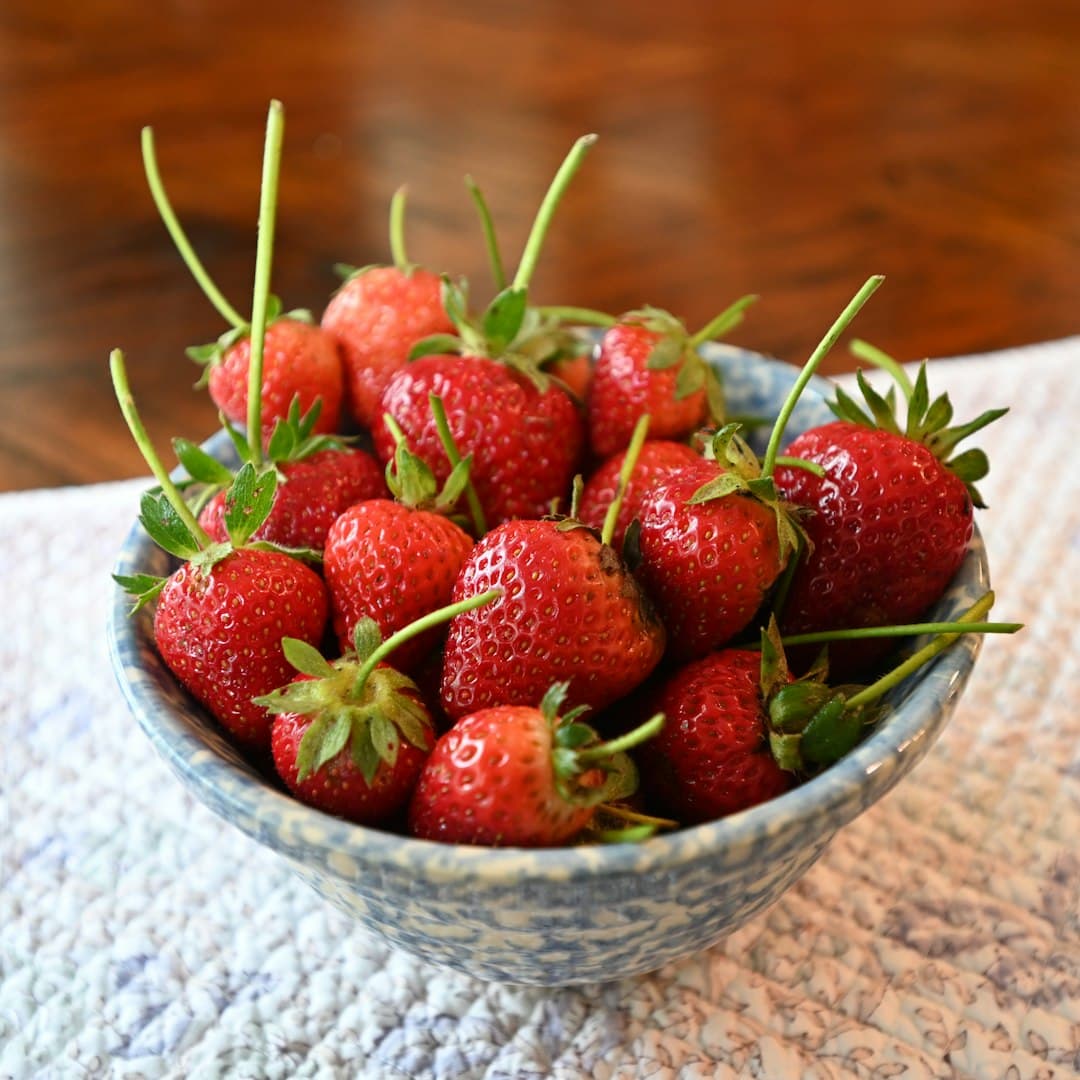
Harvest Chandler strawberries when they're fully red with no white or green areas remaining—this variety develops its signature sweet flavor only when completely ripe. The berries should yield slightly to gentle pressure but still feel firm, not soft or mushy. Unlike some varieties that can be picked with slight white tips, Chandler requires full color development for optimal taste.
Harvest in early morning when berries are cool and firm, ideally after dew has dried but before afternoon heat. Gently twist and pull each berry with its green cap attached—the stem should release easily when fruit is ready. If you meet resistance, wait another day or two. Pick every 2-3 days during peak season as Chandler produces continuously over 4-6 weeks.
Use shallow containers to prevent crushing bottom berries, and handle minimally as these large fruits can bruise easily. Never wash berries until just before eating, as moisture accelerates spoilage.
Storage & Preservation
Fresh Chandler strawberries keep best when stored unwashed in the refrigerator at 32-36°F with high humidity. Place them in a single layer on paper towels in a breathable container—avoid airtight plastic that traps moisture. Properly stored berries maintain quality for 5-7 days, longer than most strawberry varieties due to Chandler's naturally firm texture.
For freezing, hull and slice larger berries or freeze smaller ones whole on parchment-lined trays before transferring to freezer bags. Chandler's size makes it perfect for jam and jelly making—its high pectin content creates excellent gel without added thickeners. The variety also excels when dried into fruit leather or dehydrated chips, as its concentrated sweetness intensifies beautifully. For long-term storage, make strawberry butter or freeze pureed berries in ice cube trays for smoothies.
History & Origin
Chandler strawberry was developed by Dr. Kirk Larson and the breeding team at the University of California, Davis, and released in 1983 as part of their acclaimed strawberry improvement program. Named after Chandler, California, in Kern County, this cultivar was bred specifically to combine the exceptional flavor of traditional strawberries with the large size and productivity demanded by both commercial growers and home gardeners.
The breeding program crossed several elite California selections to create a variety that could thrive in the state's diverse growing regions while maintaining consistent fruit quality. Chandler quickly became the benchmark against which other strawberry varieties were measured, earning recognition as one of UC Davis's most successful releases.
This variety played a crucial role in elevating California's strawberry industry standards and helped establish the expectation that home garden strawberries could rival commercial quality. Today, Chandler remains popular among serious gardeners who refuse to compromise on flavor, representing the gold standard of what a backyard strawberry should be.
Advantages
- +Exceptionally large berries often exceed 1.5 inches in diameter
- +Outstanding flavor with perfect sugar-acid balance that rivals premium commercial varieties
- +Excellent disease resistance to verticillium wilt and red stele root rot
- +Firm texture maintains quality during transport and storage better than most varieties
- +Consistent production with minimal year-to-year variation in fruit quality
- +Superior performance in warm climates where other varieties struggle
- +Extended harvest window of 4-6 weeks provides steady berry supply
Considerations
- -June-bearing only—no fall harvest like everbearing varieties
- -Large berries are more attractive to birds and require netting
- -Higher water requirements than drought-tolerant strawberry varieties
- -Susceptible to gray mold in humid conditions without proper air circulation
Companion Plants
Plant Together
Thyme
Repels aphids, spider mites, and worms while attracting beneficial insects
Borage
Attracts pollinators, repels tomato hornworms, and may improve strawberry flavor
Chives
Deters aphids, slugs, and Japanese beetles with strong sulfur compounds
Garlic
Natural fungicide properties help prevent strawberry diseases and repel pests
Spinach
Shallow roots don't compete, provides ground cover and living mulch
Lettuce
Compatible root depth, quick harvest allows space for strawberry runners
Marigolds
Repel nematodes, aphids, and whiteflies while attracting beneficial predators
Pine Trees
Pine needle mulch acidifies soil, which strawberries prefer
Keep Apart
Brassicas
Heavy feeders that compete for nutrients and may inhibit strawberry growth
Tomatoes
Share verticillium wilt susceptibility and compete for similar nutrients
Black Walnut
Produces juglone toxin that causes stunting and death in strawberry plants
Pests & Disease Resistance
Resistance
Good resistance to verticillium wilt and red stele root rot
Common Pests
Strawberry root weevil, aphids, spider mites, slugs, birds
Diseases
Gray mold (botrytis), leaf spot, powdery mildew in humid conditions
Frequently Asked Questions
How long does Chandler strawberry take to produce fruit?▼
Can you grow Chandler strawberries in containers?▼
Is Chandler strawberry good for beginners?▼
What does Chandler strawberry taste like?▼
When should I plant Chandler strawberry plants?▼
Chandler vs Albion strawberry - what's the difference?▼
More Berries & Fruits
Duke Blueberry
Ben Sarek Black Currant
Patriot Blueberry
Northland Blueberry
Honeyberry (Haskap)
Heritage Red Raspberry
Jewel Black Raspberry
Triple Crown Blackberry