Shrub Rose - Carefree Beauty
Rosa 'Bucbi'
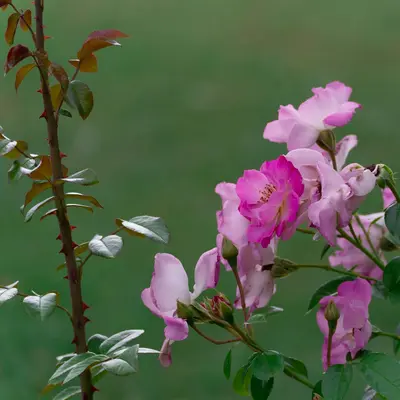
A remarkably tough and beautiful shrub rose that lives up to its name with minimal care requirements and maximum impact. Produces masses of bright pink semi-double blooms followed by attractive orange-red hips that persist into winter, providing four-season interest. This drought-tolerant rose thrives in challenging conditions where other roses fail, making it perfect for naturalized landscapes and busy gardeners.
Sun
Full sun
Zones
5–11
USDA hardiness
Height
1-8 feet
Planting Timeline
Showing dates for Shrub Rose - Carefree Beauty in USDA Zone 7
All Zone 7 rose →Zone Map
Click a state to update dates
Shrub Rose - Carefree Beauty · Zones 5–11
Growing Details
Complete Growing Guide
Shrub Rose - Carefree Beauty begins as a bare-root or container specimen rather than seed, arriving dormant in early spring or established in containers year-round. If you're purchasing bare-root plants, plant them as soon as the ground becomes workable in spring, typically two to three weeks before your last frost date. This timing allows the roots to establish before hot weather arrives. Container specimens can be planted anytime during the growing season, though spring planting gives them the full season to develop deep roots for drought tolerance.
Space plants three to five feet apart, depending on your desired final height and the cultivar's mature spread. Carefree Beauty responds well to generous spacing that encourages air circulation. Dig planting holes at least twice as wide as the root ball and equally deep, positioning the graft union one to two inches below soil level in cold climates or slightly above in warmer regions. This variety is exceptionally adaptable to poor soil, but amending with compost or aged manure ensures vigorous growth. Its drought tolerance means it tolerates sandy, clayey, and marginal soils where fussier roses struggle.
Water deeply once weekly during the first growing season to encourage deep rooting, then taper to occasional deep soakings during dry spells. Once established, Carefree Beauty requires minimal supplemental watering except during extended droughts, living up to its reputation for toughness. Feed in early spring as growth begins, then apply balanced fertilizer or rose food in mid-summer. Avoid late-season nitrogen feeding, which encourages tender growth vulnerable to frost damage.
The remarkable pest and disease resistance of this variety means you'll rarely encounter problems. Unlike many shrub roses, Carefree Beauty shows exceptional resistance to black spot, powdery mildew, and rose rosette virus. Minimal pest pressure means Japanese beetles and spider mites are uncommon visitors. If you do notice any issues, they typically stem from environmental stress rather than pest susceptibility.
Pruning should be light to moderate in early spring, removing only dead canes and crossing branches. This variety flowers on both old and new wood, so aggressive pruning diminishes bloom production. You can shape it lightly after flowering or allow it to grow naturally into an informal mound. The persistent orange-red hips provide exceptional fall and winter interest, so resist the urge to deadhead spent flowers unless you want continuous blooming.
The one critical mistake gardeners make with Carefree Beauty is overwatering and overfertilizing, treating it like tender hybrid teas. This shrub rose thrives on neglect and becomes weak and disease-prone when coddled with frequent watering and heavy feeding. Its entire appeal lies in performing beautifully with minimal intervention, so embrace its self-sufficient nature and let it thrive.
Harvesting
Carefree Beauty roses reach peak harvest readiness when the semi-double blooms display fully open petals with a rich, vibrant pink color and feel slightly soft to the touch rather than papery. Unlike single-flush roses, this variety produces continuous blooms throughout the growing season, allowing for repeated harvesting rather than one concentrated picking period. For optimal vase life and stem longevity, harvest flowers in early morning after dew dries but before afternoon heat sets in, cutting stems at a 45-degree angle just above an outward-facing leaf node. Remove lower foliage to prevent bacterial growth in water, and condition stems in cool water for several hours before arranging.
The accessory fruit is called a hip and forms after the flowers finish blooming. The hip will appear under the sepals of where the flower was after the flower dies. They will turn from green to red. They are filled with many achenes surrounded by irritating hairs.
Color: Green, Red/Burgundy. Type: Achene. Length: < 1 inch. Width: < 1 inch.
Garden value: Showy
Harvest time: Fall
Edibility: The fruit (called the hip) is edible.
Storage & Preservation
Cut blooms from Carefree Beauty roses are best stored in a cool location out of direct sunlight. Keep them in a clean vase filled with fresh water mixed with flower food, changing water every 2-3 days. Blooms typically last 7-10 days indoors. For preservation, air-dry the cut flowers by hanging them upside down in a dark, well-ventilated space for 2-3 weeks to create dried arrangements. Alternatively, press individual petals between newspaper under heavy books for 4-6 weeks for crafts. Rose hips can be dried whole in a warm, dry location for herbal tea preparation.
History & Origin
Developed by the Buck breeding program in the 1980s, Carefree Beauty represents a deliberate effort to create landscape roses that perform reliably without intensive management. Bred by Griffith J. Buck at Iowa State University, this variety emerges from crosses designed to combine the hardiness and disease resistance of wild roses with the ornamental qualities of modern cultivars. The variety's robust nature reflects Buck's philosophy of developing roses suited to Midwestern growing conditions, though it has since proven adaptable across diverse climates. Its designation as Rosa 'Bucbi' credits the Buck name in its cultivar code, cementing its place within a significant American breeding lineage focused on practical, low-maintenance garden performance.
Origin: Temp. & Subtropical Northern Hemisphere (such as Europe & Asia)
Advantages
- +Exceptionally tough rose requiring minimal care and maintenance year-round
- +Produces abundant bright pink blooms with ornamental orange-red hips
- +Virtually pest-free and disease-resistant, thriving where other roses fail
- +Drought-tolerant once established, perfect for water-wise gardens
- +Four-season interest from flowers through winter hip display
Considerations
- -Semi-double blooms lack the full, classic appearance some gardeners prefer
- -Orange-red hips may self-seed prolifically in ideal growing conditions
- -Limited fragrance compared to many traditional shrub rose varieties
Companion Plants
The aromatic herbs — lavender, catmint, salvia, and chives — are the most practical plants to place around Carefree Beauty. Their volatile oils confuse aphids and thrips looking to land, and their flowers pull in parasitic wasps and hoverflies that will work the rose canopy without any effort on your part. Chives and garlic do extra work: the allium family is broadly thought to deter Japanese beetles and aphids through scent, and a garlic planting at the drip line gives you a harvest on top of whatever pest benefit it provides. Tagetes marigolds are worth including at the border — their root secretions suppress certain soil nematodes, and they're one of the few companion planting claims with actual research behind it rather than folklore.
Clematis is a different kind of useful — it's not there for pest reasons. The two plants coexist well because clematis roots go deep while rose roots occupy the upper 12–18 inches of soil, so they're not competing hard for water or nutrients. It's a structural pairing that happens to work.
Black walnut (Juglans nigra) is the one to avoid most seriously. The roots release juglone, a compound that interferes with respiration in susceptible plants, and roses are on that list — you'll see wilting and slow decline that mimics drought or a root disease but won't respond to either fix. Large trees create a different problem: shade and root competition. Carefree Beauty needs at least 6 hours of direct sun to flower well, and anything less starts to close the gap on that disease resistance the variety is known for.
Plant Together
Lavender
Repels aphids, moths, and other rose pests while attracting beneficial pollinators
Marigold
Deters nematodes, aphids, and other harmful insects that commonly attack roses
Garlic
Natural fungicide properties help prevent black spot and powdery mildew on roses
Catmint
Repels aphids and ants while attracting beneficial insects and complementing rose blooms
Allium
Strong scent deters aphids, thrips, and other rose pests naturally
Clematis
Shares similar soil requirements and extends bloom season without competing for nutrients
Chives
Prevents black spot disease and aphid infestations while improving rose fragrance
Salvia
Attracts beneficial insects and provides complementary colors without competing for resources
Keep Apart
Black Walnut
Produces juglone toxin that inhibits rose growth and can cause wilting
Large Trees
Create excessive shade and compete for water and nutrients that roses require
Impatiens
Susceptible to similar fungal diseases that can spread to roses in humid conditions
Pests & Disease Resistance
Resistance
Outstanding disease resistance to all common rose diseases
Common Pests
Virtually pest-free
Diseases
Exceptional disease resistance
Troubleshooting Shrub Rose - Carefree Beauty
What you'll see, why it happens, and what to do about it.
Dark spots with irregular, 'feathered' or ragged edges on leaves; leaves yellowing and dropping — can start mid-season and strip the plant bare by late summer
Likely Causes
- Black spot (Diplocarpon rosae) — a fungal disease that splashes up from soil or infected fallen leaves during rain or overhead watering
- Poor air circulation from dense planting or unpruned canes
What to Do
- 1.Rake up and trash (not compost) every fallen leaf — the fungus overwinters in debris
- 2.Mulch the root zone in late winter to stop spore splash; straw or wood chips work fine
- 3.Water at the base of the plant only, and do it in the morning so foliage stays dry overnight — NC State Extension's IPM notes that extending nighttime leaf wetness is a key driver of infection
- 4.Prune out any cane infections in winter; Carefree Beauty has good resistance but it's not immune
New shoots stay red instead of greening up, elongate strangely, and the canes are developing far more thorns than usual — or the plant throws out a witches'-broom of small, distorted stems
Likely Causes
- Rose Rosette Disease (Rose rosette virus), transmitted by the eriophyid mite Phyllocoptes fructiphilus
- Glyphosate drift can mimic the witches'-broom symptom — worth ruling out if you or a neighbor recently sprayed herbicide nearby
What to Do
- 1.Excessive thorniness combined with red shoot retention is the clearest sign of RRD, per NC State Extension — if you see both together, the diagnosis is nearly certain
- 2.There is no cure: dig the entire plant, roots and all, bag it, and dispose of it in the trash — do not compost
- 3.Control nearby wild multiflora rose (Rosa multiflora), which is a primary reservoir for the virus and its mite vector
Bright yellow mosaic pattern on leaves, sometimes in an oak-leaf shape — plant looks mottled but isn't dropping leaves the way black spot causes
Likely Causes
- Rose mosaic virus (Prunus necrotic ringspot virus and/or Apple mosaic virus) — typically introduced through infected nursery stock at propagation, not spread aggressively once the plant is in the ground
What to Do
- 1.Inspect plants carefully before purchase; NC State Extension specifically flags buying infected plants as a primary route diseases enter home gardens
- 2.Rose mosaic generally won't kill the plant, but it reduces vigor — if flowering has dropped off badly and the mottling is severe, replacement is the practical call
- 3.Unlike RRD, rose mosaic isn't mite-vectored in the garden, so there's no urgency to remove it to protect neighboring roses