Knock Out Rose
Rosa 'Radrazz'
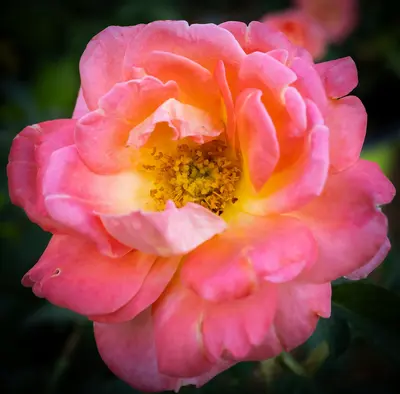
The revolutionary rose that changed home gardening forever with its exceptional disease resistance and continuous blooming from spring to frost. This low-maintenance beauty produces clusters of bright cherry-red flowers without the fuss of traditional roses, making it perfect for busy gardeners who want stunning color all season long.
Sun
Full sun
Zones
5–11
USDA hardiness
Height
1-8 feet
Planting Timeline
Showing dates for Knock Out Rose in USDA Zone 7
All Zone 7 rose →Zone Map
Click a state to update dates
Knock Out Rose · Zones 5–11
Growing Details
Complete Growing Guide
Unlike heirloom roses requiring constant deadheading and fungicide applications, Knock Out roses bloom prolifically without spent flower removal, though light pruning in early spring encourages bushier growth. Plant in spring or fall in full sun (six hours minimum) with well-draining soil amended with compost; these roses tolerate poor soil better than finicky varieties. While disease-resistant, watch for occasional spider mites during hot, dry spells—increase humidity with morning watering at soil level rather than overhead. Knock Outs rarely require chemical pest management, but prune out any cane borers if stems show sawdust-like frass. A practical tip: resist over-fertilizing, which promotes leggy growth and reduces flowering; a single balanced application in early spring suffices for season-long blooms through frost.
Light: Full sun (6 or more hours of direct sunlight a day). Soil: Clay, Loam (Silt). Soil pH: Acid (<6.0), Neutral (6.0-8.0). Height: 1 ft. 0 in. - 8 ft. 0 in.. Spread: 1 ft. 0 in. - 6 ft. 0 in.. Spacing: Less than 12 inches, 12 inches-3 feet, 3 feet-6 feet, 6-feet-12 feet. Growth rate: Medium. Maintenance: High. Propagation: Grafting.
Harvesting
Knock Out roses reach peak harvest readiness when the outer petals begin to unfurl and display their full cherry-red color, typically three to four days after the bloom fully opens, while the inner petals remain slightly cupped and the stem feels firm yet supple when gently bent. Unlike single-bloom roses, Knock Out varieties produce continuous clusters throughout the season, allowing you to harvest individual florets or entire spray clusters depending on your arrangement needs. The optimal timing strategy is to cut stems early in the morning after dew has dried, as this maximizes water uptake and extends vase life significantly compared to afternoon harvests when the plant's moisture reserves are lower.
The accessory fruit is called a hip and forms after the flowers finish blooming. The hip will appear under the sepals of where the flower was after the flower dies. They will turn from green to red. They are filled with many achenes surrounded by irritating hairs.
Color: Green, Red/Burgundy. Type: Achene. Length: < 1 inch. Width: < 1 inch.
Garden value: Showy
Harvest time: Fall
Edibility: The fruit (called the hip) is edible.
Storage & Preservation
Fresh cut Knock Out rose stems last longest when immediately placed in lukewarm water, then moved to cool water with flower preservative. Recut stems underwater every 2-3 days and change water completely. Store arrangements away from direct sunlight and heat sources - they'll maintain quality for 5-7 days.
For preservation, hang small bouquets upside down in a dark, dry, well-ventilated area for 2-3 weeks until completely dried. Dried roses retain color best when picked just before full bloom. You can also press individual petals between paper in heavy books for 4-6 weeks.
Rose hips can be dried whole for winter arrangements or crafts. Spread fresh hips on screens in a single layer, turning daily until completely dry (usually 10-14 days). Store dried hips in airtight containers away from light. Fresh hips also freeze well whole in freezer bags for up to one year and can be used later for wildlife feeding or decorative purposes.
History & Origin
Introduced by Will Radler at Star Roses and Plants in 2000, the Knock Out Rose represents a significant achievement in modern rose breeding, though detailed documentation of its specific parentage remains limited in publicly available sources. Radler's breeding program focused on creating disease-resistant roses that would thrive without intensive chemical treatments, a goal that culminated in this variety's release. The rose's exceptional resistance to black spot and powdery mildew, combined with its continuous blooming habit, made it an immediate commercial success and fundamentally shifted expectations for home gardeners regarding rose cultivation difficulty and maintenance requirements.
Origin: Temp. & Subtropical Northern Hemisphere (such as Europe & Asia)
Advantages
- +Blooms continuously from spring through frost without deadheading required
- +Naturally resistant to common rose diseases like black spot and mildew
- +Low-maintenance shrub thrives with minimal pruning and feeding needs
- +Bright cherry-red flower clusters provide bold seasonal color impact
- +Perfect for novice gardeners wanting reliable roses without expertise
Considerations
- -Japanese beetles frequently infest flowers during peak summer months
- -Susceptible to canker and rust in consistently humid climates
- -Flowers lack fragrance, offering visual appeal only without scent
- -May require preventive treatments for spider mites in dry conditions
Companion Plants
Lavender and catmint planted within 2–3 feet pull in pollinators and put out volatile oils that disrupt aphid host-finding — and both share Knock Out's tolerance for lean, drier soils once established, so you're not fighting conflicting water needs. Tagetes patula marigolds and alliums like garlic and chives add pest deterrence at ground level without competing for vertical space. Black walnut is the one to keep far away: juglone from the roots is toxic to roses, and the effect doesn't stop at the drip line. Large trees are mostly a light problem — Knock Out needs a solid 6+ hours of direct sun to bloom reliably through summer, and a canopy that cuts that to 3 or 4 hours will show up as sparse, weak flower flushes within a season or two.
Plant Together
Lavender
Repels aphids, spider mites, and other rose pests while attracting beneficial pollinators
Marigold
Deters nematodes, aphids, and whiteflies with natural compounds
Garlic
Repels aphids, thrips, and Japanese beetles while improving soil health
Catmint
Strong scent deters ants, aphids, and rodents while attracting beneficial insects
Allium
Sulfur compounds repel aphids, thrips, and other soft-bodied insects
Parsley
Attracts hoverflies and other beneficial insects that prey on rose pests
Clematis
Complementary root systems and provides vertical interest without competing
Chives
Natural fungicide properties help prevent black spot and powdery mildew
Keep Apart
Black Walnut
Produces juglone toxin that inhibits rose growth and can cause wilting
Large Trees
Compete for nutrients and water while creating excessive shade roses cannot tolerate
Fennel
Allelopathic properties inhibit growth and development of roses
Pests & Disease Resistance
Resistance
Exceptional resistance to black spot, powdery mildew, and downy mildew
Common Pests
Japanese beetles, aphids, spider mites, thrips
Diseases
Generally disease resistant, occasional canker or rust in humid conditions
Troubleshooting Knock Out Rose
What you'll see, why it happens, and what to do about it.
Dark circular spots on leaves with irregular 'feathered' edges, followed by yellowing and leaf drop
Likely Causes
- Black spot (Diplocarpon rosae) — a fungal disease that splashes up from soil and thrives when foliage stays wet overnight
- Watering overhead in the evening, extending leaf wetness into the morning
What to Do
- 1.Strip and trash (do not compost) all affected leaves, then clean up any fallen leaves on the ground
- 2.Water at the base of the plant only, early in the morning so foliage dries before nightfall
- 3.Mulch around the base in late winter to prevent soil splash; prune for airflow so the canopy dries faster after rain — NC State Extension's IPM notes recommend all of these as front-line cultural controls
New canes elongating fast with leaves that stay red instead of turning green, or excessive thorns crowding those shoots
Likely Causes
- Rose Rosette Disease (RRD), caused by Rose rosette virus and transmitted by the eriophyid mite Phyllocoptes fructiphilus
- Witches'-broom proliferation can accompany RRD as the disease progresses — though NC State Extension notes that glyphosate drift at low doses can produce a similar-looking symptom
What to Do
- 1.Don't diagnose on one symptom alone — look for retained red coloration on mature leaves plus hyper-thorniness or witches'-broom together before you act
- 2.There is no cure; dig out and bag the entire plant immediately to cut off mite transmission to nearby roses
- 3.Treat surrounding roses with a labeled miticide to knock down Phyllocoptes fructiphilus populations before they move
Leaves stippled or bronzed, fine webbing visible on undersides during hot, dry stretches
Likely Causes
- Two-spotted spider mite (Tetranychus urticae) — populations explode in dry weather above 85°F
- Dusty or water-stressed conditions, which slow natural predator activity
What to Do
- 1.Blast the undersides of leaves with a strong jet of water every 2–3 days — this physically dislodges mites before a colony gets established
- 2.Apply insecticidal soap or neem oil to leaf undersides; repeat every 5–7 days for at least 3 applications
- 3.Skip broad-spectrum insecticides — they wipe out predatory mites (Phytoseiidae) that were doing free control work for you