Iceberg Rose
Rosa 'Korbin'
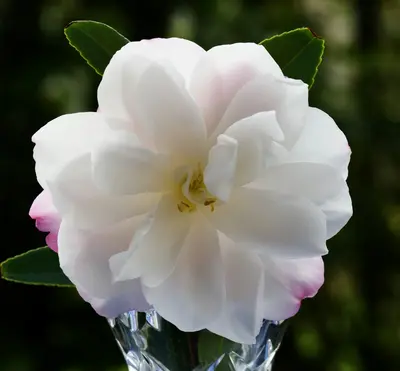
The world's favorite white rose that blooms with unmatched abundance from spring until hard frost, covering itself in clusters of pure white flowers against clean green foliage. This virtually maintenance-free floribunda combines exceptional disease resistance with non-stop flowering, making it the perfect choice for gardeners who want maximum impact with minimal effort.
Sun
Full sun
Zones
5–11
USDA hardiness
Height
1-8 feet
Planting Timeline
Showing dates for Iceberg Rose in USDA Zone 7
All Zone 7 rose →Zone Map
Click a state to update dates
Iceberg Rose · Zones 5–11
Growing Details
Complete Growing Guide
This floribunda's exceptional disease resistance means you can skip many preventive fungicide sprays required for other roses, though monitoring for spider mites during hot, dry summers remains important. Plant Iceberg in spring or fall in full sun with well-draining soil amended with compost; unlike some roses, it tolerates slightly alkaline conditions better than acidic ones. The variety flowers continuously from late spring through first frost without significant deadheading requirements, though removing spent clusters encourages denser blooms. Prune in early spring by cutting canes back to 12-18 inches to maintain a compact, bushy form and prevent the leggy growth this cultivar can develop if left unpruned. To maximize flower production, ensure consistent moisture during the growing season and fertilize monthly from spring through August, stopping before fall to allow the plant to harden off before winter.
Light: Full sun (6 or more hours of direct sunlight a day). Soil: Clay, Loam (Silt). Soil pH: Acid (<6.0), Neutral (6.0-8.0). Height: 1 ft. 0 in. - 8 ft. 0 in.. Spread: 1 ft. 0 in. - 6 ft. 0 in.. Spacing: Less than 12 inches, 12 inches-3 feet, 3 feet-6 feet, 6-feet-12 feet. Growth rate: Medium. Maintenance: High. Propagation: Grafting.
Harvesting
Iceberg roses reach peak harvest readiness when the outer petals display a soft, creamy white with just a hint of pink at the base, and the bloom has opened to approximately three-quarters full with a diameter of three to four inches. The petals should feel silky and firm to the touch, not papery or brittle. Unlike single-bloom roses, Iceberg's clustered floribunda growth pattern allows for continuous harvesting throughout the blooming season rather than waiting for one perfect moment. Cut in early morning when stems are fully hydrated, selecting clusters where at least half the florets have opened, as the remaining buds will continue opening in the vase, extending the arrangement's lifespan significantly.
The accessory fruit is called a hip and forms after the flowers finish blooming. The hip will appear under the sepals of where the flower was after the flower dies. They will turn from green to red. They are filled with many achenes surrounded by irritating hairs.
Color: Green, Red/Burgundy. Type: Achene. Length: < 1 inch. Width: < 1 inch.
Garden value: Showy
Harvest time: Fall
Edibility: The fruit (called the hip) is edible.
Storage & Preservation
Iceberg roses are cut flowers meant for immediate display and enjoyment. Store fresh cut stems in a clean vase with room-temperature water mixed with flower food to extend vase life to 7-14 days. Keep away from direct sunlight, heat sources, and ripening fruit. For longer preservation, air-dry freshly cut blooms in a cool, dark, well-ventilated space by hanging them upside-down for 1-2 weeks to create dried arrangements. Alternatively, press individual petals between book pages for 2-3 weeks to preserve them for potpourri or crafting. Freezing whole blooms in water preserves them for up to 3 months, though they won't be suitable for display after thawing.
History & Origin
Introduced in 1958 by German breeder Reimer Kordes, Iceberg emerged as a breakthrough floribunda rose from his acclaimed breeding program. Kordes developed this variety by crossing Fairy and Kahlund, two parentage lines known for their prolific flowering and disease resistance. The rose was originally registered under the name 'Korbin' but became universally known as Iceberg due to its pristine white blooms. Kordes's systematic approach to breeding disease-resistant, continuously flowering garden roses positioned Iceberg as a foundational modern floribunda, and it remains one of the most widely planted roses globally over six decades later.
Origin: Temp. & Subtropical Northern Hemisphere (such as Europe & Asia)
Advantages
- +Blooms continuously from spring until hard frost with exceptional abundance
- +Virtually maintenance-free with exceptional disease resistance to black spot and powdery mildew
- +Pure white flowers in clusters provide stunning visual impact in any garden
- +Minimal pest problems despite occasional aphids, spider mites, or Japanese beetles
- +Easy to grow making it ideal for beginner and experienced gardeners
Considerations
- -White flowers show dirt and rain spots more visibly than other colors
- -Requires consistent watering during establishment and drought periods for best performance
- -Can become leggy or sparse if not pruned regularly during growing season
- -Susceptible to occasional aphid infestations requiring monitoring or treatment
Companion Plants
Lavender and catmint are the two most practical companions for Iceberg. Both deter aphids through scent, both settle into the same well-drained soil at pH 6.0–7.5, and neither pushes aggressive roots into the rose's zone once established. Give them 18–24 inches from the drip line and they'll do their job without competing for the 1 inch of weekly water the rose needs. French marigolds (Tagetes patula) add something different: their root exudates suppress certain nematode populations in the surrounding soil — useful if your beds have seen root-knot nematode pressure before.
Garlic, chives, and alliums as a group are shallow-rooted enough to stay out of trouble below 8–10 inches, and the sulfur compounds they release above ground are a credible aphid deterrent. Parsley pulls in parasitic wasps that prey on aphids — it earns its 12-inch square without doing anything flashy. Clematis is worth mentioning because it gets misread as a competitor; it isn't. It climbs, draws from a deeper root zone than the rose, and shares a fence or obelisk without resource conflict.
Black walnut is a hard no. Juglone — produced in the roots, leaf litter, and hulls — is phytotoxic to roses, and you can't amend your way around it. Large trees create a different problem: they'll pull Iceberg below the 6 hours of direct sun it needs to set flower buds, and their feeder roots cover far more ground than most gardeners expect. Impatiens shouldn't crowd in either — they need frequent, heavy watering that keeps the soil surface wet longer than Iceberg tolerates, and that sustained moisture near the crown invites fungal trouble.
Plant Together
Lavender
Repels aphids, spider mites, and other rose pests while attracting beneficial pollinators
Marigold
Deters nematodes, aphids, and whiteflies while adding colorful contrast
Garlic
Natural fungicide properties help prevent black spot and powdery mildew on roses
Catmint
Repels aphids and ants while attracting beneficial insects and providing blue-purple blooms
Allium
Strong scent deters aphids, thrips, and Japanese beetles from attacking roses
Clematis
Shares similar growing conditions and adds vertical interest without competing for nutrients
Chives
Prevents black spot disease and deters aphids with natural sulfur compounds
Parsley
Attracts beneficial insects like hoverflies that prey on rose aphids
Keep Apart
Black Walnut
Produces juglone toxin that stunts rose growth and can cause yellowing and death
Large Trees
Compete for water and nutrients while creating excessive shade that weakens roses
Impatiens
High water requirements compete with roses and shade can reduce flowering
Pests & Disease Resistance
Resistance
Excellent disease resistance, very hardy and reliable
Common Pests
Aphids, spider mites, Japanese beetles (minimal issues)
Diseases
Exceptional resistance to black spot, powdery mildew, and rust
Troubleshooting Iceberg Rose
What you'll see, why it happens, and what to do about it.
Dark spots with irregular, 'feathered' or jagged edges on leaves; leaves yellowing and dropping — can start mid-season and accelerate in wet weather
Likely Causes
- Black spot (Diplocarpon rosae) — a fungal disease that splashes up from soil or infected fallen leaves during rain
- Prolonged leaf wetness from overhead watering or poor air circulation
What to Do
- 1.Strip affected leaves and bin them — don't compost them, the fungus overwinters in debris
- 2.Water at the base only, and water in the morning so foliage dries before nightfall
- 3.Mulch around the base in late winter to keep spores from splashing up from soil
- 4.Prune out any infected canes in winter and open up the center of the plant with a light thinning cut — NC State Extension's IPM guidance specifically recommends this sequence for black spot management
New shoots look twisted or excessively thorny, leaves are distorted or tiny, and the cane growth has an elongated reddish tinge that doesn't fade
Likely Causes
- Rose rosette disease (RRD) — a virus transmitted by the microscopic eriophyid mite (Phyllocoptes fructiphylus); NC State's Plant Disease and Insect Clinic notes the elongated red new shoots as an early diagnostic indicator
- Eriophyid mite pressure from nearby infected wild roses or multiflora rose (Rosa multiflora)
What to Do
- 1.There is no cure — remove the entire plant, roots and all, and bag it before it leaves the garden
- 2.Don't replant a rose in that spot for at least one season; scout nearby for wild or multiflora roses that could be the mite reservoir
- 3.If you're unsure whether it's RRD or rose mosaic (which shows a bright yellow 'oak leaf' pattern without stem deformation), NC State's PDIC can confirm — mosaic is much less serious and doesn't require removal
Clusters of small soft-bodied insects on new growth and buds, stems possibly sticky; flower buds distorted or failing to open
Likely Causes
- Aphids (commonly Macrosiphum rosae, the rose aphid) — they colonize fast in spring when new growth is soft
- Absence of predatory insects, often from broad-spectrum insecticide use nearby
What to Do
- 1.Knock them off with a firm stream of water from a hose — do this 3 mornings in a row and populations drop fast
- 2.If the infestation is heavy, apply insecticidal soap directly to the clusters; coat the undersides of leaves too
- 3.Plant garlic or chives within 18 inches — their sulfur compounds are a genuine deterrent, not just folklore