Floribunda Rose - Europeana
Rosa 'Europeana'
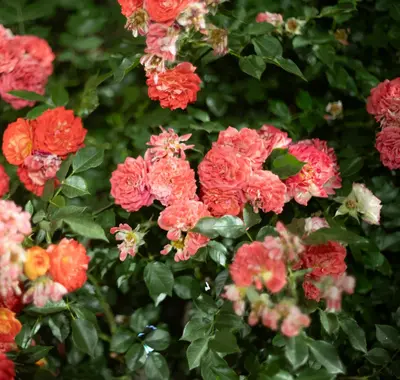
This award-winning floribunda rose creates stunning mass displays with clusters of deep crimson-red blooms that seem to glow against its distinctive bronze-tinted foliage. Europeana is prized for its compact, bushy growth habit and exceptional flower production, blooming repeatedly from spring through frost. The contrast between the dark red flowers and bronzy leaves makes this rose a standout choice for dramatic landscape impact.
Harvest
65-75d
Days to harvest
Sun
Full sun
Zones
5–11
USDA hardiness
Height
2-3 feet
Planting Timeline
Showing dates for Floribunda Rose - Europeana in USDA Zone 7
All Zone 7 rose →Zone Map
Click a state to update dates
Floribunda Rose - Europeana · Zones 5–11
Growing Details
Complete Growing Guide
Europeana rewards consistent care with nonstop blooms from spring through frost, so establish a regular deadheading routine to maximize flower production throughout the season. This cultivar thrives in full sun (at least six hours daily) with well-draining soil rich in organic matter, as its vigorous growth demands steady nutrition. Unlike some floribundas, Europeana's bronze-tinted foliage makes it particularly susceptible to black spot in humid conditions—improve air circulation around plants and avoid overhead watering to prevent fungal issues. Watch for spider mites during hot, dry spells, which can stress the foliage. The compact, bushy growth habit means minimal pruning beyond deadheading, though a light spring cut encourages branching. A practical tip: mulch around the base with 2–3 inches of organic material to retain moisture and regulate soil temperature, supporting the heavy blooming cycle that makes this rose exceptional.
Light: Full sun (6 or more hours of direct sunlight a day). Soil: Loam (Silt), Sand. Soil pH: Acid (<6.0), Alkaline (>8.0), Neutral (6.0-8.0). Drainage: Good Drainage, Moist. Height: 2 ft. 0 in. - 3 ft. 0 in.. Spread: 2 ft. 0 in. - 3 ft. 0 in.. Spacing: 12 inches-3 feet, 3 feet-6 feet. Growth rate: Rapid. Maintenance: High. Propagation: Grafting, Stem Cutting. Regions: Coastal, Mountains, Piedmont.
Harvesting
Harvest Europeana roses when the outer petals begin to unfurl and the blooms display their full deep crimson color, typically five to seven days after the flower first opens. The petals should feel soft but still hold firm structure, and the bloom will feel substantial with weight when gently cupped in your hand. Unlike single-harvest roses, Europeana's continuous blooming pattern means you can deadhead spent flowers throughout the season to encourage perpetual flowering until frost. For maximum vase life, cut stems in early morning after dew has dried, selecting blooms that have just passed their initial opening stage rather than fully mature flowers that may shed petals quickly indoors.
This is an ornamental variety — not grown for harvest. Enjoy in the garden landscape.
Storage & Preservation
For cut Europeana roses, store stems in a cool location (65-72°F) away from direct sunlight and ripening fruit, which produce ethylene gas that shortens vase life. Keep in a humidity-controlled environment (60-70% humidity). Cut flowers last 7-12 days when properly conditioned. Preservation methods: (1) Hydrate stems in warm water with floral preservative immediately after cutting, re-cutting stems every 2-3 days at a 45-degree angle. (2) Remove lower leaves to prevent bacterial growth. (3) Dry flowers by hanging upside-down in a dark, well-ventilated space for 2-3 weeks for long-term decorative arrangements.
History & Origin
Europeana was bred by Dutch rose breeder M. de Ruiter in 1963, marking a significant achievement in floribunda rose development during a period when breeders were intensifying efforts to create compact, free-flowering garden roses. The variety emerged from deliberate crosses aimed at combining continuous bloom capability with ornamental foliage and bushy plant architecture. De Ruiter's breeding program, established in the Netherlands, became renowned for producing disease-resistant, landscape-worthy floribundas that required minimal maintenance. Europeana's introduction coincided with growing demand among home gardeners for reliable, showy roses suitable for mass plantings and garden beds, establishing the cultivar as a foundational variety within modern floribunda genetics.
Origin: Belgium
Advantages
- +Award-winning variety with stunning deep crimson-red blooms and bronze foliage contrast
- +Exceptional flower production with continuous blooming from spring through frost
- +Compact, bushy growth habit perfect for mass displays and landscape impact
- +Easy to moderate difficulty level makes it accessible for most gardeners
- +Less susceptible to black spot compared to other floribunda rose varieties
Considerations
- -Vulnerable to powdery mildew and rust in humid or poorly ventilated conditions
- -Attracts multiple pests including aphids, thrips, Japanese beetles, and spider mites
- -Requires consistent pest monitoring and management throughout growing season
Companion Plants
Lavender and catmint planted within 12–18 inches of Europeana pull their weight — both attract predatory wasps and their scent confuses aphids and thrips, two of the pests that go after rose foliage most aggressively. Alliums like garlic and chives are worth tucking in at the drip line; their sulfur compounds are widely credited with discouraging the same insects, and their narrow footprint means they won't crowd a shrub that's already topping out at 2–3 feet. Marigolds (Tagetes species) are a practical third choice: they attract spider mite predators and their roots produce thiophene compounds that suppress certain soil nematodes.
Black Walnut (Juglans nigra) is the one to keep far away — it releases juglone, a root toxin that will stunt or kill Europeana if the shrub sits anywhere inside the tree's drip line. Large trees generally are a poor pairing for a different reason: they'll outcompete a compact floribunda for both water and the 6+ hours of sun it needs to set repeat blooms. Brassicas are a lower-stakes problem, but their root exudates can interfere with rose root development, and they draw some of the same fungal pressure you're already trying to manage.
Plant Together
Lavender
Repels aphids, spider mites, and other pests while attracting beneficial pollinators
Marigold
Deters nematodes, aphids, and whiteflies with natural compounds
Alliums (Garlic/Chives)
Repels aphids, thrips, and Japanese beetles while preventing fungal diseases
Catmint
Deters ants, aphids, and rodents while attracting beneficial insects
Clematis
Provides vertical interest and shares similar growing conditions without competing
Parsley
Attracts beneficial insects like hoverflies that prey on rose aphids
Geraniums
Repels Japanese beetles, leafhoppers, and other common rose pests
Thyme
Deters cabbage worms, whiteflies, and improves overall garden pest control
Keep Apart
Black Walnut
Produces juglone toxin that inhibits rose growth and can cause wilting
Large Trees
Competes heavily for nutrients and water while creating excessive shade
Brassicas (Cabbage family)
May attract pests that can spread to roses and compete for soil nutrients
Pests & Disease Resistance
Resistance
Good disease resistance, particularly to black spot
Common Pests
Aphids, thrips, Japanese beetles, spider mites
Diseases
Powdery mildew, rust, black spot (less susceptible)
Troubleshooting Floribunda Rose - Europeana
What you'll see, why it happens, and what to do about it.
Dark spots with irregular, 'feathered' edges on leaves; leaves yellowing and dropping, sometimes starting mid-season
Likely Causes
- Black spot (Diplocarpon rosae) — a fungal disease that splashes up from the soil during rain or overhead watering
- Extended leaf wetness from evening watering or poor air circulation between plants spaced closer than 2 feet
What to Do
- 1.Strip and trash (not compost) all affected leaves, and clean up any fallen leaves around the base of the plant
- 2.Water at the base only, and do it in the morning so foliage dries before nightfall — NC State Extension's IPM guidance specifically flags nighttime leaf wetness as a driver of this disease
- 3.Mulch around the root zone in late winter to reduce splash transmission, and prune any cane infections out before new growth starts in spring
New shoots are unusually elongated, stay red longer than normal, and the plant develops excessive thorniness or a tight cluster of stunted shoots (witches'-broom)
Likely Causes
- Rose Rosette Disease (RRD), caused by Rose rosette virus and vectored by the eriophyid mite Phyllocoptes fructiphilus
- NC State Extension notes that excessive thorniness alone is considered a definitive sign, though symptoms vary by cultivar and can shift as the disease progresses
What to Do
- 1.There is no cure — remove and bag the entire plant immediately to stop mite spread to neighboring roses
- 2.Dispose of the removed material in the trash, not the compost pile
- 3.Monitor any roses within 100 feet for the same elongated red shoots over the next 2–3 seasons, since mite transmission tends to be slow and uneven