Pink Flowering Crabapple
Malus 'Prairifire'
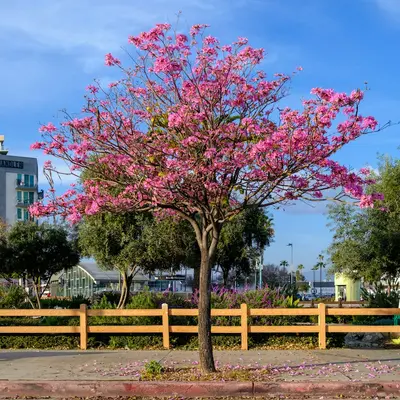
One of the most disease-resistant crabapples available, 'Prairifire' produces abundant coral-pink buds that open to deep pink flowers, followed by small red fruits that persist into winter for wildlife. This compact tree offers multi-season interest with excellent disease resistance that makes it virtually maintenance-free.
Sun
Full sun
Zones
3–9
USDA hardiness
Height
14-44 feet
Planting Timeline
Showing dates for Pink Flowering Crabapple in USDA Zone 7
All Zone 7 ornamental-tree →Zone Map
Click a state to update dates
Pink Flowering Crabapple · Zones 3–9
Growing Details
Complete Growing Guide
Light: Full sun (6 or more hours of direct sunlight a day). Soil: Clay, High Organic Matter, Loam (Silt), Sand. Soil pH: Acid (<6.0), Neutral (6.0-8.0). Drainage: Good Drainage, Moist. Height: 14 ft. 0 in. - 44 ft. 0 in.. Spread: 3 ft. 0 in. - 25 ft. 0 in.. Spacing: 12-24 feet, 24-60 feet. Growth rate: Medium. Maintenance: High, Medium. Propagation: Seed, Stem Cutting. Regions: Coastal, Mountains, Piedmont.
Harvesting
Fruits are rounded pomes that are 1/2 to 5 inches in diameter
Color: Gold/Yellow, Green, Red/Burgundy. Type: Pome. Length: > 3 inches. Width: > 3 inches.
Garden value: Edible
Harvest time: Fall
Storage & Preservation
As an ornamental tree, 'Prairifire' Pink Flowering Crabapple doesn't require storage for consumption. However, cut flowers and branches can be displayed in a vase with fresh water at room temperature (65-72°F) and changed every 2-3 days for up to 10-14 days. For preservation: (1) Air-dry flower clusters in a cool, dry location for dried arrangements lasting months; (2) Press individual flowers between paper layers for 2-3 weeks to create botanical specimens; (3) Preserve branches in glycerin solution (1 part glycerin to 2 parts water) for long-lasting, pliable arrangements.
History & Origin
The 'Prairifire' crabapple was developed in the 1960s by the University of Minnesota's Landscape Arboretum as part of their extensive breeding program to create hardy, disease-resistant ornamental crabapples suited to northern climates. Like other selections from this program, 'Prairifire' emerged from controlled crosses designed to combine aesthetic appeal with practical resilience against apple scab and other fungal diseases that plagued earlier varieties. While specific parentage details are not widely documented in readily available horticultural records, the cultivar represents the University's systematic effort to advance crabapple breeding for landscape use, establishing it as part of a distinguished lineage of cold-hardy Minnesota introductions rather than a single breeder's discovery.
Origin: Northern Hemisphere
Advantages
- +Attracts: Bees, Butterflies, Moths, Pollinators, Small Mammals, Songbirds
Considerations
- -High maintenance
Companion Plants
Daffodil bulbs planted around the drip line naturalize well under a tree canopy, and deer and voles avoid them — which matters when those same animals will happily gnaw the bark off a young 'Prairifire' in winter. Chives and marigolds within a few feet of the trunk attract parasitic wasps and ladybugs, which puts a dent in Aphis pomi populations before they build up on spring growth. Comfrey's deep taproot pulls up subsoil nutrients that benefit the shallower feeder roots above it, and lavender fills the gap between them without crowding either.
Black Walnut (Juglans nigra) is the straightforward problem: its roots release juglone, a compound that disrupts cellular respiration in Rosaceae family members, and crabapples are susceptible enough that the 50-foot minimum clearance NC State Extension recommends is worth taking seriously. Eastern Red Cedar (Juniperus virginiana) is a subtler issue — it's the alternate host for cedar-apple rust (Gymnosporangium juniperi-virginianae), and while 'Prairifire' carries good resistance to that disease, planting the two within a couple hundred feet of each other is an unnecessary gamble.
Plant Together
Daffodils
Repel rodents that might damage crabapple roots and bark
Chives
Deters aphids and other pests that commonly attack crabapple trees
Marigolds
Repel nematodes and attract beneficial insects for pest control
Lavender
Attracts pollinators and repels moths and other harmful insects
Comfrey
Deep roots bring nutrients to surface, leaves make excellent mulch
Hostas
Thrive in partial shade under canopy, help retain soil moisture
Nasturtiums
Act as trap crops for aphids and attract beneficial predatory insects
Astilbe
Tolerates shade and provides ground cover while attracting pollinators
Keep Apart
Black Walnut
Releases juglone toxin that can stunt growth and damage crabapple trees
Eastern Red Cedar
Serves as alternate host for cedar-apple rust disease that severely affects crabapples
Apple Trees
Share common diseases like fire blight and apple scab, increasing infection risk
Pests & Disease Resistance
Resistance
Excellent resistance to apple scab, fire blight, and cedar apple rust
Common Pests
Japanese beetles, aphids, tent caterpillars
Diseases
Highly disease resistant, occasional powdery mildew
Troubleshooting Pink Flowering Crabapple
What you'll see, why it happens, and what to do about it.
Leaves covered in white powdery coating, usually mid-to-late summer on new growth
Likely Causes
- Powdery mildew (Podosphaera leucotricha) — fungal, thrives in warm days and cool nights with low humidity
- Crowded planting or shaded canopy reducing airflow
What to Do
- 1.Prune out the worst-affected shoots and dispose of them — don't compost them
- 2.A spray of diluted neem oil (2 tbsp per gallon) every 7-10 days can slow spread if caught early
- 3.'Prairifire' is rated highly resistant, so persistent mildew usually means the tree is stressed — check soil moisture and spacing first
Skeletonized leaves or ragged holes across the canopy in June and July
Likely Causes
- Japanese beetles (Popillia japonica) — gregarious feeders, attracted to stressed or isolated trees
- Tent caterpillars (Malacosoma americanum) — look for silken nests in branch forks in early spring
What to Do
- 1.For tent caterpillars, remove and destroy the silk tents by hand in the evening before larvae disperse — do this before the nests get larger than a fist
- 2.For Japanese beetles, hand-pick into soapy water in the early morning when they're sluggish; avoid beetle traps, which draw more beetles than they catch
- 3.A single season of heavy feeding rarely kills a mature crabapple — prioritize mulching and watering to keep the tree's energy up
Curling, sticky new leaves in spring, sometimes with a blackish sooty coating
Likely Causes
- Aphid colonies (commonly Aphis pomi, the apple aphid) — cluster on new shoot tips, excreting honeydew that feeds sooty mold (Capnodium spp.)
- Lack of predatory insect pressure, often in a newly planted tree with no nearby habitat
What to Do
- 1.Knock aphids off with a firm blast of water from a hose — repeat every 2-3 days for two weeks
- 2.Avoid high-nitrogen fertilizer in spring, which pushes the soft new growth aphids prefer
- 3.Planting chives or nasturtiums within 5-6 feet of the trunk helps draw in ladybugs and parasitic wasps over time
Frequently Asked Questions
How long does a Prairifire crabapple tree live?▼
Is the Prairifire crabapple good for beginners?▼
Can you grow a Prairifire crabapple in a container?▼
When should I plant a Prairifire crabapple tree?▼
What pests affect Prairifire crabapple trees?▼
What makes Prairifire different from other crabapples?▼
Zone-by-Zone Planting Calendar
Growing Guides from Wind River Greens
Sources & References
External authority sources used in compiling this guide.
- ExtensionNC State Extension
See the Methodology page for how this data is sourced, what's AI-assisted, and known limitations.