Kwanzan Cherry
Prunus serrulata 'Kwanzan'
The most popular ornamental cherry tree in America, Kwanzan produces an absolutely breathtaking display of double pink flowers that cover every branch in mid-spring. These fluffy, rose-like blossoms are so abundant they often completely obscure the branches, creating a spectacular pink cloud effect that stops traffic. The reliable spring show, combined with attractive bronze-green summer foliage and golden fall color, makes this the ultimate flowering tree for maximum impact.
Sun
Full sun to partial shade
Zones
5–8
USDA hardiness
Height
15-25 feet
Planting Timeline
Showing dates for Kwanzan Cherry in USDA Zone 7
All Zone 7 ornamental-tree →Zone Map
Click a state to update dates
Kwanzan Cherry · Zones 5–8
Growing Details
Complete Growing Guide
Light: Full sun (6 or more hours of direct sunlight a day), Partial Shade (Direct sunlight only part of the day, 2-6 hours). Soil: Loam (Silt). Soil pH: Acid (<6.0), Alkaline (>8.0), Neutral (6.0-8.0). Drainage: Good Drainage, Moist. Height: 15 ft. 0 in. - 25 ft. 0 in.. Spread: 15 ft. 0 in. - 25 ft. 0 in.. Growth rate: Medium. Maintenance: Low. Regions: Coastal, Mountains, Piedmont.
Harvesting
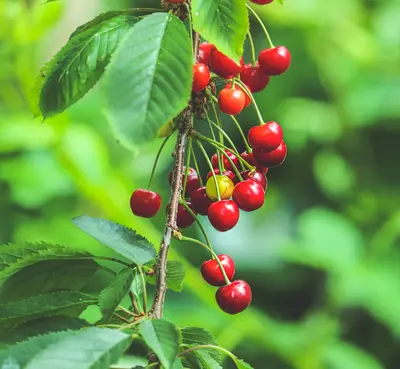
The fruit is an inconspicuous, small, round, fleshy black drupe and appear in late summer.
Color: Black. Type: Drupe. Length: < 1 inch. Width: < 1 inch.
Harvest time: Summer
Storage & Preservation
Kwanzan Cherry trees don't produce edible fruit; storage isn't applicable. For ornamental enjoyment, plant in a permanent location. Fresh cut branches can be displayed indoors in water at room temperature (65-72°F) for 7-10 days. To extend display life, change water every 2-3 days and keep in indirect light. Preservation methods include: air-drying branches for dried arrangements, pressing individual blossoms between paper for preservation, or pressing flowers in books for flat preservation and crafting.
History & Origin
Origin: Japan, China, Korea
Advantages
- +Attracts: Butterflies, Pollinators, Songbirds
- +Low maintenance
Companion Plants
Kwanzan cherry's most practical companions are the ones planted in the 6–10 foot ring around the drip line, where you're trying to replace turf grass. Lawn grasses compete aggressively for surface moisture and — more critically — the equipment used to maintain them causes repeated bark damage at the base. Repeated nicks from string trimmers are a primary entry point for canker diseases. Swap that grass ring for low-growing perennials like catmint (Nepeta) or hostas and you eliminate the mowing pressure entirely while holding soil moisture better than bare mulch.
Daffodils and chives pull double duty here. Daffodils are toxic to deer, voles, and squirrels — none of which will dig through a naturalized daffodil planting to reach tree roots. Chives, along with marigolds (Tagetes spp.), put out root and foliar compounds that may deter aphids from settling in, though the effect is modest and shouldn't replace a real management plan if you get a heavy infestation.
Lavender and comfrey are worth including for different reasons. Lavender draws in parasitic wasps and hoverflies that prey on aphid colonies and scale crawlers. Comfrey sends roots down 6 feet or more, so it doesn't compete with the cherry's shallower feeder roots, and the leaves chop-and-drop into useful mulch. Black walnut (Juglans nigra) is a hard no — the juglone compounds it releases into the soil can stunt or kill Prunus species, and NC State Extension notes that sensitive plants within 50–60 feet of the trunk are at real risk.
Plant Together
Lavender
Repels aphids and other pests while attracting beneficial pollinators
Catmint
Deters aphids and Japanese beetles that commonly attack cherry trees
Chives
Repels aphids and provides natural pest control without competing for nutrients
Marigold
Controls nematodes in soil and deters various pests that damage cherry trees
Comfrey
Deep roots bring up nutrients and leaves provide mulch when composted
Nasturtium
Acts as trap crop for aphids and cucumber beetles, protecting the cherry tree
Daffodils
Deter rodents and provide early spring color without competing with tree roots
Hostas
Thrive in partial shade under cherry canopy and help suppress weeds
Keep Apart
Black Walnut
Produces juglone which is toxic to cherry trees and inhibits their growth
Tomatoes
Susceptible to same bacterial diseases and may compete for similar nutrients
Grass Turf
Competes heavily for water and nutrients, especially problematic for young trees
Pests & Disease Resistance
Resistance
Moderate susceptibility to common stone fruit diseases
Common Pests
Aphids, spider mites, scale insects, tent caterpillars
Diseases
Black knot, brown rot, leaf spot, canker
Troubleshooting Kwanzan Cherry
What you'll see, why it happens, and what to do about it.
Black, warty, elongated swellings forming on branches and twigs, often first appearing on younger wood
Likely Causes
- Black knot disease (Apiosporina morbosa) — a fungal pathogen common on Prunus species, spreads via spores in wet spring weather
- Infected pruning tools carrying spores from tree to tree
What to Do
- 1.Prune out affected branches at least 4 inches below the visible gall, cutting into clean wood
- 2.Sterilize pruning tools with 70% isopropyl alcohol between every cut
- 3.Dispose of removed material in the trash — not the compost pile, not left on the ground nearby
Leaves stippled with tiny yellow or bronze dots, sometimes with fine webbing on the undersides, most noticeable in hot, dry spells
Likely Causes
- Two-spotted spider mites (Tetranychus urticae) — populations explode when temps stay above 85°F and humidity drops
- Over-application of broad-spectrum insecticides that kills off natural predators like predatory mites
What to Do
- 1.Knock mites off with a strong spray of water from a hose, hitting the leaf undersides directly
- 2.Apply insecticidal soap or neem oil in the evening — two or three applications, 5–7 days apart
- 3.Avoid broad-spectrum sprays that wipe out Phytoseiidae predatory mites, which keep spider mite populations in check naturally
Tent-like silk structures forming in branch crotches in early spring, with clusters of caterpillars inside stripping nearby foliage
Likely Causes
- Eastern tent caterpillar (Malacosoma americanum) — egg masses overwinter on the tree and hatch when temperatures warm consistently above 50°F
What to Do
- 1.Remove tents by hand early in the morning when caterpillars are clustered inside — drop them into soapy water
- 2.For persistent infestations, apply Bacillus thuringiensis var. kurstaki (Bt) to foliage while caterpillars are still small (under 1 inch)
- 3.Scrape off the shiny, varnished-looking egg bands from smaller branches in late winter before hatch
Frequently Asked Questions
How long do Kwanzan Cherry blossoms last each spring?▼
Is Kwanzan Cherry tree good for beginner gardeners?▼
Can you grow Kwanzan Cherry in containers?▼
When should I plant a Kwanzan Cherry tree?▼
What's the difference between Kwanzan and other ornamental cherry varieties?▼
Do Kwanzan Cherry trees need special pruning?▼
Zone-by-Zone Planting Calendar
Growing Guides from Wind River Greens
Sources & References
External authority sources used in compiling this guide.
- ExtensionNC State Extension
See the Methodology page for how this data is sourced, what's AI-assisted, and known limitations.