Honey Locust Sunburst
Gleditsia triacanthos inermis 'Sunburst'
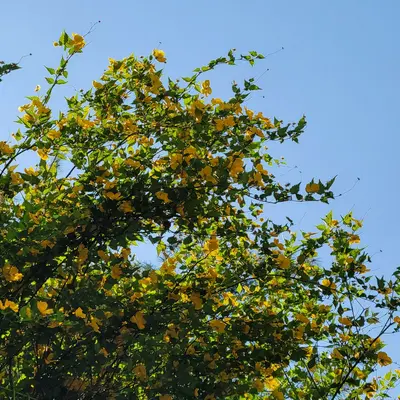
A fast-growing shade tree that emerges each spring with brilliant golden-yellow foliage that gradually transitions to bright green, creating a stunning color display. This thornless and podless variety is perfect for homeowners who want the beauty of honey locust without the cleanup, plus its delicate filtered shade allows grass to grow underneath.
Sun
Full sun to partial shade
Zones
3–8
USDA hardiness
Height
60-80 feet
Planting Timeline
Showing dates for Honey Locust Sunburst in USDA Zone 7
All Zone 7 ornamental-tree →Zone Map
Click a state to update dates
Honey Locust Sunburst · Zones 3–8
Growing Details
Complete Growing Guide
Plant Honey Locust Sunburst in spring or early fall in full sun to partial shade, ensuring at least six hours of direct light daily to maintain the vibrant golden spring emergence that defines this cultivar. This variety tolerates poor, compacted, and alkaline soils better than most ornamentals, making it adaptable to challenging urban sites, though it prefers well-draining conditions. Unlike standard honey locusts, the thornless, podless trait eliminates dangerous spines and excessive seed pod litter, but watch for spider mites and mimosa webworms during hot, dry summers—regular irrigation reduces pest pressure significantly. Young trees may develop a somewhat leggy, open branching habit; selectively prune competing leaders in the first three years to encourage a strong central stem and fuller canopy. Once established, Sunburst requires minimal maintenance, though pruning immediately after the spring foliage transition to green allows you to shape the tree while it's actively growing and will heal faster than dormant-season cuts.
Light: Full sun (6 or more hours of direct sunlight a day), Partial Shade (Direct sunlight only part of the day, 2-6 hours). Soil: Clay, High Organic Matter, Loam (Silt). Soil pH: Acid (<6.0), Alkaline (>8.0), Neutral (6.0-8.0). Drainage: Good Drainage, Moist. Height: 60 ft. 0 in. - 80 ft. 0 in.. Spread: 60 ft. 0 in. - 80 ft. 0 in.. Spacing: more than 60 feet. Growth rate: Rapid. Maintenance: Medium. Propagation: Seed, Stem Cutting. Regions: Coastal, Piedmont.
Harvesting
Since Honey Locust Sunburst is an ornamental tree rather than a fruiting variety, there is no harvest in the traditional sense. However, if foliage harvesting is desired for decorative arrangements, the peak readiness occurs when the spring emergence displays its most brilliant golden-yellow color, typically lasting two to three weeks before transitioning to green. The delicate, fern-like leaflets should feel firm and vibrant to the touch, with no wilting or browning at the edges. For continuous foliage interest, prune selectively throughout the growing season rather than harvesting all at once, which maintains the tree's natural form and encourages new colorful growth. Timing your harvest or pruning in early morning ensures the best quality and longevity of cut foliage.
Female flowers are replaced by reddish-brown, twisted, flat bean pods 12 to 18 inches long containing oval seeds appear in the summer and can remain on the tree through the winter. Seed pods twist into corkscrew shapes and can be messy to maintain once they fall off the tree. The pods turn black when ripe and contain a sweet-tasting sticky substance that gives Honeylocust its common name.
Color: Brown/Copper, Red/Burgundy. Type: Legume. Length: > 3 inches.
Garden value: Showy
Harvest time: Fall, Winter
Edibility: The pulp inside the seed pod is edible, raw or cooked, but mostly consumed by livestock and wildlife.
Storage & Preservation
As an ornamental tree, Honey Locust Sunburst does not require traditional storage or preservation methods like harvest crops. However, to maintain tree health, store in a cool location if container-grown, and keep soil consistently moist during establishment. For seed storage (if propagating), keep seeds in a cool, dry place at 32-50°F with low humidity. Seeds remain viable for 2-3 years when stored properly in airtight containers. No food preservation methods apply to this ornamental variety.
History & Origin
The 'Sunburst' cultivar of thornless honey locust (Gleditsia triacanthos inermis) emerged from systematic ornamental breeding programs in the mid-20th century, though specific breeder attribution remains somewhat obscured in horticultural literature. This variety represents a refinement of the thornless, podless honey locust line that gained popularity following the introduction of the inermis form itself. The golden-yellow spring foliage and compact growth habit suggest deliberate selection within commercial nursery programs, likely in the American Midwest or Northeast where ornamental tree breeding was concentrated. 'Sunburst' became widely propagated and distributed through major landscape nurseries by the 1970s-1980s, establishing itself as a preferred ornamental alternative to the species type.
Origin: Central and Eastern North America, NC to Mexico
Advantages
- +Brilliant golden-yellow spring foliage provides stunning seasonal color display.
- +Fast growth rate establishes shade quickly compared to other ornamental trees.
- +Thornless and podless variety eliminates dangerous thorns and messy seed pod cleanup.
- +Delicate filtered shade allows grass and understory plants to thrive beneath.
- +Easy to grow with minimal care requirements for most gardeners.
Considerations
- -Susceptible to honey locust plant bugs, spider mites, and scale insects.
- -Vulnerable to root rot in poorly drained or consistently wet soils.
- -Canker disease can cause branch dieback and reduce tree vigor over time.
- -Leaf spot infections may cause cosmetic foliage damage during wet seasons.
Companion Plants
The shade Sunburst casts is dappled and shifts through the season — not the dense, floor-killing darkness a Norway Maple throws — and that's what makes underplanting actually work here. Shade-tolerant perennials like Hosta, Astilbe, and Lungwort do fine in the root zone because their moisture demands are modest and their roots stay shallow, well above the depth where a 60-80 foot tree is pulling water. Japanese Painted Fern fills the 6-12 inch layer where little else wants to settle, and Coral Bells handles the drier edges where the canopy starts to open up. Sedum belongs at the drip line or beyond — it needs more direct sun and won't survive in the dim, dry center under a mature specimen.
Catmint (Nepeta spp.) and Daylily are solid at the outer edge, roughly 10-15 feet from the trunk where they can get 4-5 hours of direct sun. Both tolerate the mildly alkaline soil — pH up to 8.0 — that this tree tends to produce over time, and neither spreads aggressively enough to become a problem.
Black Walnut (Juglans nigra) produces juglone, a root-zone compound toxic to a wide range of plants, and Gleditsia is not immune. Keep at least 50 feet between the two. Norway Maple and Ailanthus are a different kind of problem — less about chemistry, more about the fact that both seed prolifically into the same understory you're trying to manage, and once they're established at the root competition stage, removing them without disturbing your plantings is genuinely tedious.
Plant Together
Hosta
Thrives in the dappled shade created by honey locust's filtered canopy
Astilbe
Enjoys partial shade conditions and complements the tree's airy texture
Coral Bells
Tolerates filtered light and adds colorful foliage contrast to golden leaves
Japanese Painted Fern
Flourishes in the light shade and provides textural contrast
Catmint
Tolerates drought conditions similar to honey locust and deters pests
Daylily
Adapts well to changing light conditions as tree matures
Lungwort
Benefits from the tree's light shade and spring moisture retention
Sedum
Shares drought tolerance and won't compete aggressively for nutrients
Keep Apart
Black Walnut
Produces juglone which can inhibit honey locust growth and health
Norway Maple
Creates dense shade that honey locust cannot tolerate, competes for resources
Ailanthus
Aggressive root system and allelopathic compounds suppress nearby plantings
Pests & Disease Resistance
Resistance
Generally disease resistant, some susceptibility to canker
Common Pests
Honey locust plant bug, spider mites, scale insects
Diseases
Canker, leaf spot (minor), root rot in wet soils
Troubleshooting Honey Locust Sunburst
What you'll see, why it happens, and what to do about it.
New leaves at branch tips distorted, curled, or stippled yellow-green in late spring
Likely Causes
- Honey locust plant bug (Diaphnocoris chlorionis) — nymphs feed on emerging foliage in May and June
- Spider mite (Tetranychus urticae) feeding, especially during hot, dry stretches
What to Do
- 1.Knock mites off with a strong spray of water from a hose — repeat every 3-4 days for two weeks
- 2.For plant bug pressure, a single application of insecticidal soap at bud break can reduce nymph populations before damage sets in
- 3.Avoid cutting irrigation too early in the season; mites explode on stressed, dry trees
Raised, crusty or sunken patches on bark, often weeping or discolored, with dieback in branches above the wound
Likely Causes
- Canker fungi (Thyronectria austro-americana is the most common on Gleditsia) — typically enter through wounds or winter injury
- Physical damage from lawn equipment nicking the trunk
What to Do
- 1.Prune out affected branches at least 6 inches below visible discoloration and sterilize the saw between cuts with 70% isopropyl alcohol
- 2.Don't paint or seal the wound — current research shows wound dressings don't help and can trap moisture
- 3.Protect the trunk base from mower and string-trimmer contact with a 3-inch mulch ring, kept 4-6 inches away from the bark itself
Small, irregular brown or tan spots on leaflets, sometimes with a yellow halo, appearing mid-summer
Likely Causes
- Leaf spot fungi (Cercospora or Phyllosticta spp.) — cosmetic and common in humid summers, rarely serious on an otherwise healthy tree
What to Do
- 1.Rake and dispose of fallen leaflets in autumn — don't compost them, as the spores overwinter in debris
- 2.Fungicide sprays are almost never worth it for minor leaf spot on a large established tree; save the effort
- 3.If full defoliation happens two or three years running, have an arborist check for other stressors — repeated complete leaf loss weakens the tree over time
Yellowing foliage, branch dieback from the top down, and soft or discolored roots on a young transplant within the first 1-2 seasons
Likely Causes
- Root rot — most likely Phytophthora spp. — in sites with poor drainage or heavy clay that stays wet for more than a few days after rain
- Planting too deep, burying the root flare
What to Do
- 1.At planting, set the tree so the root flare sits at or slightly above grade — never below it
- 2.If the site stays soggy, amend the planting hole with coarse grit and slope the surrounding grade away from the trunk to improve drainage
- 3.A young tree already showing significant dieback from root rot in year one is rarely worth trying to save; put the next one in a drier spot