Pecan (Desirable)
Carya illinoinensis 'Desirable'
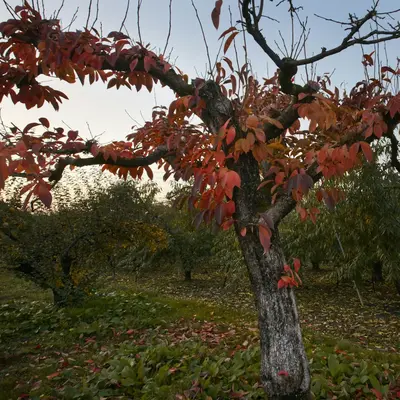
One of the most popular pecan varieties for home orchards, living up to its name with exceptional nut quality and reliable production. Desirable produces large, plump pecans with thin shells that crack easily and yield beautiful halves perfect for baking or snacking. This variety is particularly valued for its consistent bearing habits and excellent disease resistance in humid climates.
Harvest
210-240d
Days to harvest
Sun
Full sun to partial shade
Zones
5–9
USDA hardiness
Height
70-100 feet
Planting Timeline
Showing dates for Pecan (Desirable) in USDA Zone 7
All Zone 7 nut-tree →Zone Map
Click a state to update dates
Pecan (Desirable) · Zones 5–9
Growing Details
Complete Growing Guide
The Desirable pecan requires a long, hot growing season of 210–240 frost-free days and performs best in USDA zones 6–9 with hot summers and moderate winter chilling. Unlike generic pecan advice, this cultivar specifically demands deep, well-draining soil and excellent air circulation to prevent scab and powdery mildew—common issues in humid regions where Desirable otherwise excels. Plant in full sun with at least 40 feet of clearance from other trees to maximize air flow and nut production. Water consistently during kernel development (mid-summer through early fall) since inconsistent moisture causes empty shells and splits. A practical tip: plant a compatible pollinator variety like Pawnee or Sioux within 100 feet, as Desirable's pollen matures at a different time than its female flowers. Monitor regularly for pecan weevil in late summer and apply neem oil if needed to protect your crop before harvest.
Light: Full sun (6 or more hours of direct sunlight a day), Partial Shade (Direct sunlight only part of the day, 2-6 hours). Soil: Clay, Loam (Silt), Sand. Soil pH: Acid (<6.0), Alkaline (>8.0), Neutral (6.0-8.0). Drainage: Good Drainage, Moist, Occasional Flooding, Occasionally Dry. Height: 70 ft. 0 in. - 100 ft. 0 in.. Spread: 40 ft. 0 in. - 75 ft. 0 in.. Spacing: 24-60 feet, more than 60 feet. Growth rate: Medium. Maintenance: Medium. Regions: Coastal, Mountains, Piedmont.
Harvesting
Desirable pecans reach peak harvest readiness when the kernel fills out completely inside the shell, typically signaled by the hull splitting open and dropping to reveal the characteristic tan shell beneath. At this stage, the nuts will feel heavy and full when gently squeezed, and the kernel should rattle minimally when shaken. Rather than waiting for all nuts to drop simultaneously, employ continuous harvesting by collecting fallen nuts every few days throughout the season, as maturation occurs progressively across the canopy. A critical timing tip: harvest Desirables within two to three days of hull split, before nuts remain on the ground long enough to absorb moisture or suffer pest damage, which is especially important in humid climates where this variety excels.
Sweet edible nuts with a husk that splits into four sections when they ripen in the fall. Husk begins green and dries to brown. The nut is oval to round, 1-3" long, tan to brown with darker streaking. Wind pollinated.
Color: Brown/Copper, Cream/Tan, Green. Type: Nut. Length: 1-3 inches. Width: 1-3 inches.
Garden value: Edible
Harvest time: Fall, Summer
Edibility: Nuts are edible.
Storage & Preservation
Freshly harvested Desirable pecans should be dried to 5–7% moisture content before storage. Keep them in a cool, dry place at 32–45°F (0–7°C) with relative humidity between 65–70%, ideally in sealed containers or burlap sacks that allow minimal air exposure. At these conditions, in-shell pecans remain fresh for up to two years; shelled kernels last four to six months. For longer storage, freezing is highly effective—vacuum-seal shelled nuts and store at 0°F (−18°C) or below for up to three years without significant quality loss. Drying is also reliable; spread kernels in a warm, well-ventilated space until they reach target moisture levels, then store in airtight containers. Desirable pecans' buttery character makes them prone to rancidity if exposed to warmth or light, so keep them away from heat sources and store in opaque containers when possible.
History & Origin
The Desirable pecan cultivar emerged from the extensive breeding programs conducted at Texas A&M University during the mid-twentieth century, though precise documentation of its original breeder and exact year of introduction remains limited in accessible records. Developed as part of institutional efforts to improve pecan production for commercial and home growers, Desirable represents the culmination of selective breeding focused on nut quality, shell thickness, and disease resistance. The variety gained prominence through university extension recommendations and has since become widely distributed by commercial nurseries, establishing itself as a cornerstone cultivar in pecan breeding lineages valued for its reliable performance across diverse growing regions.
Origin: Central & E. Central U.S.A. to Mexico
Advantages
- +Produces large, plump pecans with thin shells that crack easily
- +Exceptional nut quality yields beautiful halves perfect for baking
- +Reliable, consistent bearing habits make it dependable for home orchards
- +Excellent disease resistance in humid climates compared to other varieties
- +Rich, buttery, sweet flavor delivers classic pecan taste
Considerations
- -Susceptible to pecan scab and brown spot in wet conditions
- -Long 210-240 day season requires warm, frost-free growing regions
- -Moderate to difficult cultivation demands proper care and attention
- -Multiple pest pressures including weevils and caseborers need management
Companion Plants
Clover and comfrey do the most useful work under a pecan canopy — clover fixes nitrogen and stays low enough not to compete for light, while comfrey's deep taproot pulls up calcium and potassium and deposits them as surface mulch when the leaves die back. Marigolds and nasturtiums draw in predatory wasps that target pecan nut casebearer larvae, which is a documented pest-suppression mechanism rather than garden folklore. Keep mint contained in a buried pot or it'll colonize the whole understory inside two seasons. The big avoidances are black walnut, which produces juglone and will stunt or kill feeder roots in the shared zone, and any large shade tree planted within 40 feet — canopy competition on a tree that already needs 70–100 feet of vertical space just slows establishment and cuts the airflow that 'Desirable' already struggles with in scab-prone seasons.
Plant Together
Comfrey
Deep roots mine nutrients from subsoil and leaves provide potassium-rich mulch
Clover
Fixes nitrogen in soil and provides ground cover to retain moisture
Marigold
Repels nematodes and other soil pests that can damage pecan roots
Chives
Repels aphids and other insects while improving soil with sulfur compounds
Nasturtium
Attracts beneficial insects and acts as trap crop for aphids
Wildflower Mix
Supports pollinators and beneficial insects for pest control
Mint
Deters ants and rodents that may damage nuts, but plant in containers
Yarrow
Attracts predatory insects and improves soil with deep taproot
Keep Apart
Black Walnut
Produces juglone which is toxic to pecans and inhibits their growth
Pine Trees
Acidify soil significantly, while pecans prefer neutral to slightly alkaline conditions
Large Shade Trees
Compete for sunlight and nutrients, pecans need full sun for optimal nut production
Nutrition Facts
Per 100g serving. % Daily Value based on 2,000 calorie diet. Source: USDA FoodData Central (FDC #2346395)
Pests & Disease Resistance
Resistance
Good resistance to scab and other fungal diseases
Common Pests
Pecan weevil, aphids, fall webworm, pecan nut casebearer
Diseases
Pecan scab, brown spot, downy spot, crown rot
Troubleshooting Pecan (Desirable)
What you'll see, why it happens, and what to do about it.
Blackened, sunken lesions on shucks and leaves, often appearing by midsummer in wet years
Likely Causes
- Pecan scab (Venturia effusa) — the most economically damaging disease on pecans in the southeastern U.S., spreads rapidly in humid conditions above 70°F
- Susceptible variety planted without a spray program — 'Desirable' is notably scab-susceptible
What to Do
- 1.Apply a fungicide labeled for pecan scab (propiconazole is commonly used) on a 14-day schedule from bud break through shell hardening
- 2.Don't let the canopy get crowded — prune for airflow every dormant season, even on young trees
- 3.If scab is chronic and severe, seriously consider whether 'Desirable' is the right variety for your site; 'Elliot' and 'Lakota' carry better scab resistance
Nuts drop prematurely in late summer, kernel inside is hollowed out or contains a fat white grub
Likely Causes
- Pecan nut casebearer (Acrobasis nuxvorella) — larvae bore into the nut shortly after pollination, causing early drop
- Pecan weevil (Curculio caryae) — adults puncture nuts in August–September to lay eggs; larvae consume the kernel
What to Do
- 1.For casebearer, time a carbaryl or spinosad spray to the 'black head' larvae stage — your county extension office can provide a pheromone-trap monitoring calendar
- 2.For weevil, apply kaolin clay or a labeled insecticide to the ground around the trunk starting in early August
- 3.Collect and destroy all dropped nuts immediately — leaving them on the ground lets larvae complete their cycle in the soil
Leaves covered in a sticky film, then sooty black coating, especially on lower canopy branches
Likely Causes
- Black pecan aphid (Melanocallis caryaefoliae) or yellow pecan aphid (Monelliopsis pecanis) — both excrete honeydew that feeds sooty mold fungus
- Populations spike when natural predators (lacewings, lady beetles) have been knocked back by broad-spectrum sprays
What to Do
- 1.Before reaching for a spray, scout for predatory insects — if you see lady beetles or lacewing larvae present, wait 5–7 days and recheck
- 2.A hard spray of water from a hose knocks aphid colonies off young growth effectively on smaller trees
- 3.If populations are heavy enough to cause leaf drop, apply insecticidal soap or a labeled systemic like imidacloprid — but note that systemics will also harm beneficial insects visiting the understory
Tree shows dieback at the crown, leaves wilt and turn brown without dropping cleanly, and bark at the soil line looks dark and water-soaked
Likely Causes
- Crown rot (Phytophthora species) — almost always triggered by poor drainage or a planting hole that holds water
- Tree planted too deep — burying the root flare even 2–3 inches can suffocate feeder roots and invite Phytophthora
What to Do
- 1.Dig back the soil from the trunk base and confirm the root flare is visible at or above grade; if it's buried, pull the soil back immediately
- 2.Improve surface drainage away from the trunk — a slight grade of 2–3% redirects standing water without major regrading
- 3.There is no reliable cure once crown rot is established; caught early, removing infected bark tissue and applying a phosphonate fungicide can slow progression, but a severely affected tree rarely recovers
Frequently Asked Questions
How long does it take to harvest Desirable pecans?▼
Is Desirable pecan good for beginners?▼
What does Desirable pecan taste like?▼
Can you grow Desirable pecans in containers?▼
When should I plant Desirable pecan trees?▼
What pests affect Desirable pecan trees?▼
Zone-by-Zone Planting Calendar
Growing Guides from Wind River Greens
Sources & References
External authority sources used in compiling this guide.
See the Methodology page for how this data is sourced, what's AI-assisted, and known limitations.