Pecan (Caddo)
Carya illinoinensis 'Caddo'
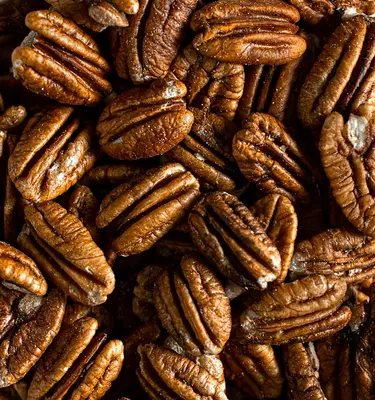
An early-ripening pecan variety that's perfect for northern pecan growing regions and shorter seasons. Caddo produces medium-sized nuts with excellent kernel quality and good crack-out percentage, making it ideal for home gardeners who want reliable harvests. This variety is known for its consistent production and adaptation to cooler climates where other pecans struggle.
Harvest
210-230d
Days to harvest
Sun
Full sun to partial shade
Zones
5–9
USDA hardiness
Height
70-100 feet
Planting Timeline
Showing dates for Pecan (Caddo) in USDA Zone 7
All Zone 7 nut-tree →Zone Map
Click a state to update dates
Pecan (Caddo) · Zones 5–9
Growing Details
Complete Growing Guide
The Caddo cultivar's 210–230-day maturity makes it uniquely suited to northern zones where traditional pecans fail to ripen fully; plant it where it receives full sun and reaches at least 70–100 feet at maturity, ensuring adequate spacing from structures. This variety thrives in well-drained, slightly acidic soil and tolerates cooler growing seasons better than later-ripening types, though it still needs consistent warmth during the growing season. Watch for pecan scab and aphids, which can reduce kernel quality even on this hardy cultivar; apply preventive fungicide sprays during wet springs. Caddo's consistent production means reliable yields, but thin developing nuts in early summer to encourage larger individual nuts and easier harvesting. A practical tip: plant at least two pecan trees for cross-pollination, as even self-fertile Caddo produces better nut set with a compatible pollinator nearby.
Light: Full sun (6 or more hours of direct sunlight a day), Partial Shade (Direct sunlight only part of the day, 2-6 hours). Soil: Clay, Loam (Silt), Sand. Soil pH: Acid (<6.0), Alkaline (>8.0), Neutral (6.0-8.0). Drainage: Good Drainage, Moist, Occasional Flooding, Occasionally Dry. Height: 70 ft. 0 in. - 100 ft. 0 in.. Spread: 40 ft. 0 in. - 75 ft. 0 in.. Spacing: 24-60 feet, more than 60 feet. Growth rate: Medium. Maintenance: Medium. Regions: Coastal, Mountains, Piedmont.
Harvesting
Caddo pecans reach peak harvest readiness when the outer husk turns from green to brown and begins splitting naturally, revealing the darker shell beneath, typically occurring in late September through October depending on your region. The nuts themselves should feel firm and full when gently squeezed, indicating mature kernels inside. Rather than waiting for a single massive drop, Caddo follows a continuous harvest pattern where nuts fall progressively over several weeks, so plan multiple collection trips by shaking branches or gathering fallen nuts from the ground every 7-10 days. A key timing tip: begin harvesting as soon as you spot the first significant husk splits, since delayed collection allows nuts to remain exposed to moisture and potential pest damage on the orchard floor.
Sweet edible nuts with a husk that splits into four sections when they ripen in the fall. Husk begins green and dries to brown. The nut is oval to round, 1-3" long, tan to brown with darker streaking. Wind pollinated.
Color: Brown/Copper, Cream/Tan, Green. Type: Nut. Length: 1-3 inches. Width: 1-3 inches.
Garden value: Edible
Harvest time: Fall, Summer
Edibility: Nuts are edible.
Storage & Preservation
Caddo pecans store best in cool, dry conditions between 32–50°F with humidity around 65–70%. Keep shelled nuts in airtight containers or vacuum-sealed bags to prevent rancidity; unshelled pecans last longer and can be held at room temperature in a cool pantry for up to three months. Fresh harvested nuts keep four to six months under proper refrigeration, extending to a year when frozen at 0°F or below.
For preservation, freezing is ideal—both shelled and in-shell nuts freeze exceptionally well for up to two years without quality loss. Roasting before storage concentrates flavor and extends shelf life. Drying at low temperatures (around 140–160°F) reduces moisture content and creates shelf-stable kernels suitable for baking. Because Caddo's buttery character makes it particularly prone to oil oxidation, vacuum sealing or freezing is preferable to long-term pantry storage. Date your containers; older nuts work better in baked goods than for eating fresh.
History & Origin
Caddo pecan was developed by the USDA Pecan Breeding Program at the Southern Pecan Shelling Company in the mid-20th century, though precise documentation of its original breeder and release year remains limited in readily available sources. The variety emerged from crosses within germplasm lines selected for northern adaptation and early maturity, characteristics increasingly valuable as pecan cultivation expanded into cooler regions beyond the traditional Deep South growing areas. Caddo represents the breeding philosophy of that era, which prioritized shorter season requirements and reliable production in marginal climates while maintaining the kernel quality expected from commercial pecan varieties.
Origin: Central & E. Central U.S.A. to Mexico
Advantages
- +Early ripening in 210-230 days makes it ideal for northern climates
- +Medium nuts crack out easily with excellent kernel quality and yield
- +Sweet, buttery flavor rivals commercial pecans for home garden enjoyment
- +Consistent annual production even in cooler regions other varieties cannot tolerate
- +Moderate growing difficulty makes it accessible for most home gardeners
Considerations
- -Susceptible to pecan scab and brown spot in humid growing conditions
- -Vulnerable to multiple pests including weevils and hickory shuckworm damage
- -Requires cross-pollination with compatible pecan variety for reliable nut set
Companion Plants
Comfrey and clover are the most practical companions to establish under a Caddo pecan. Comfrey's taproot — often 6 feet or more — pulls calcium and potassium up from deep in the soil profile and deposits them when you cut the leaves back, effectively mulching with minerals the pecan can use during the long growing season. Clover fixes nitrogen at the root level, which matters in the lean years before a young tree hits full production around year 8-10. Native grasses and wildflowers fill the understory without competing hard for water, and they pull in the predatory wasps and ground beetles that keep aphid colonies from building up in the canopy. In our zone 7 Georgia garden, French marigolds (Tagetes patula) planted near the drip line seem to suppress soil nematodes reasonably well through the warm-season window.
Black walnut needs to stay at least 50 feet away — not because of any general incompatibility, but because juglone, the allelopathic compound it releases through roots and decomposing litter, hits Carya species hard and will stunt a young pecan before you figure out what's wrong. Tomatoes and potatoes share that same juglone sensitivity, so skip them in the drip zone too.
Plant Together
Comfrey
Deep roots bring nutrients to surface, leaves make excellent mulch and compost
Clover
Fixes nitrogen in soil, provides ground cover, and attracts beneficial insects
Marigolds
Repel nematodes and other soil pests that can damage pecan roots
Nasturtiums
Act as trap crops for aphids and cucumber beetles, attract beneficial predators
Wildflowers
Support beneficial insects and pollinators, improve biodiversity around mature trees
Native grasses
Prevent soil erosion, require minimal water, don't compete heavily with deep pecan roots
Elderberry
Attracts beneficial insects, provides wildlife habitat, tolerates partial shade under pecans
Lavender
Repels ants and other pests, drought tolerant, attracts beneficial pollinators
Keep Apart
Black walnut
Produces juglone toxin that can inhibit pecan growth and nut production
Tomatoes
Sensitive to juglone compounds that pecans produce in small amounts
Potatoes
Susceptible to juglone toxicity and compete for nutrients in root zone
Nutrition Facts
Per 100g serving. % Daily Value based on 2,000 calorie diet. Source: USDA FoodData Central (FDC #2346395)
Pests & Disease Resistance
Resistance
Good resistance to scab, moderate resistance to other fungal diseases
Common Pests
Pecan weevil, aphids, hickory shuckworm, fall webworm
Diseases
Pecan scab, brown spot, downy spot, powdery mildew
Troubleshooting Pecan (Caddo)
What you'll see, why it happens, and what to do about it.
Dark, sunken lesions on shuck and nut surface, nuts shriveling or failing to fill out — most visible in August through harvest
Likely Causes
- Pecan scab (Venturia effusa) — the most damaging disease on pecans in the humid Southeast, spreads rapidly in wet springs
- Caddo has moderate scab resistance, but prolonged rainfall years can still overwhelm it
What to Do
- 1.Apply a fungicide labeled for pecan scab (copper-based or myclobutanil) starting at bud break in spring, repeating every 14-21 days through mid-summer
- 2.Rake and remove leaf and shuck debris in fall — Venturia overwinters on that material
- 3.If scab pressure is severe year after year, check whether your site has enough airflow; trees planted under 35 feet apart make this worse
Nuts dropping prematurely in late summer with small, grub-eaten kernels inside — shucks may have tiny entry holes near the stem end
Likely Causes
- Pecan weevil (Curculio caryae) — adult beetles puncture the shuck to lay eggs in August and September, larvae eat the kernel
- Hickory shuckworm (Cydia caryana) — earlier-season larvae tunnel the shuck, cutting off kernel development before water stage
What to Do
- 1.Collect and destroy all dropped nuts immediately — larvae that complete their cycle in fallen nuts re-enter the soil and emerge as adults the following season
- 2.For weevil on mature trees, pyrethrin-based sprays timed to adult emergence (when shucks reach water stage, roughly mid-August in zone 7) can reduce pressure
- 3.NC State Extension recommends monitoring with drop-cloth beating samples to time any spray applications accurately
Leaves covered in white powdery coating or yellow-orange spots in midsummer, followed by early defoliation
Likely Causes
- Powdery mildew (Erysiphe alphitoides) — favors warm days and cool nights in late summer
- Downy spot (Mycosphaerella caryigena) — produces yellow spots on the upper leaf surface, white sporulation on the underside
What to Do
- 1.A single defoliation event on a mature 70-100 foot tree generally doesn't require treatment — established pecans have the root mass to push through it
- 2.If a young tree under 5 years is losing leaves heavily before October, apply a sulfur-based fungicide and lay 3-4 inches of wood chip mulch over the root zone to reduce overall stress
- 3.Cut out evening overhead irrigation — wet foliage sitting overnight feeds both pathogens
Frequently Asked Questions
How long does it take Caddo pecan trees to produce nuts?▼
Is Caddo pecan good for beginners?▼
Can you grow Caddo pecan trees in containers?▼
What does Caddo pecan taste like?▼
When should I plant Caddo pecan trees?▼
What pests affect Caddo pecan trees?▼
Zone-by-Zone Planting Calendar
Growing Guides from Wind River Greens
Sources & References
External authority sources used in compiling this guide.
- ExtensionNC State Extension
- USDAUSDA FoodData Central
See the Methodology page for how this data is sourced, what's AI-assisted, and known limitations.