Wild Indigo
Amorpha canescens
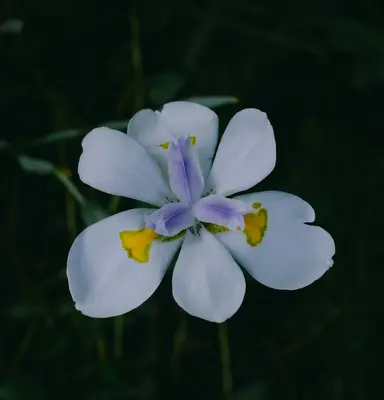
A unique prairie native with silvery-gray foliage and distinctive deep purple flower spikes topped with bright orange stamens, creating an unusual and striking garden display. This extremely drought-tolerant legume develops a deep taproot and becomes virtually maintenance-free once established, making it perfect for challenging sites.
Sun
Full sun to partial shade
Zones
2–9
USDA hardiness
Height
1-3 feet
Planting Timeline
Showing dates for Wild Indigo in USDA Zone 7
All Zone 7 native-wildflower →Zone Map
Click a state to update dates
Wild Indigo · Zones 2–9
Growing Details
Complete Growing Guide
Wild Indigo rewards patience more than any other prairie native. Choose your planting site carefully — that legendary deep taproot means a mature Baptisia resents transplanting, so plant it once and leave it alone. Pick a spot with full sun (6+ hours) for the strongest stems and heaviest bloom; in hot southern zones (7-9), a few hours of afternoon shade is fine and will extend flower life.
Soil flexibility is one of this plant's greatest strengths. Wild Indigo thrives in everything from sandy loam to heavy clay, as long as drainage is reasonable. It does not need rich soil — in fact, overly fertile ground produces floppy stems that need staking. Skip the compost amendments and definitely skip the fertilizer. As a nitrogen-fixing legume, it manufactures its own.
Starting from seed requires planning. Scarify the hard seed coat by nicking with a file or rubbing on sandpaper, then cold-stratify in moist sand in the refrigerator for 60 days. Direct sow scarified, stratified seed in fall (letting winter do the stratification work) or in early spring. Alternatively, start seeds in deep tree-pots indoors — the taproot develops fast and resents shallow cells. Transplant young seedlings to their permanent home before the second year, as older plants almost never survive a move.
Expect a slow start. Year one produces a small clump of foliage; year two often gives a few blooms; by year three, you have the full prairie spectacle that lasts for decades. Don't dig it up thinking it failed — the root system is establishing underground.
Common mistakes to avoid: do not fertilize, do not overwater established plants, and do not cut it back in fall if you can help it. The seed pods are an autumn feature, and the dried stems shelter overwintering native bees. Cut old growth to the ground in early spring before new shoots emerge.
For maximum visual impact, give each plant 3 feet of breathing room — they grow into shrub-sized specimens. Pair with little bluestem, butterfly weed, and prairie dropseed for an authentic tallgrass prairie look. In zones 3-9, no winter protection is needed; this plant is bone-hardy. If stems flop after heavy rain, install a peony-style grow-through ring early in the season; staking later is nearly impossible without snapping the brittle stems. Deer and rabbits leave it alone thanks to mildly toxic alkaloids in the foliage.
Harvesting
Wild Indigo isn't harvested for food, but gardeners do "harvest" it for two purposes: cut flowers and seed collection. For cut flowers, snip flower spikes early in the morning when one-third of the buds on the spike have opened. Use sharp pruners and cut stems at an angle just above a leaf node. The blooms last 5-7 days in a vase and the foliage itself is prized by florists for its silvery-blue color and good vase life.
For seed harvest, wait until the pods turn jet black and rattle when shaken — typically late summer to early fall. Clip whole pod-bearing stems on a dry afternoon and place them in paper bags to finish drying for two weeks. Crush dried pods to release the small, hard, kidney-shaped seeds. Wear gloves; the dried pods can be sharp. Avoid harvesting more than one-third of pods from any plant to leave food for native seed-eating birds and to allow some natural reseeding.
Storage & Preservation
Cut Wild Indigo flowers last about a week in a vase with fresh water changed every two days. Recut stems underwater and add floral preservative for best longevity. The dramatic black seed pods are excellent for dried arrangements — cut whole stems when pods have blackened but before they shatter, then hang upside down in a dark, well-ventilated space for 2-3 weeks until fully dry. Dried pods hold their shape and rattle pleasingly for years.
For seed storage, ensure seeds are completely dry, then store in a paper envelope or glass jar inside a cool, dry place. Refrigerated at 35-40°F in an airtight container, viable seed keeps for 3-5 years. Label with the collection date and species. Note: all parts of Baptisia are mildly toxic — do not store near food or where pets might access.
History & Origin
Wild Indigo (genus Baptisia) is native to the prairies, savannas, and open woodlands of central and eastern North America, with Baptisia australis (Blue Wild Indigo) being the most widely cultivated species. The genus name comes from the Greek "bapto," meaning "to dye," referencing its historical use as a substitute for true indigo (Indigofera tinctoria) by early American colonists and Indigenous peoples. While the dye it produces is inferior and fades quickly, it served as an accessible alternative when imported indigo was scarce or expensive.
Several Native American tribes, including the Cherokee and Osage, used Baptisia medicinally — though cautiously, as the plant contains toxic quinolizidine alkaloids. The Perennial Plant Association named Baptisia australis its Perennial Plant of the Year in 2010, recognizing its toughness and ornamental value. Modern breeders, particularly Hans Hansen at Walters Gardens, have introduced numerous hybrid cultivars in the "Decadence" series featuring expanded color palettes — yellows, whites, bicolors — but the classic purple-and-orange wild form remains a favorite of native plant gardeners and prairie restorationists.
Advantages
- +Extreme drought tolerance once established thanks to deep taproot reaching 6+ feet
- +Lives 50+ years in the same spot with zero division required
- +Fixes its own nitrogen — never needs fertilizer
- +Deer and rabbit resistant due to mildly toxic alkaloids
- +Provides early-season nectar for native bumblebees and queen bumblebees emerging from hibernation
- +Striking three-season interest: silvery foliage, purple flowers, black seed pods
- +Hardy from zone 3 to zone 9 with no winter protection
Considerations
- -Takes 2-3 years to reach full size and flowering potential — not for impatient gardeners
- -Nearly impossible to transplant or move once established due to deep taproot
- -Seeds require scarification AND 60-day cold stratification to germinate
- -All plant parts are mildly toxic — not safe for grazing pets or livestock
- -Stems can flop after heavy rain or in overly rich soil, requiring early-season support
- -Bloom period is relatively short, lasting only 2-3 weeks in late spring
Companion Plants
The best companions for Wild Indigo are the ones it grows next to naturally on a dry prairie: Purple Coneflower, Black-Eyed Susan, Little Bluestem Grass, and Wild Bergamot. These plants share the same lean, well-drained soil preference and tolerate pH up to 8.0, so they won't outcompete Amorpha canescens for the resources it actually needs. Little Bluestem and Prairie Dropseed are particularly good structural fits — their tight, clumping root systems don't spread laterally the way sod-forming grasses do, so they fill the mid-layer without crowding out a plant that takes 2–3 seasons to fully establish. Wild Bergamot and Butterfly Weed attract the same guild of native bees and parasitic wasps that keep pea aphid pressure in check, so planting them within 10–15 feet has real functional value.
The plants to avoid are a different story for different reasons. Black Walnut produces juglone, an allelopathic compound that leaches through the root zone and suppresses many forbs — legume-family plants like Amorpha being notably sensitive. Kentucky Bluegrass is the subtler threat: it spreads aggressively by rhizome and will smother a young Wild Indigo planting in the first 2 seasons before it can put down the deep roots that make it so durable later. Crown Vetch is a similar problem in terms of aggression, and it's listed as invasive across much of its introduced range — reason enough to keep it out of the garden entirely, whatever you're planting near it.
Plant Together
Purple Coneflower
Both are native prairie plants with similar soil and water requirements, attract beneficial pollinators
Black-Eyed Susan
Compatible native wildflower that blooms at different times, extending pollinator season
Little Bluestem Grass
Native prairie grass that provides structural support and creates natural ecosystem balance
Wild Bergamot
Native companion that attracts beneficial insects and has complementary root depth
Prairie Dropseed
Native grass that helps prevent soil erosion and doesn't compete for nutrients
Butterfly Weed
Both support native pollinators and have similar drought tolerance once established
Nodding Onion
Native allium that naturally repels pests while attracting pollinators
Leadplant
Fellow nitrogen-fixing legume that creates beneficial soil conditions
Keep Apart
Black Walnut
Produces juglone toxin that inhibits growth of most legumes including Wild Indigo
Kentucky Bluegrass
Aggressive non-native grass that competes heavily for water and nutrients
Crown Vetch
Invasive legume that can outcompete and smother native Wild Indigo
Pests & Disease Resistance
Resistance
Excellent disease resistance, very hardy
Common Pests
Few pest problems, occasionally aphids
Diseases
Rarely affected by diseases
Troubleshooting Wild Indigo
What you'll see, why it happens, and what to do about it.
Stunted seedlings with slow or no germination after 30+ days
Likely Causes
- Scarification skipped — Wild Indigo (Amorpha canescens) seeds have a hard coat that blocks water uptake
- Soil temperature too cold — germination stalls below 65°F
What to Do
- 1.Scarify seeds before planting: rub them lightly on sandpaper or nick the seed coat with a nail file, then soak in room-temperature water for 24 hours
- 2.Direct sow in spring once soil hits at least 65°F, or cold-stratify seeds in damp sand in the fridge for 30 days before a late-winter indoor start
- 3.Be patient — even well-prepared seeds can take the full 21–30 days; don't write off a flat that's only been in the ground 2 weeks
Soft, curled leaf tips with sticky residue on stems in late spring
Likely Causes
- Aphid colonies — likely pea aphids (Acyrthosiphon pisum), which specifically target legume-family plants — clustering on new growth
- Absence of predatory insects early in the season before beneficials establish
What to Do
- 1.Knock aphids off with a firm stream of water from a hose — repeat every 2–3 days for a week
- 2.Hold off on insecticides; Amorpha canescens is a documented host for specialist native bees and beneficial wasps that will suppress the colony on their own within 7–14 days
- 3.If the infestation is heavy and persistent, a diluted insecticidal soap spray (2 teaspoons per quart of water) applied directly to colonies is low-risk to beneficials once dry
Yellowing leaves, weak new growth, and mushy crown tissue in an established plant
Likely Causes
- Overwatering or poorly drained soil — this species is native to dry prairies and will not tolerate wet feet
- Heavy clay soil holding moisture around the crown through multiple wet weeks
What to Do
- 1.Stop supplemental irrigation immediately; once roots are established, Amorpha canescens needs essentially none — treat it like a xeric plant, not a border perennial
- 2.If drainage is the underlying problem, amend the bed with coarse grit before replanting, or move to a raised berm
- 3.Confirm soil pH is between 6.5 and 8.0 — waterlogged clay sitting below 6.5 compounds root stress significantly
Frequently Asked Questions
How long does Wild Indigo take to grow from seed?▼
Is Wild Indigo good for beginners?▼
Can you grow Wild Indigo in containers or pots?▼
When should I plant Wild Indigo?▼
Is Wild Indigo toxic to dogs or livestock?▼
What's the difference between Wild Indigo and False Indigo?▼
Zone-by-Zone Planting Calendar
Growing Guides from Wind River Greens
Sources & References
External authority sources used in compiling this guide.
- ExtensionNC State Extension
See the Methodology page for how this data is sourced, what's AI-assisted, and known limitations.