Milkmaid
Asclepias incarnata
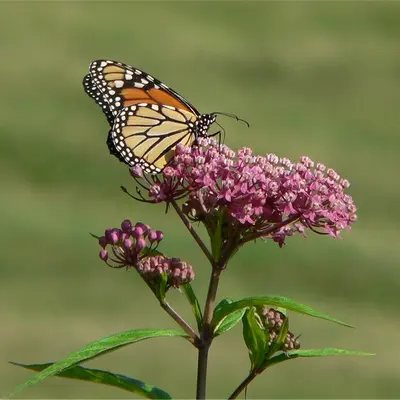
Clusters of creamy white florets on sturdy stems. Attractive lance-shaped leaves. Use for cut flowers and garden beds. Flowers late in the summer of the first year. Tall plants and sturdy stems are highly uniform. Attracts butterflies and hummingbirds. Larval host for monarch butterflies. Native to North America. Also known as swamp milkweed. Perennial in Zones 3-8.
Harvest
120-130d
Days to harvest
Sun
Full sun to partial shade
Zones
3–9
USDA hardiness
Height
3-5 feet
Planting Timeline
Showing dates for Milkmaid in USDA Zone 7
All Zone 7 native-wildflower →Zone Map
Click a state to update dates
Milkmaid · Zones 3–9
Growing Details
Complete Growing Guide
Clusters of creamy white florets on sturdy stems. Attractive lance-shaped leaves. Use for cut flowers and garden beds. Flowers late in the summer of the first year. Tall plants and sturdy stems are highly uniform. Attracts butterflies and hummingbirds. Larval host for monarch butterflies. Native to North America. Also known as swamp milkweed. Perennial in Zones 3-8. According to Johnny's Selected Seeds, Milkmaid is 120 - 130 days to maturity, perennial. Notable features: Use for Cut Flowers and Bouquets, Attracts Beneficial Insects.
Light: Full sun (6 or more hours of direct sunlight a day), Partial Shade (Direct sunlight only part of the day, 2-6 hours). Soil: Clay, High Organic Matter, Loam (Silt). Soil pH: Acid (<6.0), Neutral (6.0-8.0). Drainage: Good Drainage, Moist, Occasionally Wet. Height: 3 ft. 0 in. - 5 ft. 0 in.. Spread: 2 ft. 0 in. - 3 ft. 0 in.. Spacing: 3 feet-6 feet. Growth rate: Medium. Maintenance: Low. Regions: Coastal, Mountains, Piedmont.
Harvesting
Milkmaid reaches harvest at 120 - 130 days from sowing per Johnny's Selected Seeds.
3-4-inch long follicle seed pods split on one side to release seeds with tufts of hair that float on the wind. They are green and mature to brown.
Color: Brown/Copper, Cream/Tan, White. Type: Follicle. Length: > 3 inches. Width: 1-3 inches.
Garden value: Showy
Harvest time: Fall
Storage & Preservation
For cut flowers, store Milkmaid stems in a clean vase with cool water (65-72°F) in a cool location away from direct sunlight and ripening fruit. Change water every 2-3 days. Fresh stems last 7-14 days. For preservation: (1) Air dry by hanging bundles upside-down in a cool, dark, well-ventilated space for 2-3 weeks, creating long-lasting dried arrangements. (2) Press individual flowers between parchment and heavy books for 1-2 weeks to preserve for crafts. (3) Freeze flowers in ice cubes for decorative purposes.
History & Origin
Asclepias incarnata, commonly called swamp milkweed, is a native North American wildflower with deep historical roots in wetland and prairie ecosystems across the eastern and central United States. The "Milkmaid" cultivar represents a selected garden form of this species, though specific breeder attribution and introduction date remain undocumented in widely available horticultural records. Like many native wildflower cultivars, it likely emerged through informal seed selection and propagation by native plant nurseries rather than formal breeding programs, reflecting the growing twentieth-century interest in native plant gardening. The cultivar's creamy-white flowers and uniform growth habit suggest deliberate selection for ornamental garden performance while maintaining the ecological value of the species as a monarch butterfly host plant.
Origin: Central & E. Canada to W. Central & E. U.S.A.
Advantages
- +Creamy white flower clusters provide elegant cut flower arrangements throughout late summer.
- +Sturdy stems and uniform plant height make Milkmaid excellent for garden design consistency.
- +Serves as essential monarch butterfly larval host while attracting pollinators to gardens.
- +Perennial hardiness across Zones 3-8 ensures long-term garden establishment with minimal replanting.
- +Easy cultivation and low difficulty makes Milkmaid suitable for beginning gardeners.
Considerations
- -Swamp milkweed prefers consistently moist soil; drought stress causes stunted growth and wilting.
- -Late summer flowering means shorter display window compared to early-blooming wildflower alternatives.
- -Self-seeds aggressively in ideal conditions, potentially overwhelming adjacent garden plantings nearby.
Companion Plants
Wild Bergamot (Monarda fistulosa) and Purple Coneflower (Echinacea purpurea) are the most useful neighbors here. They bloom on a similar schedule, attract the same guild of native bees and parasitic wasps, and together they create enough floral density that pest pressure on any single plant stays low. Wild Columbine and Coral Bells fill in the early-season gap before Milkmaid hits its stride around day 90-100, so the patch keeps something going for pollinators from April through August. Root competition is minimal — Milkmaid pushes a substantial taproot straight down, while Coral Bells stays in the top 6-8 inches of soil.
Black Walnut is the one to plan around hardest. Its roots and decomposing leaf litter release juglone at concentrations that cause slow, hard-to-diagnose decline in Asclepias incarnata — you'll see gradual yellowing and dieback over a season or two before you trace it back to the source. Autumn Olive and Crown Vetch are a different problem: neither produces a soil toxin, but both spread aggressively enough to physically crowd out a milkweed planting before it can establish. Either one can dominate a bed within 2-3 seasons if you let it get a foothold alongside a perennial that takes its time coming in.
Plant Together
Wild Bergamot
Attracts beneficial insects and pollinators while sharing similar native habitat preferences
Purple Coneflower
Complementary blooming periods and both attract native bees and butterflies
Wild Columbine
Shares woodland edge habitat and attracts different pollinators, extending garden diversity
Coral Bells
Similar moisture and partial shade requirements, provides contrasting foliage texture
Wild Ginger
Acts as living mulch, suppresses weeds, and thrives in same moist, shaded conditions
Trout Lily
Early spring bloomer that complements Milkmaid's timing and shares woodland habitat
Native Sedges
Provides ground cover and helps retain soil moisture that Milkmaid requires
Mayapple
Creates beneficial understory microclimate and shares native woodland ecosystem
Keep Apart
Black Walnut
Produces juglone which is toxic to many wildflowers including Milkmaid
Autumn Olive
Invasive shrub that outcompetes native wildflowers for resources and light
Crown Vetch
Aggressive spreader that can smother delicate native wildflowers
Troubleshooting Milkmaid
What you'll see, why it happens, and what to do about it.
Seedlings fail to emerge or germinate unevenly after 14+ days, even in warm soil
Likely Causes
- Skipped cold stratification — Asclepias incarnata seeds need 30 days of cold, moist chilling to break dormancy
- Seed planted too deep (deeper than 1/4 inch smothers germination)
What to Do
- 1.Refrigerate seeds in a damp paper towel inside a zip bag for 30 days before direct sowing or starting indoors
- 2.Surface-sow or barely cover seeds — 1/8 inch of soil is enough
- 3.If you've already sown and gotten nothing by day 21, assume stratification failure and start a new batch with cold treatment
Leaves stippled silver or bronze, with fine webbing on undersides in hot, dry stretches
Likely Causes
- Two-spotted spider mite (Tetranychus urticae) — thrives when plants are drought-stressed and airflow is poor
- Inadequate soil moisture, which stresses the plant and makes it more susceptible
What to Do
- 1.Blast the undersides of leaves with a strong jet of water every 2-3 days to knock mites off
- 2.Deep-water the plant so the root zone stays consistently moist — swamp milkweed genuinely wants wet feet, especially in summer
- 3.If infestation is heavy, apply insecticidal soap in the evening to avoid harming any visiting pollinators
Stems wilt or snap at the base near ground level, with no obvious pest or disease on the foliage
Likely Causes
- Milkweed stem weevil (Rhyssomatus lineaticollis) — female weevils girdle the stem near the base to lay eggs, cutting off water flow
- Waterlogged soil causing crown rot, particularly in poorly drained sites
What to Do
- 1.Cut the wilted stem at the base and check for a small tunnel or larval chamber — if present, dispose of the stem in the trash, not compost
- 2.Pull back any mulch from the crown and let it dry out if you suspect rot; improve drainage before replanting in that exact spot
- 3.Milkmaid will typically re-sprout from the root crown — don't pull the plant unless multiple stems collapse in the same season
Frequently Asked Questions
How long do Milkmaid cut flowers last in a vase?▼
Is Milkmaid native wildflower good for beginners?▼
Can you grow Milkmaid in containers?▼
When should I plant Milkmaid seeds?▼
What wildlife does Milkmaid attract?▼
Is Milkmaid the same as swamp milkweed?▼
Zone-by-Zone Planting Calendar
Growing Guides from Wind River Greens
Sources & References
External authority sources used in compiling this guide.
- ExtensionNC State Extension
- BreederJohnny's Selected Seeds
See the Methodology page for how this data is sourced, what's AI-assisted, and known limitations.