Summertime
Lactuca sativa 'Summertime'
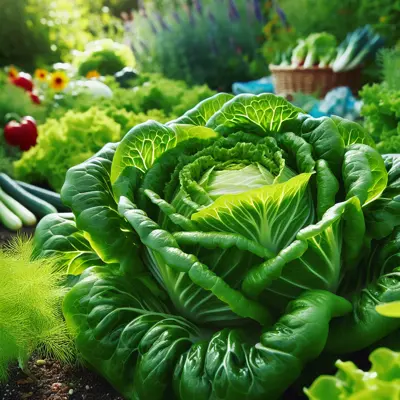
The ultimate warm-weather lettuce that thrives when others bolt, producing crisp, sweet heads even in summer heat. This crisphead variety combines the satisfying crunch of iceberg with superior heat tolerance and better flavor. A game-changer for gardeners who want fresh lettuce year-round in warmer climates.
Harvest
70-80d
Days to harvest
Sun
Full sun to partial shade
Zones
2–11
USDA hardiness
Height
6-12 inches
Planting Timeline
Showing dates for Summertime in USDA Zone 7
All Zone 7 lettuce →Zone Map
Click a state to update dates
Summertime · Zones 2–11
Growing Details
Succession Planting
Direct sow 'Summertime' every 14-18 days starting March 1 in zone 7, and keep going through mid-May. Once daytime temperatures are consistently hitting 85-90°F, germination turns unreliable and what does come up will bolt before it heads — stop sowing by late May and pick up again in late August for a fall run. Each planting gives you a decent harvest window of about 10-14 days before heads start to crack, so staggering is the only way to avoid a two-week glut followed by nothing.
For the fall succession, sow again from late August through early October in zone 7. 'Summertime' has better heat tolerance than most crisphead types, but it's still lettuce — it won't hold past the first hard frost at 28°F or below, so time your last sowing with that cutoff in mind.
Complete Growing Guide
While most lettuces surrender to summer heat, Summertime is engineered to produce heads when temperatures consistently exceed 75°F, making it ideal for late spring through early fall planting in warm regions. Plant in partial shade (afternoon shade is crucial) and ensure consistently moist, well-draining soil rich in organic matter to support rapid head formation. This crisphead variety still prefers cooler mornings and evenings, so consider shade cloth during peak summer to reduce stress and prevent the premature bolting that weakens heat-tolerant strains. Monitor closely for aphids and cabbage loopers, which thrive in warm conditions; use row covers early in the season for prevention. The key practical advantage: succession plant every two weeks starting in late spring rather than relying on single sowings, since even this cultivar benefits from staggered harvests during marginal heat periods. Maintain soil moisture without waterlogging to prevent root rot in humid climates.
Light: Full sun (6 or more hours of direct sunlight a day), Partial Shade (Direct sunlight only part of the day, 2-6 hours). Soil: High Organic Matter. Soil pH: Neutral (6.0-8.0). Drainage: Good Drainage, Moist. Height: 0 ft. 6 in. - 1 ft. 0 in.. Spread: 0 ft. 6 in. - 1 ft. 0 in.. Spacing: Less than 12 inches. Growth rate: Rapid. Maintenance: Medium. Propagation: Seed. Regions: Coastal, Mountains, Piedmont.
Harvesting
Harvest Summertime when heads feel firm and dense to the touch, typically reaching 6 to 8 inches in diameter with tightly wrapped outer leaves displaying a pale green hue. Unlike loose-leaf varieties, this crisphead develops a satisfying solidity that signals peak ripeness around day 70–80, though you can leave heads slightly longer for extra size without significant quality loss. For continuous harvest, cut individual heads at soil level in early morning when plants are fully hydrated, and secondary leaves will often regenerate for smaller follow-up harvests. The critical timing advantage: pick in the coolest part of the day before afternoon heat stresses the plant, which preserves crispness and prevents any hint of the bitterness that heat-stressed lettuce can develop.
Tiny seeds with a dandelion-like tuft (pappus) to aid in wind dispersal.
Color: Brown/Copper. Type: Achene. Length: < 1 inch. Width: < 1 inch.
Harvest time: Summer
Edibility: Leaves can be used raw or cooked in salads, sandwiches, and other dishes. Head lettuce can be stored for 2-3 weeks while leaf and butterhead store for 1-2 weeks.
Storage & Preservation
Store whole heads of Summertime lettuce in the refrigerator crisper drawer at 32-35°F with high humidity (95-98%). Wrap loosely in perforated plastic bags or place in ventilated containers to maintain moisture while preventing condensation buildup. Properly stored heads stay crisp for 2-3 weeks.
For optimal freshness, don't wash until ready to use. Remove any damaged outer leaves before storage. If leaves begin to wilt, revive them by soaking in ice water for 10-15 minutes.
While lettuce doesn't freeze or can well due to its high water content, you can preserve excess harvest by making and freezing lettuce soup or dehydrating outer leaves for smoothie powder. The best preservation method is succession planting every 2-3 weeks for continuous fresh harvest throughout the growing season.
History & Origin
Developed by Johnny's Selected Seeds, a Maine-based company renowned for vegetable breeding innovations, 'Summertime' emerged from a focused breeding program aimed at creating heat-tolerant crisphead lettuce for North American gardeners. The variety represents a deliberate cross within the crisphead lineage, combining the dense head structure and crisp texture of iceberg-type lettuces with enhanced bolting resistance and heat tolerance. While the precise crossing details and year of introduction remain proprietary to Johnny's, the variety reflects modern seed company breeding priorities of the late twentieth century, when specialty varieties for specific growing conditions became increasingly important to home gardeners. This cultivar builds on decades of crisphead development work initiated much earlier in the twentieth century.
Origin: Mediterranean to Siberia
Advantages
- +Thrives in summer heat when most lettuce varieties bolt
- +Delivers crisp, sweet flavor comparable to premium iceberg types
- +Produces satisfying crunch without bitterness even in warm weather
- +Enables year-round fresh lettuce harvests in warm climates
Considerations
- -Requires 70-80 days, longer than many faster-maturing lettuce varieties
- -Susceptible to tip burn and bottom rot in inconsistent conditions
- -Vulnerable to multiple pests including aphids, slugs, and cabbage loopers
- -Needs consistent moisture and cool soil to prevent quality issues
Companion Plants
Radishes are probably the most practical thing you can plant alongside 'Summertime.' They mature in 25-30 days and come out of the ground right as the lettuce starts sizing up, so you're not fighting over space — you're essentially double-cropping the same square footage. Chives and garlic are worth tucking in nearby too; their sulfur compounds confuse aphids, which are the pest most likely to colonize lettuce in warm weather. Nasturtiums tend to draw aphids first, so they function as an early-warning plant — when you see the nasturtiums loaded up, you know to check the lettuce heads.
Broccoli is the companion to skip. Brassicas and lettuce share cabbage loopers as a pest, and clustering them together just gives the loopers a larger, easier target. Sunflowers are the other problem: their roots release allelopathic compounds that can stunt lettuce growth for plants within about 12 inches. Keep 'Summertime' at least a full row away from both.
Plant Together
Chives
Repels aphids and improves lettuce flavor while providing natural pest deterrent
Carrots
Loosens soil for lettuce roots and doesn't compete for nutrients due to different root depths
Radishes
Breaks up compacted soil and deters flea beetles that can damage lettuce
Marigolds
Repels nematodes, aphids, and other pests while attracting beneficial insects
Spinach
Similar growing requirements and harvest times, efficient use of garden space
Garlic
Natural fungicide properties help prevent lettuce diseases and repels various pests
Dill
Attracts beneficial insects like ladybugs and lacewings that control aphids
Nasturtiums
Acts as trap crop for aphids and cucumber beetles, drawing pests away from lettuce
Parsley
Attracts beneficial insects and doesn't compete for space due to compact growth habit
Keep Apart
Broccoli
Competes heavily for nitrogen and space, can shade lettuce and stunt growth
Sunflowers
Allelopathic effects inhibit lettuce germination and growth, plus creates too much shade
Nutrition Facts
Per 100g serving. % Daily Value based on 2,000 calorie diet. Source: USDA FoodData Central (FDC #2346388)
Pests & Disease Resistance
Resistance
Exceptional heat tolerance and bolt resistance. Good tip burn resistance.
Common Pests
Aphids, slugs, snails, cabbage loopers
Diseases
Downy mildew, bottom rot, tip burn
Troubleshooting Summertime
What you'll see, why it happens, and what to do about it.
Seedlings collapsing at the soil line within the first 7-10 days after transplanting or germination
Likely Causes
- Damping off — a complex of soil-borne fungi (Pythium spp., Rhizoctonia solani) that thrives in wet, poorly drained soil
- Replanting lettuce in the same bed for 3+ consecutive years without rotation, allowing pathogen load to build
What to Do
- 1.Don't overwater newly seeded or transplanted starts — lettuce wants consistent moisture, not saturated soil
- 2.If you've grown lettuce in the same raised bed for more than two years, rotate it out for at least one season
- 3.Start fresh transplants in sterile seed-starting mix rather than garden soil to cut early exposure
White-gray fuzzy coating on the undersides of outer leaves, sometimes with yellow patches on top — usually showing up in cool, damp stretches
Likely Causes
- Downy mildew (Bremia lactucae) — a water mold that spreads fast when nights drop below 65°F and foliage stays wet
- Dense planting that traps humidity around the leaves
What to Do
- 1.Space plants at least 10-12 inches apart so air can move between them
- 2.Water at the base — drip irrigation or a soaker hose keeps foliage dry where Bremia lactucae needs it wet
- 3.Pull and trash (not compost) any affected leaves at first sign; the spores move to neighboring plants fast
Brown, papery scorching on inner leaf margins or tips — no insects present, no visible mold
Likely Causes
- Tip burn — a localized calcium deficiency in the tissue caused by poor internal water movement during heat spikes, not a soil calcium shortage
- Inconsistent watering that lets the plant dry out between cycles, disrupting calcium uptake to fast-growing inner leaves
What to Do
- 1.Hold soil moisture steady — 'Summertime' needs about 1.5 inches per week; uneven wet-dry cycles make tip burn worse
- 2.Drape 30-40% shade cloth over the bed once daytime highs are consistently above 85°F to slow transpiration
- 3.Tip burn doesn't make the head inedible — peel back the outer leaves and the interior is usually fine
Frequently Asked Questions
How long does Summertime lettuce take to grow?▼
Can you grow Summertime lettuce in hot weather?▼
Is Summertime lettuce good for beginners?▼
Can you grow Summertime lettuce in containers?▼
What does Summertime lettuce taste like?▼
When should I plant Summertime lettuce?▼
Zone-by-Zone Planting Calendar
| Zone | Indoor Start | Transplant | Direct Sow | Harvest |
|---|---|---|---|---|
| Zone 3 | — | — | May – June | July – October |
| Zone 4 | — | — | April – June | July – October |
| Zone 5 | — | — | April – May | June – November |
| Zone 6 | — | — | April – May | June – November |
| Zone 7 | — | — | March – May | June – November |
| Zone 8 | — | — | March – April | May – December |
| Zone 9 | — | — | February – March | April – December |
| Zone 10 | — | — | January – March | April – December |
| Zone 1 | — | — | June – July | August – September |
| Zone 2 | — | — | May – July | August – September |
| Zone 11 | — | — | January – February | March – December |
| Zone 12 | — | — | January – February | March – December |
| Zone 13 | — | — | January – February | March – December |
Growing Guides from Wind River Greens
Sources & References
External authority sources used in compiling this guide.
- ExtensionNC State Extension
- USDAUSDA FoodData Central
See the Methodology page for how this data is sourced, what's AI-assisted, and known limitations.