Shikibu
Brassica rapa var. chinensis
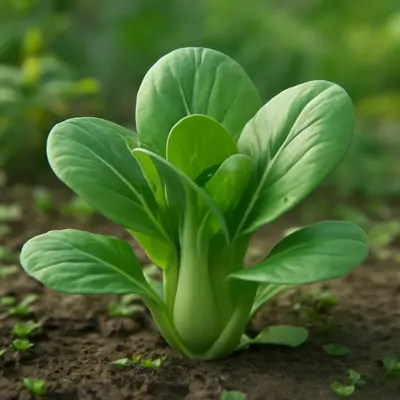
Uniform and upright with long, narrow green petioles. Dark purple leaves with green, purple-veined undersides. Slower to bolt and taller than Rosie, producing 16-18" heads.
Harvest
45d
Days to harvest
Sun
Full sun to part shade
Zones
5–9
USDA hardiness
Height
3 feet
Planting Timeline
Showing dates for Shikibu in USDA Zone 7
All Zone 7 lettuce →Zone Map
Click a state to update dates
Shikibu · Zones 5–9
Growing Details
Succession Planting
Direct sow Shikibu every 14–21 days starting March 1 in zone 7 and carry that through late April. Once daytime highs are consistently hitting 85°F, stop sowing — you'll spend the whole time racing a bolt you won't win. Resume around August 20, sowing every 2 weeks through mid-September for a fall run that stretches into November.
The fall succession tends to go more smoothly. Pest pressure is lower, the plants fill out in cooling temps, and you get the full 45-day window without a heat wall cutting it short. Don't skip it.
Complete Growing Guide
Uniform and upright with long, narrow green petioles. Dark purple leaves with green, purple-veined undersides. Slower to bolt and taller than Rosie, producing 16-18" heads. According to Johnny's Selected Seeds, Shikibu is 45 days to maturity, annual, hybrid (f1). Notable features: Hydroponic Performer.
Light: Full sun (6 or more hours of direct sunlight a day), Partial Shade (Direct sunlight only part of the day, 2-6 hours). Soil: Clay, Loam (Silt), Sand. Soil pH: Acid (<6.0), Neutral (6.0-8.0). Drainage: Good Drainage, Moist. Height: 0 ft. 10 in. - 2 ft. 0 in.. Spread: 1 ft. 0 in. - 2 ft. 0 in.. Spacing: 12 inches-3 feet. Growth rate: Medium. Maintenance: Medium. Propagation: Seed, Stem Cutting. Regions: Coastal, Mountains, Piedmont.
Harvesting
Shikibu reaches harvest at 45 days from sowing per Johnny's Selected Seeds. Expect 16-18" at peak. As an annual, harvest continues until frost ends the season.
The fruits dry and split when ripe.
Color: Brown/Copper, Green. Type: Siliqua. Length: > 3 inches.
Garden value: Edible
Harvest time: Fall, Summer
Bloom time: Spring, Summer
Edibility: The foliage is edible raw or cooked but when cooked can emit an unpleasant odor.
Storage & Preservation
Harvest Shikibu at 45 days and refrigerate immediately in perforated plastic bags or breathable containers at 32–40°F with 90–95% humidity. Fresh leaves keep for 5–7 days under these conditions. For longer storage, blanch whole heads for 2 minutes, cool in ice water, then freeze in airtight containers for up to 8 months. Fermentation works well with this variety—pack shredded leaves with salt (2–3% by weight) in jars and let sit 1–2 weeks at room temperature for a tangy, probiotic-rich condiment. Drying is less practical for tender leaves, as they lose texture and flavor quickly. Shikibu's thin, delicate leaves are prone to bruising during storage, so handle gently and avoid stacking heavy produce on top. Use refrigerated heads within days for optimal crispness and nutrient content.
History & Origin
Shikibu is an F1 hybrid developed through controlled cross-pollination. Listed in the Johnny's Selected Seeds catalog.
Brassica is a genus of plants in the cabbage and mustard family (Brassicaceae). The members of the genus are informally known as cruciferous vegetables, cabbages, mustard plants, or simply brassicas. Crops from this genus are sometimes called cole crops—derived from the Latin caulis, denoting the stem or stalk of a plant.
Advantages
- +Distinctive dark purple leaves add visual appeal and nutritional anthocyanins to dishes
- +Slower bolting tendency allows extended harvest window compared to similar varieties
- +Impressive 16-18 inch heads provide substantial yields per plant for home gardeners
- +Upright growth habit maximizes space efficiency in small garden plots
- +Purple-veined undersides create attractive presentation for fresh market or restaurant sales
Considerations
- -Taller plant structure requires more vertical garden space than compact varieties
- -Dark purple coloring may be less appealing to consumers preferring traditional green lettuce
- -45-day maturity is slower than some fast-maturing Asian greens available
- -Purple foliage darker coloration can mask early pest damage or disease symptoms
Companion Plants
Chives and garlic are useful neighbors for Shikibu. Their sulfur compounds disrupt aphid host-finding — a real concern on thin brassica leaves — and neither one crowds the bed since both sit shallow and upright. French marigolds (Tagetes patula specifically, not the big African types) are worth putting on the border; they suppress root-knot nematode populations in the top foot of soil and draw parasitic wasps that work through caterpillar pressure. Radishes pull double duty as a trap crop: flea beetles will hit the radish leaves hard before moving to Shikibu, so let them take the damage and pull those tops once they're chewed up.
Broccoli is the companion to skip. It's Brassicaceae just like Shikibu, which means you're stacking the same disease targets and pest attractants into one spot — clubroot (Plasmodiophora brassicae) doesn't care which host it's on. Walnut trees produce juglone from their root systems, and that compound is phytotoxic enough to stunt or kill a wide range of vegetable crops planted within their drip line.
Plant Together
Chives
Repels aphids and other soft-bodied insects that commonly attack lettuce
Marigolds
Deters nematodes and aphids while attracting beneficial insects
Carrots
Different root depths allow efficient space use without competing for nutrients
Radishes
Quick-growing companion that helps break up soil and deters flea beetles
Garlic
Natural pest deterrent that repels aphids and slugs
Spinach
Similar growing requirements and harvest timing, efficient garden space usage
Nasturtiums
Acts as trap crop for aphids and cucumber beetles, edible flowers
Dill
Attracts beneficial insects like ladybugs and parasitic wasps
Keep Apart
Broccoli
Heavy feeder that competes for nitrogen and can shade lettuce
Sunflowers
Allelopathic effects inhibit lettuce growth and creates excessive shade
Walnut trees
Produces juglone which is toxic to lettuce and many other vegetables
Nutrition Facts
Per 100g serving. % Daily Value based on 2,000 calorie diet. Source: USDA FoodData Central (FDC #2346388)
Troubleshooting Shikibu
What you'll see, why it happens, and what to do about it.
Seedlings collapse at soil level within the first 7–10 days after planting, sometimes with fuzzy white mold on the soil surface nearby
Likely Causes
- Damping off — a fungal complex (commonly Pythium or Rhizoctonia solani) that thrives in cold, wet, poorly-draining soil
- Replanting in the same bed where brassicas or lettuce-family crops have grown for 2–3 consecutive seasons, allowing pathogen load to build
What to Do
- 1.Back off watering in the first week — let the top inch of soil dry slightly between waterings once seeds have germinated
- 2.Work compost into compacted ground before sowing, or switch to a raised bed with fresh mix to improve drainage
- 3.Rotate this crop out of any bed that's seen damping off; NC State Extension's IPM guidance calls for at least a 2-season break
Outer leaves yellowing and wilting in hot weather, plant sending up a flower stalk around day 45–50
Likely Causes
- Heat stress — Brassica rapa var. chinensis bolts fast once daytime temps push past 85–90°F
- Inconsistent moisture during a heat spike, which accelerates the bolt trigger
What to Do
- 1.Drape 30–40% shade cloth over the bed to buy an extra 1–2 weeks before the plant gives up
- 2.Water deeply and consistently — this variety has high moisture needs, and dry spells between waterings speed the process along
- 3.For fall production, direct sow no later than early September so plants hit maturity in cooling temps rather than climbing ones
Frequently Asked Questions
How long does it take to grow Shikibu lettuce from seed to harvest?▼
Is Shikibu lettuce good for beginner gardeners?▼
Can you grow Shikibu lettuce in containers?▼
What does Shikibu lettuce taste like?▼
When should I plant Shikibu lettuce for best results?▼
How much space does Shikibu lettuce need between plants?▼
Zone-by-Zone Planting Calendar
| Zone | Indoor Start | Transplant | Direct Sow | Harvest |
|---|---|---|---|---|
| Zone 3 | — | — | May – June | June – October |
| Zone 4 | — | — | April – June | June – October |
| Zone 5 | — | — | April – May | May – November |
| Zone 6 | — | — | April – May | May – November |
| Zone 7 | — | — | March – May | May – November |
| Zone 8 | — | — | March – April | April – December |
| Zone 9 | — | — | February – March | March – December |
| Zone 10 | — | — | January – March | March – December |
| Zone 1 | — | — | June – July | July – September |
| Zone 2 | — | — | May – July | July – September |
| Zone 11 | — | — | January – February | February – December |
| Zone 12 | — | — | January – February | February – December |
| Zone 13 | — | — | January – February | February – December |
Growing Guides from Wind River Greens
Sources & References
External authority sources used in compiling this guide.
- BreederJohnny's Selected Seeds
- USDAUSDA FoodData Central
See the Methodology page for how this data is sourced, what's AI-assisted, and known limitations.