Salad Bowl Green
Lactuca sativa 'Salad Bowl'
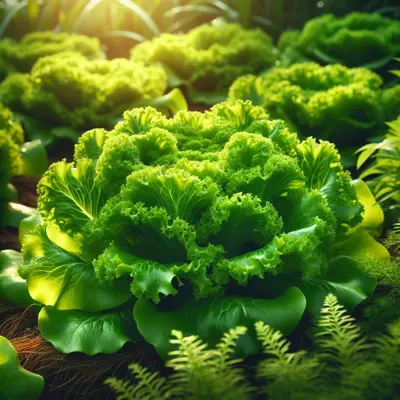
An exceptional loose-leaf variety that won the All-America Selections award for its outstanding performance and unique deeply-lobed, oak-like leaves. This vigorous grower provides continuous harvests throughout the season and rarely bolts, making it perfect for cut-and-come-again harvesting. The frilly, decorative leaves add both beauty and nutrition to any garden or salad bowl.
Harvest
45-55d
Days to harvest
Sun
Full sun to partial shade
Zones
2–11
USDA hardiness
Height
6-12 inches
Planting Timeline
Showing dates for Salad Bowl Green in USDA Zone 7
All Zone 7 lettuce →Zone Map
Click a state to update dates
Salad Bowl Green · Zones 2–11
Growing Details
Succession Planting
Direct sow every 14 days starting around March 1 in zone 7, continuing through early May. Once daytime highs are consistently hitting 80°F, Salad Bowl will bolt — the center stalk shoots up, the leaves turn bitter, and the planting is finished. Pick back up with a late-summer sowing around August 15, once the worst heat breaks, and that planting will carry through October or into November under row cover. Each sowing runs 45-55 days to full harvest, so count backward from your first expected frost to find your last safe direct-sow date.
Complete Growing Guide
Salad Bowl Green lettuce thrives when started either indoors under grow lights four to six weeks before your last frost date, or direct sown outdoors two to three weeks before the last frost. This vigorous variety tolerates cool soil temperatures exceptionally well, so you can sow as soon as the ground is workable in spring. For continuous harvests throughout the season, succession plant seeds every two to three weeks until early summer, then resume planting in late summer for a fall crop. Direct sowing is often simpler for this easy-to-grow variety—simply scatter seeds on loosened soil and barely cover them with a thin layer of fine soil or compost.
Prepare your beds with rich, well-draining soil amended with compost or aged manure. Salad Bowl Green prefers slightly acidic to neutral soil with plenty of organic matter to retain moisture while preventing waterlogging. Space plants eight to ten inches apart in rows, or scatter them more densely if you plan tight cut-and-come-again harvesting. The deeply-lobed leaves need room to develop their characteristic oak-like shape, so avoid crowding despite the variety's compact six to twelve-inch height.
Water consistently and deeply, keeping soil evenly moist but never soggy. Lettuce is shallow-rooted, so frequent light watering works better than occasional heavy soaking. During hot spells, water in early morning and consider afternoon shade cloth to keep leaves tender. Feed sparingly—an initial boost of balanced fertilizer at planting usually suffices, though older plants benefit from a light monthly feeding with diluted liquid fertilizer if harvesting continues beyond eight weeks.
Salad Bowl Green's vigor and reluctance to bolt make it remarkably forgiving, yet watch for aphids clustering on new growth and leaf miners creating pale tunnels in the decorative foliage. These pests can mar the attractive appearance gardeners prize in this variety. Scout regularly and spray with neem oil or insecticidal soap at first sign of damage. Slugs and snails are particularly problematic in moist, shaded conditions, so improve air circulation around plants and remove debris where pests hide. Downy mildew may appear as fuzzy gray patches on leaf undersides during cool, wet springs—ensure good spacing and avoid overhead watering.
The true secret to maximizing Salad Bowl Green's potential is embracing cut-and-come-again harvesting rather than pulling entire plants. Begin harvesting outer leaves when plants reach six inches tall, cutting two inches above soil level. This method extends your harvest window significantly beyond the forty-five to fifty-five day timeframe, sometimes producing for twelve weeks or longer. Many gardeners mistakenly wait to harvest until plants are fully mature, missing weeks of tender, flavorful leaves. Regular harvesting actually encourages bushier growth and delays bolting, rewarding frequent picking with increasingly frilly, productive plants.
Harvesting
Harvest Salad Bowl Green when the deeply-lobed leaves reach 4-6 inches long and display their characteristic oak-like shape with vibrant green coloring and crisp texture. Rather than harvesting the entire plant at once, employ the cut-and-come-again method by removing outer leaves from the base while allowing the center to continue growing, encouraging multiple harvests throughout the season. For peak flavor and tenderness, pick leaves in the early morning after dew has dried but before heat stress occurs, as this timing ensures maximum crispness and sweetness. This vigorous variety rarely bolts, allowing you to extend your harvest window significantly compared to heading lettuce varieties.
Tiny seeds with a dandelion-like tuft (pappus) to aid in wind dispersal.
Color: Brown/Copper. Type: Achene. Length: < 1 inch. Width: < 1 inch.
Harvest time: Summer
Edibility: Leaves can be used raw or cooked in salads, sandwiches, and other dishes. Head lettuce can be stored for 2-3 weeks while leaf and butterhead store for 1-2 weeks.
Storage & Preservation
Immediately after harvest, rinse Salad Bowl Green leaves in cool water and spin dry thoroughly in a salad spinner. Store unwashed, dry leaves in perforated plastic bags or wrap in slightly damp paper towels inside unsealed containers in your refrigerator's crisper drawer. Properly stored leaves maintain quality for 7-10 days at 32-36°F with high humidity.
For longer preservation, Salad Bowl Green works exceptionally well as microgreens – harvest 7-14 days after germination for tender, flavorful greens that store 5-7 days refrigerated. The variety also excels for succession planting rather than preservation, providing fresh harvests for 6-8 months in favorable climates.
While lettuce doesn't freeze, can, or dry well due to its high water content, you can extend the season by growing plants in cold frames or low tunnels, effectively preserving your harvest capability through light frosts down to 25°F.
History & Origin
Salad Bowl Green emerged from mid-twentieth-century American vegetable breeding, winning the All-America Selections award that established its commercial prominence. While specific breeder attribution remains sparse in readily available documentation, the variety represents the broader post-World War II movement toward home gardening and convenient loose-leaf lettuces that challenged the dominance of head lettuce varieties. The deeply lobed, oak-like leaf morphology suggests deliberate selection within European loose-leaf germplasm, likely refined through American seed companies seeking ornamental appeal alongside culinary performance. Its development coincided with growing consumer interest in salad culture and the practical advantages of cut-and-come-again harvesting systems that home gardeners could easily manage.
Origin: Mediterranean to Siberia
Advantages
- +Award-winning loose-leaf variety with distinctive deeply-lobed, oak-like leaves
- +Continuous cut-and-come-again harvesting throughout the season without replanting
- +Rarely bolts, extending harvest window in warm conditions
- +Mild, crisp, slightly sweet flavor perfect for fresh salads
- +Vigorous grower ready for harvest in just 45-55 days
Considerations
- -Susceptible to aphids, leaf miners, slugs, and snail damage
- -Vulnerable to downy mildew and lettuce mosaic virus infections
- -Delicate lobed leaves require careful handling to prevent bruising
Companion Plants
Radishes are the most practical neighbor here — they germinate in 5-7 days and break up the top few inches of soil before your lettuce roots get established, and they pull leaf miners away from the lettuce in the process. Chives and garlic at the bed edges do a reasonable job disrupting aphid landings through volatile sulfur compounds. Nasturtiums work as an aphid trap crop and their sprawling growth shades out weeds without competing at root depth. Keep sunflowers well clear — they release allelopathic root compounds that suppress germination and stunt seedling growth, and the shade from a 6-foot plant will finish off a low-growing variety like Salad Bowl in short order. Broccoli is the other one to separate out; it pulls from the same shallow moisture zone and its canopy will outcompete lettuce for light within a few weeks of establishment.
Plant Together
Chives
Repels aphids and improves lettuce flavor and growth
Carrots
Loosens soil for lettuce roots and doesn't compete for nutrients
Radishes
Breaks up soil and deters flea beetles that can damage lettuce
Marigolds
Repels aphids, whiteflies, and other pests that attack lettuce
Garlic
Natural pest deterrent that repels aphids and slugs
Spinach
Similar growing requirements and helps maximize garden space
Nasturtiums
Acts as trap crop for aphids and cucumber beetles
Dill
Attracts beneficial insects and may improve lettuce growth
Parsley
Compatible growth habits and helps repel some leaf-eating pests
Keep Apart
Sunflowers
Creates too much shade and competes heavily for water and nutrients
Broccoli
Heavy feeder that competes with lettuce for nitrogen and space
Nutrition Facts
Per 100g serving. % Daily Value based on 2,000 calorie diet. Source: USDA FoodData Central (FDC #2346388)
Pests & Disease Resistance
Resistance
Good bolt resistance, moderate disease tolerance
Common Pests
Aphids, leaf miners, slugs, snails
Diseases
Downy mildew, lettuce mosaic virus, bottom rot
Troubleshooting Salad Bowl Green
What you'll see, why it happens, and what to do about it.
Seedlings collapse at soil level within the first 7-10 days after transplanting or germination — stems look pinched or water-soaked at the base
Likely Causes
- Damping off — a complex of soil-borne fungi (Pythium spp., Rhizoctonia solani) that thrive in cold, wet, poorly-drained soil
- Overwatering or heavy clay soil holding moisture too long after planting
What to Do
- 1.Pull the dead seedlings and check whether the bed drains within an hour of watering before replanting into the same spot
- 2.Start fresh seed in a different raised bed or container with sterile seed-starting mix; as NC State's IPM case study notes, keeping backup lettuce in multiple locations is the cheapest insurance
- 3.Wait until soil temps reach at least 40°F and let the surface dry slightly between waterings before the next sowing
Pale yellow patches on the upper leaf surface with a grayish-purple fuzzy coating on the underside, appearing in cool, damp weather
Likely Causes
- Downy mildew (Bremia lactucae) — spreads quickly in temperatures between 50-65°F with high humidity or overhead irrigation
- Crowded spacing below 6 inches that traps moisture between leaves
What to Do
- 1.Remove and trash (not compost) any affected leaves as soon as you spot them
- 2.Water at the base of plants in the morning so foliage dries before nightfall — drip tape beats a sprinkler here
- 3.Space plants at the full 6-8 inches; Salad Bowl's loose, open head still needs airflow to stay clean
Leaves show mosaic-patterned light and dark green mottling, sometimes with puckering or distortion, on plants that otherwise look like they should be producing fine
Likely Causes
- Lettuce mosaic virus (LMV) — transmitted by aphids, which move in fast once daytime temps climb above 65°F
- Infected transplants or nearby weeds acting as a virus reservoir
What to Do
- 1.Check the undersides of leaves for aphid colonies — a strong spray of water dislodges most of them, or apply insecticidal soap at labeled rates
- 2.Pull and trash any plant showing severe mottling; the virus won't clear and aphids will keep feeding on it and spreading LMV to healthy plants
- 3.Source from a reputable supplier — LMV is seed-transmissible, so certified disease-free seed cuts your exposure before anything goes in the ground
Frequently Asked Questions
How long does Salad Bowl Green lettuce take to grow?▼
Can you grow Salad Bowl Green lettuce in containers?▼
Is Salad Bowl Green good for beginners?▼
When should I plant Salad Bowl Green lettuce?▼
What does Salad Bowl Green taste like compared to other lettuce?▼
How do you harvest Salad Bowl Green without killing the plant?▼
Zone-by-Zone Planting Calendar
| Zone | Indoor Start | Transplant | Direct Sow | Harvest |
|---|---|---|---|---|
| Zone 1 | — | — | June – July | July – September |
| Zone 2 | — | — | May – July | July – September |
| Zone 11 | — | — | January – February | February – December |
| Zone 12 | — | — | January – February | February – December |
| Zone 13 | — | — | January – February | February – December |
| Zone 3 | — | — | May – June | June – October |
| Zone 4 | — | — | April – June | June – October |
| Zone 5 | — | — | April – May | June – November |
| Zone 6 | — | — | April – May | May – November |
| Zone 7 | — | — | March – May | May – November |
| Zone 8 | — | — | March – April | April – December |
| Zone 9 | — | — | February – March | March – December |
| Zone 10 | — | — | January – March | March – December |
Growing Guides from Wind River Greens
Sources & References
External authority sources used in compiling this guide.
See the Methodology page for how this data is sourced, what's AI-assisted, and known limitations.