Red Salad Bowl
Lactuca sativa 'Red Salad Bowl'
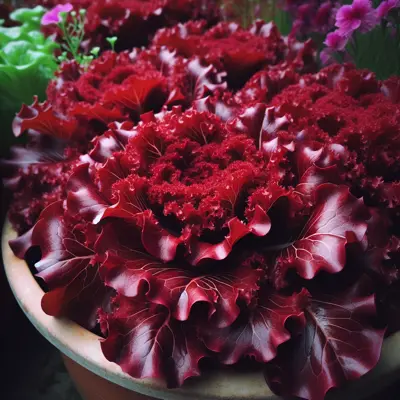
The stunning burgundy-red counterpart to the famous Green Salad Bowl, featuring the same deeply-lobed oak leaves but with gorgeous wine-red coloration that intensifies in cool weather. This loose-leaf variety provides continuous harvests while adding dramatic color contrast to salads and garden beds. The tender leaves maintain their sweet flavor even as the red pigmentation deepens with maturity.
Harvest
50-60d
Days to harvest
Sun
Full sun to partial shade
Zones
2–11
USDA hardiness
Height
6-12 inches
Planting Timeline
Showing dates for Red Salad Bowl in USDA Zone 7
All Zone 7 lettuce →Zone Map
Click a state to update dates
Red Salad Bowl · Zones 2–11
Growing Details
Succession Planting
In zone 7, direct sow Red Salad Bowl every 14 days starting around March 1 and keep going through late April. Each sowing matures around 50-60 days out, so staggering keeps a steady supply coming rather than 40 heads ready on the same day. A fall run works well too — back-calculate from your first frost (typically mid-November in north Georgia) and start again in late August through mid-September.
Stop once daytime highs are consistently hitting 80°F — Red Salad Bowl will bolt fast above that threshold and the outer leaves turn sharp and bitter almost overnight. That usually means your last spring sowing goes in around May 1. The fall window is often more forgiving and produces noticeably sweeter leaves than anything you'll pull in late May.
Complete Growing Guide
Red Salad Bowl lettuce thrives when started either indoors or direct sown into the garden, depending on your climate and preference. For spring harvests, sow seeds indoors 4-6 weeks before your last frost date, then transplant seedlings once they've developed their first true leaves. Alternatively, direct sow seeds into prepared garden beds 2-3 weeks before the last frost, as Red Salad Bowl seeds will germinate in cool soil. For fall crops, which actually produce the most vibrant coloring in this variety, sow seeds in mid to late summer for harvest before the first hard freeze. Succession planting every two weeks ensures continuous supplies of tender leaves throughout the season rather than a single mature harvest.
Prepare soil rich in organic matter, incorporating compost or aged manure to improve water retention and drainage simultaneously. Sow seeds just barely covered—about a quarter inch deep—and keep the seedbed consistently moist until germination occurs in 7-10 days. Space seedlings or thin direct-sown plants to 6-8 inches apart; Red Salad Bowl's loose-leaf growth habit means plants can be grown slightly closer than heading varieties while still developing full, dramatic foliage.
Water consistently throughout the growing season, providing about one inch weekly through rainfall or irrigation. Keep the soil consistently moist but not waterlogged, as fluctuating moisture can trigger tipburn—a physiological disorder where leaf edges turn brown—which this variety is somewhat susceptible to, particularly as temperatures warm. Feed with a balanced, nitrogen-rich fertilizer every two to three weeks, though Red Salad Bowl performs adequately in well-amended soil without supplemental feeding.
Watch closely for aphids and flea beetles, which are particularly attracted to tender lettuce foliage and can devastate plants quickly. Row covers applied at sowing time provide excellent protection before pests locate your crop. Slugs find the tender leaves irresistible, so implement barriers or hand-picking methods early. Leaf miners occasionally tunnel through foliage, creating unsightly damage; remove affected leaves promptly and maintain good airflow.
Downy mildew thrives in cool, humid conditions—exactly when Red Salad Bowl produces its most striking color. Improve air circulation between plants and avoid overhead watering to reduce fungal pressure. Lettuce mosaic virus, transmitted by aphids, causes mottled discoloration; controlling aphid populations is your best defense.
The critical mistake gardeners make with Red Salad Bowl is harvesting too late. Many wait for fully mature plants, but the variety's tender texture and best flavor occur during loose-leaf stage, usually around 50-60 days. Begin harvesting outer leaves once plants reach 4-6 inches tall, removing them from the base and allowing the center to continue producing. This technique extends harvests substantially and maintains the sweet flavor that makes this variety special, even as the dramatic wine-red coloration deepens with age.
Harvesting
Peak readiness for Red Salad Bowl arrives when the wine-red coloration deepens to its richest burgundy hue, typically between 50-60 days, and individual leaves reach 4-6 inches long with a tender, crisp feel that snaps cleanly when bent. Unlike heading varieties, this loose-leaf cultivar excels at continuous harvesting—pinch off outer leaves at the base while the plant remains in the ground to encourage repeated flushes of new growth throughout the season. Begin harvesting in early morning when leaves are fully hydrated and most crisp, as afternoon heat causes slight wilting even on well-watered plants. The sweet flavor and dramatic color intensify in cool weather, making fall harvests particularly rewarding for both taste and visual appeal in composed salads.
Tiny seeds with a dandelion-like tuft (pappus) to aid in wind dispersal.
Color: Brown/Copper. Type: Achene. Length: < 1 inch. Width: < 1 inch.
Harvest time: Summer
Edibility: Leaves can be used raw or cooked in salads, sandwiches, and other dishes. Head lettuce can be stored for 2-3 weeks while leaf and butterhead store for 1-2 weeks.
Storage & Preservation
Store freshly harvested Red Salad Bowl lettuce immediately in the refrigerator at 32-40°F with high humidity (95-98%). Wash leaves gently in cold water, spin dry, and store in perforated plastic bags or containers lined with paper towels. Properly stored leaves maintain quality for 7-10 days.
For optimal freshness, store whole leaves rather than chopped pieces, which deteriorate faster. The variety's tender texture makes it unsuitable for traditional preservation methods like canning or freezing, but you can successfully dehydrate young leaves at 95°F for crispy salad toppers.
Red Salad Bowl makes excellent microgreens—harvest seedlings at 2-3 inches tall for intense flavor and color. These store for 5-7 days refrigerated and can be frozen in ice cubes for colorful drink garnishes.
History & Origin
Red Salad Bowl emerged as a color variant of the classic Green Salad Bowl lettuce, which was developed and introduced by the seed company Burpee in the 1950s. While Green Salad Bowl gained widespread popularity for its distinctive deeply lobed, oak-like foliage and reliable loose-leaf harvesting, the red-pigmented selection followed as breeders recognized the ornamental and culinary appeal of anthocyanin-rich red lettuce varieties. Documentation on the specific breeder or exact year of Red Salad Bowl's introduction is limited, but it represents a natural extension of mid-twentieth-century American vegetable breeding that prioritized both productivity and aesthetic garden value, reflecting the era's growing interest in decorative edibles.
Origin: Mediterranean to Siberia
Advantages
- +Striking wine-red color intensifies in cool weather for visual appeal
- +Deeply-lobed oak leaves provide continuous harvests without replanting
- +Fast maturity at 50-60 days delivers fresh salads quickly
- +Tender, sweet leaves with mild flavor work well raw
- +Easy to grow makes it perfect for beginner gardeners
Considerations
- -Susceptible to downy mildew in humid or wet conditions
- -Prone to lettuce mosaic virus spread by aphids and handling
- -Loose-leaf form requires frequent harvesting to prevent bolting
- -Slugs and flea beetles can heavily damage tender young foliage
Companion Plants
Radishes are the most practical companion for Red Salad Bowl — direct sow them between transplants and they'll be pulled well before the lettuce needs the space. Their scent also confuses flea beetles, which will otherwise punch your leaves full of 1/16-inch shot holes within days of transplanting. Chives and garlic along the bed edge work on the same principle, and neither one competes at the 6-to-8-inch root zone lettuce actually occupies. Carrots go deeper and won't fight for the same resources. Nasturtiums are worth a mention because aphids — persistent on lettuce all season — will pile onto nasturtium stems first, pulling pressure off your salad bowl before it gets out of hand.
Broccoli is the companion to drop from your plans entirely. A full-grown brassica is a heavy nitrogen feeder and will shade lettuce into bitterness as its canopy fills out. Fennel is the other problem: it releases allelopathic root compounds that suppress growth in a wide range of vegetables, and lettuce is particularly sensitive. Give fennel its own corner of the garden at least 3 feet away from any salad bed.
Plant Together
Chives
Repels aphids and improves lettuce flavor while providing pest protection
Radishes
Break up soil for lettuce roots and mature quickly without competing for space
Carrots
Different root depths prevent competition and carrots help aerate soil for lettuce
Marigolds
Repel nematodes, aphids, and other pests while attracting beneficial insects
Nasturtiums
Act as trap crop for aphids and cucumber beetles, protecting lettuce
Garlic
Natural pest deterrent that repels aphids and other soft-bodied insects
Spinach
Similar growing requirements and provides natural ground cover to retain soil moisture
Parsley
Attracts beneficial insects and provides natural pest control without competing for nutrients
Keep Apart
Broccoli
Large leaves create excessive shade and compete heavily for soil nutrients
Fennel
Releases allelopathic compounds that inhibit lettuce growth and development
Sunflowers
Create too much shade and have allelopathic effects that stunt lettuce growth
Nutrition Facts
Per 100g serving. % Daily Value based on 2,000 calorie diet. Source: USDA FoodData Central (FDC #2346388)
Pests & Disease Resistance
Resistance
Good bolt resistance, moderate disease tolerance
Common Pests
Aphids, leaf miners, slugs, flea beetles
Diseases
Downy mildew, lettuce mosaic virus, tipburn
Troubleshooting Red Salad Bowl
What you'll see, why it happens, and what to do about it.
Seedlings collapsing at soil level within the first 7-10 days after planting out, often with a fuzzy whitish mold visible on the soil surface nearby
Likely Causes
- Damping off — a complex of soil-borne fungi (Pythium spp., Rhizoctonia solani) that thrives in cold, wet, poorly-drained soil
- Overwatering or planting into soil that hasn't warmed above 40°F
What to Do
- 1.Pull the dead seedlings and check the roots — if they're brown and mushy at the base, it's damping off; don't replant lettuce in that exact spot this season
- 2.Work compost into the bed to loosen compacted soil before the next sowing, or switch to a raised bed with better drainage
- 3.NC State's organic IPM guidance recommends scouting early and acting fast — resow in a different location with fresh, well-drained medium rather than trying to rescue the affected bed
Undersides of leaves coated in a gray-purple downy fuzz, with corresponding pale yellow patches on the upper leaf surface
Likely Causes
- Downy mildew (Bremia lactucae) — a water mold that spreads fast in cool, humid conditions, exactly what March and October deliver in Georgia
- Overhead irrigation or rain that leaves foliage wet overnight
What to Do
- 1.Strip and trash (don't compost) affected outer leaves as soon as you spot symptoms — don't let it work inward toward the crown
- 2.Switch to drip irrigation or water at the base in the morning so leaves dry before evening
- 3.Open up the planting — 8 inches between plants is the minimum; closer than that and air barely moves through the canopy
Leaf edges turning brown and papery — not from the outside in, but starting at the tips of inner leaves — on otherwise healthy-looking plants
Likely Causes
- Tipburn — a calcium deficiency at the leaf margins caused by poor calcium translocation during rapid growth, not a shortage of calcium in the soil itself
- Wet-dry-wet watering cycles that disrupt transpiration and slow calcium movement to new tissue
- Daytime temperatures above 80°F pushing the plant into rapid bolting before calcium can keep up
What to Do
- 1.Steady the moisture — 1 to 1.5 inches per week without letting the bed go dry between waterings
- 2.A 30-40% shade cloth slows bolting and cuts tipburn incidence during warm spells in April and May
- 3.Cut heads a few days earlier than you think you need to; tipburn accelerates the longer loose-leaf types sit in heat
Frequently Asked Questions
How long does Red Salad Bowl lettuce take to grow?▼
Can you grow Red Salad Bowl lettuce in containers?▼
What does Red Salad Bowl lettuce taste like?▼
When should I plant Red Salad Bowl lettuce?▼
Is Red Salad Bowl lettuce good for beginners?▼
Red Salad Bowl vs Green Salad Bowl lettuce - what's the difference?▼
Zone-by-Zone Planting Calendar
| Zone | Indoor Start | Transplant | Direct Sow | Harvest |
|---|---|---|---|---|
| Zone 3 | — | — | May – June | June – October |
| Zone 4 | — | — | April – June | June – October |
| Zone 5 | — | — | April – May | June – November |
| Zone 6 | — | — | April – May | May – November |
| Zone 7 | — | — | March – May | May – November |
| Zone 8 | — | — | March – April | April – December |
| Zone 9 | — | — | February – March | March – December |
| Zone 10 | — | — | January – March | March – December |
| Zone 1 | — | — | June – July | July – September |
| Zone 2 | — | — | May – July | July – September |
| Zone 11 | — | — | January – February | February – December |
| Zone 12 | — | — | January – February | February – December |
| Zone 13 | — | — | January – February | February – December |
Growing Guides from Wind River Greens
Sources & References
External authority sources used in compiling this guide.
See the Methodology page for how this data is sourced, what's AI-assisted, and known limitations.