Red Romaine
Lactuca sativa var. longifolia 'Red Romaine'
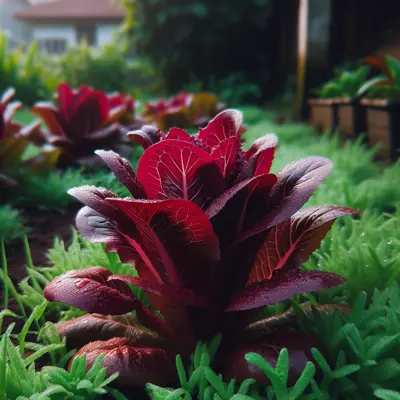
A stunning twist on classic romaine lettuce with deep burgundy-red leaves and contrasting green hearts. This beautiful variety offers the same crisp texture and sweet flavor as traditional romaine while adding dramatic color to salads and garden beds. Perfect for gardeners who want both visual appeal and exceptional taste.
Harvest
70-80d
Days to harvest
Sun
Full sun to partial shade
Zones
2–11
USDA hardiness
Height
6-12 inches
Planting Timeline
Showing dates for Red Romaine in USDA Zone 7
All Zone 7 lettuce →Zone Map
Click a state to update dates
Red Romaine · Zones 2–11
Growing Details
Succession Planting
In zone 7, direct sow Red Romaine every 14 days starting around March 1, continuing through late April. At 70-80 days to harvest, your first sowing will be ready by mid-May before serious heat arrives. Stop sowing once daytime highs are consistently above 80°F — lettuce bolts fast above that threshold and turns bitter fast. Pick back up with a fall run starting around August 20, sowing every 14 days through mid-September; those plantings will carry you into November. Don't bother trying to push into summer — this variety won't forgive it.
Complete Growing Guide
Red Romaine thrives in cool-season conditions and performs best when direct seeded in spring or late summer for fall harvest, as transplants sometimes struggle with the transition. This burgundy variety is particularly sensitive to heat and will bolt rapidly once temperatures exceed 75°F, so timing your planting to mature before summer heat is crucial. Provide consistent moisture and rich, well-draining soil to support the deeper pigmentation and crisp texture this cultivar is known for. Red Romaine shows increased susceptibility to fungal leaf diseases in humid conditions, so ensure adequate air circulation and avoid overhead watering. Unlike paler romaines, the dark leaves can scald if exposed to intense afternoon sun in hot climates—afternoon shade during warm spells prevents this problem. Harvest outer leaves when the plant reaches 6 inches tall to encourage continued production and maintain tenderness.
Light: Full sun (6 or more hours of direct sunlight a day), Partial Shade (Direct sunlight only part of the day, 2-6 hours). Soil: High Organic Matter. Soil pH: Neutral (6.0-8.0). Drainage: Good Drainage, Moist. Height: 0 ft. 6 in. - 1 ft. 0 in.. Spread: 0 ft. 6 in. - 1 ft. 0 in.. Spacing: Less than 12 inches. Growth rate: Rapid. Maintenance: Medium. Propagation: Seed. Regions: Coastal, Mountains, Piedmont.
Harvesting
Red Romaine reaches peak harvest readiness when the outer leaves deepen to a rich burgundy-red while the inner heart maintains its pale green color, indicating optimal maturity at 70-80 days. The leaves should feel firm and crisp when gently squeezed, and the plant typically reaches 8-10 inches tall at full development. For continuous harvests, remove outer leaves individually as needed while leaving the center intact to encourage regrowth, or cut the entire head at soil level for a single harvest. Timing your harvest in early morning when leaves are fully hydrated ensures maximum crispness and mineral-forward flavor that defines this cultivar's superior taste.
Tiny seeds with a dandelion-like tuft (pappus) to aid in wind dispersal.
Color: Brown/Copper. Type: Achene. Length: < 1 inch. Width: < 1 inch.
Harvest time: Summer
Edibility: Leaves can be used raw or cooked in salads, sandwiches, and other dishes. Head lettuce can be stored for 2-3 weeks while leaf and butterhead store for 1-2 weeks.
Storage & Preservation
Store freshly harvested Red Romaine in the refrigerator immediately after harvest for best quality. Wrap whole heads loosely in damp paper towels, then place in perforated plastic bags in the crisper drawer at 32-35°F with high humidity. Properly stored heads maintain peak quality for 7-10 days.
For individual leaves, rinse gently in cold water, spin dry thoroughly, and store between paper towels in sealed containers. Use within 5-7 days for best texture and flavor.
While lettuce doesn't preserve well through traditional methods like canning or drying, you can extend its usefulness by making fermented lettuce wraps or adding leaves to fermented vegetable mixes. The sturdy leaves also freeze reasonably well for use in cooked dishes – blanch for 30 seconds, then freeze in portion-sized bags for up to 3 months. Frozen Red Romaine works well in soups, stir-fries, or braised dishes where texture is less critical than fresh applications.
History & Origin
Red Romaine lettuce emerged as a colored variant within the broader romaine (cos) lettuce lineage, which traces its origins to the Mediterranean region and has been cultivated for centuries. While comprehensive documentation of this specific red-leafed cultivar's breeding origins remains limited in published horticultural records, Red Romaine represents the result of selective breeding programs that began emphasizing pigmented romaine varieties during the late twentieth century. Seed companies and breeding programs recognized market demand for visually striking vegetables without sacrificing the crispness and mild flavor characteristic of traditional romaine. The variety likely descends from accidental mutations or deliberate crosses involving red-pigmented lettuce genetics, though the precise breeder and year of introduction are not definitively documented in widely accessible sources.
Origin: Mediterranean to Siberia
Advantages
- +Striking deep burgundy leaves provide exceptional visual appeal in gardens and salads.
- +Maintains classic romaine's crisp texture and sweet flavor with added mineral complexity.
- +Relatively easy to grow, making it suitable for beginner gardeners.
- +Moderate 70-80 day maturity allows multiple plantings within a growing season.
Considerations
- -Susceptible to downy mildew, particularly in cool, humid growing conditions.
- -Prone to tip burn when calcium uptake is inconsistent or water stressed.
- -Vulnerable to common lettuce pests like aphids, slugs, and flea beetles.
Companion Plants
Radishes are the most useful neighbor here — direct-sow them every 10-12 inches around your romaine and they'll be pulled well before the lettuce heads up, doing double duty as a row marker and loosening the top few inches of soil for shallow lettuce roots. Chives and garlic both deter aphids through scent, which matters because a heavy aphid infestation can collapse a young romaine planting inside of two weeks on a wet spring. In zone 7 Georgia, Tagetes patula (French marigold) pulls its weight by confusing whiteflies and adding a visual break across the bed. Keep fennel and broccoli out — fennel is allelopathic to most vegetables and will stunt lettuce outright, while broccoli competes aggressively for the same shallow moisture and root space, sizing up faster and shading the lettuce before it can form a head.
Plant Together
Basil
Repels aphids and whiteflies while potentially improving lettuce flavor
Chives
Deters aphids and other soft-bodied insects that damage lettuce
Carrots
Deep roots don't compete with shallow lettuce roots, maximizes garden space
Radishes
Quick-growing companion that helps break up soil and deters flea beetles
Marigolds
Repels nematodes and aphids while attracting beneficial predatory insects
Spinach
Similar growing requirements and can be succession planted together
Garlic
Natural pest deterrent against aphids, slugs, and other lettuce pests
Nasturtiums
Acts as trap crop for aphids and cucumber beetles, drawing them away from lettuce
Keep Apart
Broccoli
Large leaves create too much shade and compete for nutrients with lettuce
Fennel
Releases allelopathic compounds that inhibit growth of lettuce and most vegetables
Sunflowers
Tall growth creates excessive shade and roots release growth-inhibiting chemicals
Nutrition Facts
Per 100g serving. % Daily Value based on 2,000 calorie diet. Source: USDA FoodData Central (FDC #169247)
Pests & Disease Resistance
Resistance
Good resistance to tip burn and bolting
Common Pests
Aphids, cutworms, slugs, flea beetles
Diseases
Downy mildew, lettuce drop, tip burn
Troubleshooting Red Romaine
What you'll see, why it happens, and what to do about it.
Seedlings collapse at soil level within the first 7-10 days after transplanting or germination, often with a fuzzy whitish mold visible on the soil surface nearby
Likely Causes
- Damping off — a complex of soil-borne fungi (Pythium spp., Rhizoctonia solani) that thrive in cool, wet, poorly-drained conditions
- Overwatering or compacted soil that holds moisture around the stem base
What to Do
- 1.Pull the dead seedlings and dig around the root zone — if the stem is pinched or rotted at soil level, that confirms damping off
- 2.Don't replant lettuce in that same bed this season; rotate out for at least one year and amend with compost to improve drainage
- 3.Start new seedlings in fresh, sterile seed-starting mix rather than garden soil, and water from below to keep the surface drier
Grayish-purple fuzzy coating on the undersides of older leaves, with pale yellow patches on the upper surface
Likely Causes
- Downy mildew (Bremia lactucae) — favored by cool nights below 65°F and high humidity, common in spring and fall
- Overcrowded planting that limits airflow between heads
What to Do
- 1.Remove and trash (not compost) affected leaves immediately
- 2.Space plants at least 8-10 inches apart and water at the base — overhead irrigation in the evening is a reliable way to make this worse
- 3.If it recurs season after season, look for Bremia lactucae-resistant romaine varieties for that bed
Brown, papery edges on the innermost leaves of a nearly mature head, with no sign of insects or mold
Likely Causes
- Tip burn — a calcium distribution disorder triggered by rapid growth or inconsistent soil moisture, not a true deficiency
- Irregular watering causing the plant to pull moisture unevenly and starve inner leaves of calcium
What to Do
- 1.Keep soil moisture consistent at about 1 inch per week — tip burn spikes after a dry spell followed by heavy rain or irrigation
- 2.Mulch the bed with 2-3 inches of straw to buffer soil moisture swings
- 3.Tip-burned leaves are still edible; strip them off and use the rest
Ragged holes chewed through leaves overnight, with slime trails visible on or around the plants in the morning
Likely Causes
- Slugs — especially active during wet springs and in beds with heavy mulch or debris sitting right against the plants
- Flea beetles will also chew small round holes, but they leave no slime trail and tend to hit younger, smaller plants harder
What to Do
- 1.Set out a shallow dish of beer at soil level near the plants — slugs will crawl in and drown; check and empty it every morning
- 2.Pull mulch back 2-3 inches from the base of each plant so slugs have less cover right at the crown
- 3.For flea beetles, a row cover of lightweight fabric (like Agribon-15) laid directly over the bed at planting gives good protection without trapping excess heat
Frequently Asked Questions
How long does Red Romaine take to grow from seed?▼
Can you grow Red Romaine in containers?▼
Is Red Romaine good for beginners?▼
What does Red Romaine taste like compared to regular romaine?▼
When should I plant Red Romaine for fall harvest?▼
Why are my Red Romaine leaves turning green instead of red?▼
Zone-by-Zone Planting Calendar
| Zone | Indoor Start | Transplant | Direct Sow | Harvest |
|---|---|---|---|---|
| Zone 3 | — | — | May – June | July – October |
| Zone 4 | — | — | April – June | July – October |
| Zone 5 | — | — | April – May | June – November |
| Zone 6 | — | — | April – May | June – November |
| Zone 7 | — | — | March – May | June – November |
| Zone 8 | — | — | March – April | May – December |
| Zone 9 | — | — | February – March | April – December |
| Zone 10 | — | — | January – March | April – December |
| Zone 1 | — | — | June – July | August – September |
| Zone 2 | — | — | May – July | August – September |
| Zone 11 | — | — | January – February | March – December |
| Zone 12 | — | — | January – February | March – December |
| Zone 13 | — | — | January – February | March – December |
Growing Guides from Wind River Greens
Sources & References
External authority sources used in compiling this guide.
See the Methodology page for how this data is sourced, what's AI-assisted, and known limitations.