Miz America
Brassica juncea
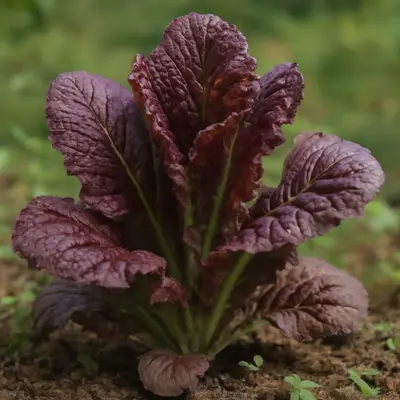
Delicate, toothed leaves are dark red on both sides for a striking addition to salad mixes. Uniform leaf size and shape, with a mild flavor.
Harvest
28d
Days to harvest
Sun
Full sun to partial shade
Zones
8–11
USDA hardiness
Height
12-18 inches
Planting Timeline
Showing dates for Miz America in USDA Zone 7
All Zone 7 lettuce →Zone Map
Click a state to update dates
Miz America · Zones 8–11
Growing Details
Succession Planting
Miz America reaches harvest in 28 days, which makes succession planting genuinely worthwhile — a single sowing doesn't last long on the table. Direct sow every 14–18 days from late February through early May, then pause once daytime highs are consistently clearing 80°F. Heat pushes mustard greens toward bolt and bitterness fast, and no amount of extra watering fully compensates. Pick back up in late August or early September for a fall run; in zones 8–11 that fall window can stretch well into November.
Each sowing only needs about a 4-foot row to keep a household supplied without waste stacking up. If you're re-seeding a bed that just finished a round, scratch in a thin side-dressing of compost before sowing again — 28-day crops draw heavily from the top few inches of soil, and by the second or third succession you'll notice smaller leaves if you skip it.
Complete Growing Guide
Delicate, toothed leaves are dark red on both sides for a striking addition to salad mixes. Uniform leaf size and shape, with a mild flavor. According to Johnny's Selected Seeds, Miz America is 28 baby; 40 full size to maturity, annual, hybrid (f1). Notable features: Cold Tolerant, Hydroponic Performer, Heat Tolerant.
Light: Full sun (6 or more hours of direct sunlight a day), Partial Shade (Direct sunlight only part of the day, 2-6 hours). Soil: High Organic Matter. Soil pH: Neutral (6.0-8.0). Drainage: Good Drainage, Moist. Height: 1 ft. 0 in. - 1 ft. 6 in.. Spread: 1 ft. 0 in. - 1 ft. 6 in.. Spacing: Less than 12 inches. Growth rate: Rapid. Maintenance: Medium. Regions: Coastal, Mountains, Piedmont.
Harvesting
Miz America reaches harvest at 28 baby; 40 full size from sowing per Johnny's Selected Seeds. As an annual, harvest continues until frost ends the season.
Long pods with round, brown seeds. The fruits will dry and split when ripe. The seeds are harvested for use in condiments and oil.
Color: Brown/Copper. Type: Siliqua.
Garden value: Edible
Edibility: The leaves, seeds, flowers, and stems of this mustard variety are edible raw or cooked. Harvested leaves can be stored in the fridge for 3-5 days.
Storage & Preservation
Harvest Miz America at peak tenderness around day 28 and store immediately at 32–35°F in a perforated plastic bag within your crisper drawer, maintaining 95% humidity. Fresh leaves will keep for 7–10 days under these conditions before wilting accelerates. For longer preservation, blanch whole leaves for 2–3 minutes, chill in ice water, pat dry, and freeze in airtight containers for up to 8 months—ideal for winter soups and smoothies. Alternatively, dehydrate thin leaves at 95–105°F until completely crisp for shelf-stable seasoning blends, though this method concentrates the peppery mustard notes. Fermentation works well too: layer fresh leaves with salt (3% by weight) in a jar, weight down, and let sit at room temperature for 2–3 weeks for a tangy condiment. Avoid canning raw greens due to safety concerns. This variety's robust texture holds up better to freezing than delicate lettuces, making it practical for batch processing.
History & Origin
Miz America is an F1 hybrid developed through controlled cross-pollination. Listed in the Johnny's Selected Seeds catalog.
Origin: Russia to central Asia
Advantages
- +Striking dark red leaves add visual appeal to fresh salads and plates
- +Fast 28-day maturity means quick harvests and multiple plantings per season
- +Mild flavor profile makes it versatile for various salad combinations
- +Uniform leaf size and shape ensures consistent, professional-looking harvest quality
- +Easy growing difficulty makes it perfect for beginner gardeners
Considerations
- -Delicate toothed leaves bruise easily during harvest and handling
- -Tendency to bolt quickly in hot summer temperatures limits season
- -Mild flavor may disappoint growers seeking stronger, more distinctive tastes
Companion Plants
Radishes are the most practically useful neighbor for Miz America. Direct-sow them at the bed edges 7–10 days before your mustard greens go in — they germinate fast, mark your rows, and flea beetles will hit the radish tops preferentially, buying your greens a window to establish. They're out of the ground in 25–30 days anyway, so there's no lingering root competition to manage.
Chives and garlic work through a different mechanism: aphids — especially Myzus persicae, the main carrier of lettuce mosaic virus on this crop — locate host plants partly by volatile chemical signals, and alliums interfere with that. A row of chives along the bed perimeter isn't a guarantee, but the mechanism is real and the cost is nothing. Tagetes patula (French marigold specifically, not the big African types) pulls similar duty against a broader pest range and is worth tucking in at the corners if you have starts on hand.
Beans are the companion to avoid. They fix nitrogen aggressively, and mustard greens on a sudden nitrogen bump bolt faster and run bitter before you can harvest them. Broccoli is a worse neighbor for a different reason — it's Brassica oleracea, same pest guild as Miz America (Brassica juncea), which means flea beetles, aphids, and downy mildew pressure stack between the two plants rather than spreading out. You're essentially doubling the target size for every problem on this list. Keep at least 18–24 inches between them, or just put them in separate beds entirely.
Plant Together
Chives
Repels aphids and other soft-bodied insects that commonly attack lettuce
Carrots
Deep roots break up soil for lettuce's shallow roots, doesn't compete for nutrients
Radishes
Quick-growing root crop that loosens soil and can be intercropped with lettuce
Marigolds
Natural pest deterrent that repels nematodes and aphids
Nasturtiums
Acts as trap crop for aphids and cucumber beetles, drawing pests away from lettuce
Spinach
Similar growing requirements and can be succession planted in same space
Garlic
Natural fungicide properties help prevent damping-off and other soil-borne diseases
Dill
Attracts beneficial insects like ladybugs and lacewings that prey on lettuce pests
Keep Apart
Beans
Can shade lettuce excessively and compete for nutrients in the root zone
Broccoli
Heavy feeder that competes for nitrogen and can overshadow lettuce
Sunflowers
Allelopathic compounds inhibit lettuce growth and tall plants create excessive shade
Nutrition Facts
Per 100g serving. % Daily Value based on 2,000 calorie diet. Source: USDA FoodData Central (FDC #2346388)
Pests & Disease Resistance
Common Pests
Aphids, slugs, snails, flea beetles
Diseases
Downy mildew, powdery mildew, lettuce mosaic virus
Troubleshooting Miz America
What you'll see, why it happens, and what to do about it.
Seedlings collapsing at the soil line within the first 7–10 days after direct sow
Likely Causes
- Damping off — a fungal complex (typically Pythium or Rhizoctonia) that thrives in wet, poorly drained soil
- Planting in a bed with 3+ years of continuous brassica or lettuce crops without rotation
What to Do
- 1.Pull the dead seedlings and check the stem base — if it's pinched and water-soaked, damping off is almost certain; trash the affected material, don't compost it
- 2.Let the bed surface dry slightly between waterings; these seedlings don't need to stay saturated at this stage
- 3.Next season, amend with compost before sowing and switch to base watering — wet foliage overnight is a reliable way to invite this problem back
Gray-purple fuzzy growth on the undersides of leaves, with yellow patches on the upper surface
Likely Causes
- Downy mildew (Peronospora effusa or related species) — a water mold that spreads fast in cool, humid conditions
- Crowded plants blocking airflow, or overhead irrigation late in the day
What to Do
- 1.Strip affected leaves immediately and dispose of them in the trash, not the compost pile
- 2.Space plants at least 6–8 inches apart and keep water off the foliage — drip or base watering does better here than overhead
- 3.If the bed is heavily affected, pull the planting and keep that bed out of brassicas and greens for at least one full season
Tiny round holes punched across young leaves, seedlings look ragged within days of emergence
Likely Causes
- Flea beetles (Phyllotreta striolata and related species) — small, fast-jumping beetles that hit young brassica foliage hard
- Warm, dry spring weather — pressure spikes when soil temps climb above 50°F and conditions stay dry
What to Do
- 1.Cover the bed with row cover immediately after sowing and keep it on until plants are 4–5 inches tall — this is the most reliable control available
- 2.Delay sowing by a week or two if flea beetles have hammered this bed in previous years; letting the first adult flush disperse before your crop emerges cuts damage significantly
- 3.Keep soil consistently moist — flea beetles prefer dry conditions and their damage is worse on drought-stressed plants
Leaves showing mosaic-pattern mottling, puckering, or distortion; plants stunted and not sizing up anywhere near the 28-day mark
Likely Causes
- Lettuce mosaic virus (LMV) — a potyvirus transmitted by aphids, particularly Myzus persicae (green peach aphid)
- Aphid colonies on nearby weeds or adjacent crops acting as a virus reservoir between plantings
What to Do
- 1.Pull and trash infected plants — there's no cure, and leaving them standing gives aphids more time to spread LMV to healthy ones
- 2.Check leaf undersides weekly for aphid colonies; a hard spray of water knocks small populations back without any chemical inputs
- 3.Clear weeds around the bed, especially chickweed and wild mustard — both are common LMV reservoirs that keep aphid populations fed between crops
Frequently Asked Questions
How long does Miz America lettuce take to grow?▼
Is Miz America lettuce good for beginners?▼
Can you grow Miz America lettuce in containers?▼
What does Miz America lettuce taste like?▼
When should I plant Miz America lettuce?▼
Does Miz America lettuce need full sun?▼
Zone-by-Zone Planting Calendar
| Zone | Indoor Start | Transplant | Direct Sow | Harvest |
|---|---|---|---|---|
| Zone 1 | — | — | June – July | June – September |
| Zone 2 | — | — | May – July | June – September |
| Zone 11 | — | — | January – February | January – December |
| Zone 12 | — | — | January – February | January – December |
| Zone 13 | — | — | January – February | January – December |
| Zone 3 | — | — | May – June | May – October |
| Zone 4 | — | — | April – June | May – October |
| Zone 5 | — | — | April – May | May – November |
| Zone 6 | — | — | April – May | April – November |
| Zone 7 | — | — | March – May | April – November |
| Zone 8 | — | — | March – April | March – December |
| Zone 9 | — | — | February – March | February – December |
| Zone 10 | — | — | January – March | February – December |
Growing Guides from Wind River Greens
Sources & References
External authority sources used in compiling this guide.
- BreederJohnny's Selected Seeds
- USDAUSDA FoodData Central
See the Methodology page for how this data is sourced, what's AI-assisted, and known limitations.