Mei Qing Choi
Brassica rapa var. chinensis
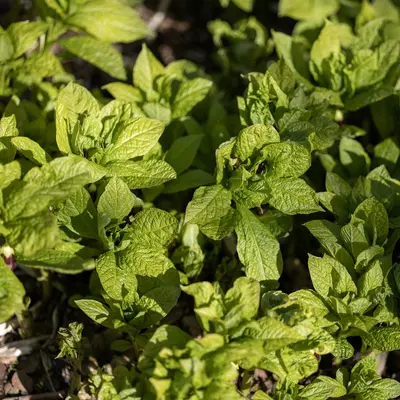
Flat, pale, misty-green stems form a thick, heavy base with broad, oval, rich green leaves. The compact vase-shaped plant at full size is about 8-10" tall, but also well-formed at mini size when young. Good bolt, heat, and cold tolerance.
Harvest
45d
Days to harvest
Sun
Full sun to part shade
Zones
5–9
USDA hardiness
Height
3 feet
Planting Timeline
Showing dates for Mei Qing Choi in USDA Zone 7
All Zone 7 lettuce →Zone Map
Click a state to update dates
Mei Qing Choi · Zones 5–9
Growing Details
Succession Planting
Direct sow every 14–21 days starting March 1 in zone 7, and keep going through early May. After that, daytime highs climbing past 80–85°F will push the plant toward bolting — Mei Qing Choi handles heat better than head lettuce, but it's still a cool-season crop and it gets bitter fast once summer heat settles in. Pick up again with sowings in late August, targeting a harvest window in October and November before hard frost.
At 45 days to maturity, a mid-August sow finishes by early October in most zone 7 gardens, leaving room for two or three fall successions before the season closes. Don't try to squeeze in a late-September sow without row cover — unprotected transplants won't survive a hard freeze below 28°F.
Complete Growing Guide
Flat, pale, misty-green stems form a thick, heavy base with broad, oval, rich green leaves. The compact vase-shaped plant at full size is about 8-10" tall, but also well-formed at mini size when young. Good bolt, heat, and cold tolerance. According to Johnny's Selected Seeds, Mei Qing Choi is 45 days to maturity, annual, hybrid (f1). Notable features: Cold Tolerant, Hydroponic Performer.
Light: Full sun (6 or more hours of direct sunlight a day), Partial Shade (Direct sunlight only part of the day, 2-6 hours). Soil: Clay, Loam (Silt), Sand. Soil pH: Acid (<6.0), Neutral (6.0-8.0). Drainage: Good Drainage, Moist. Height: 0 ft. 10 in. - 2 ft. 0 in.. Spread: 1 ft. 0 in. - 2 ft. 0 in.. Spacing: 12 inches-3 feet. Growth rate: Medium. Maintenance: Medium. Propagation: Seed, Stem Cutting. Regions: Coastal, Mountains, Piedmont.
Harvesting
Mei Qing Choi reaches harvest at 45 days from sowing per Johnny's Selected Seeds. Expect 8-10" at peak. As an annual, harvest continues until frost ends the season.
The fruits dry and split when ripe.
Color: Brown/Copper, Green. Type: Siliqua. Length: > 3 inches.
Garden value: Edible
Harvest time: Fall, Summer
Bloom time: Spring, Summer
Edibility: The foliage is edible raw or cooked but when cooked can emit an unpleasant odor.
Storage & Preservation
Store freshly harvested Mei Qing Choi in a perforated plastic bag in the refrigerator at 32–40°F with 95% humidity for optimal preservation. Under these conditions, the tender leaves and mild flavor remain crisp for 7–10 days. For longer storage, blanch whole heads for 2–3 minutes, chill in ice water, drain thoroughly, and freeze in airtight containers for up to eight months. Alternatively, pickle the chopped stems and leaves in vinegar brine for a tangy preserve lasting several months in cool, dark conditions. Drying is less practical for this tender variety, as the delicate leaves become brittle and lose appeal. A unique advantage of Mei Qing Choi is its high water content; the stems retain crispness longer than the leafy portions, so separate and store them slightly apart to prevent accelerated wilting of the more delicate foliage.
History & Origin
Mei Qing Choi is an F1 hybrid developed through controlled cross-pollination. Listed in the Johnny's Selected Seeds catalog.
Brassica is a genus of plants in the cabbage and mustard family (Brassicaceae). The members of the genus are informally known as cruciferous vegetables, cabbages, mustard plants, or simply brassicas. Crops from this genus are sometimes called cole crops—derived from the Latin caulis, denoting the stem or stalk of a plant.
Advantages
- +Attractive pale green stems and rich green leaves create beautiful visual appeal
- +Excellent bolt tolerance allows reliable harvesting across varied growing seasons
- +Compact 8-10 inch size fits well in small spaces and containers
- +Quick 45-day maturity provides fast turnover for succession planting
- +Performs well at both full and mini sizes for flexible harvesting
Considerations
- -Dense, heavy base may require careful washing to remove trapped soil
- -Pale stems can show cosmetic blemishes from minor handling or weather damage
- -Prefers consistent moisture; susceptible to splitting or cracking in wet conditions
Companion Plants
Radishes are the most useful thing you can plant near Mei Qing Choi. Flea beetles are drawn to radishes even more strongly than to bok choy, so a row along the bed edge acts as a sacrificial trap crop — you're not repelling the beetles, you're redirecting them. Chives and garlic work differently: their sulfur compounds interfere with aphids' ability to locate a host plant. That matters here because aphids feeding on bok choy can vector lettuce mosaic virus, and the damage goes well beyond cosmetic once the virus takes hold.
French marigolds (Tagetes patula specifically — not the big African types) produce root exudates that suppress soil nematodes and attract predatory insects above ground. Nasturtiums pull double duty: they draw aphids off the main bed and bring in parasitic wasps that go after caterpillars. If you've got 6 inches of border space, both are worth it. Dill and parsley add hoverflies and other soft-bodied pest predators to the mix without competing much for root space at the 6–12 inch spacing Mei Qing Choi needs.
Broccoli is a poor neighbor — not because of chemical antagonism, but because grouping two brassicas together concentrates flea beetle and cabbage aphid pressure in one spot and makes meaningful crop rotation nearly impossible. Sunflowers are a different problem: they grow fast, top out well over 5 feet, and drink a lot of water. A low, moisture-hungry plant like Mei Qing Choi will lose both light and soil moisture if sunflowers are planted anywhere nearby.
Plant Together
Radishes
Break up soil for lettuce roots and mature quickly, maximizing space usage
Carrots
Deep roots don't compete with shallow lettuce roots, efficient space utilization
Chives
Repel aphids and other pests that commonly attack lettuce
Dill
Attracts beneficial insects like ladybugs and parasitic wasps that control aphids
Garlic
Natural pest deterrent against slugs, aphids, and cabbage worms
Marigolds
Repel nematodes and aphids while attracting beneficial insects
Nasturtiums
Act as trap crop for aphids and cucumber beetles, drawing pests away from lettuce
Spinach
Similar growing requirements and can be succession planted together
Parsley
Attracts beneficial insects and has similar water and nutrient needs
Keep Apart
Broccoli
Competes for nutrients and space, both are heavy nitrogen feeders
Celery
Competes heavily for water and nutrients, similar root depth
Sunflowers
Allelopathic effects inhibit lettuce germination and growth
Nutrition Facts
Per 100g serving. % Daily Value based on 2,000 calorie diet. Source: USDA FoodData Central (FDC #2346388)
Pests & Disease Resistance
Common Pests
Aphids, slugs, snails, flea beetles
Diseases
Powdery mildew, lettuce mosaic virus, damping off
Troubleshooting Mei Qing Choi
What you'll see, why it happens, and what to do about it.
Seedlings collapse at the soil line within the first 7–10 days after sowing — stems look pinched or blackened at the base, roots brown and slimy
Likely Causes
- Damping off — a complex of soil-borne fungi (Pythium, Rhizoctonia, Fusarium) that thrive in wet, poorly drained conditions
- Reusing the same bed for brassicas three or more years running, which builds up pathogen pressure in the soil
What to Do
- 1.Pull and discard affected seedlings immediately — don't compost them
- 2.Let the soil surface dry slightly between waterings; damping off almost always follows overwatering or poor drainage
- 3.Start fresh seeds in a new spot or in sterile seed-starting mix; rotate the bed out of Brassica rapa crops for at least 2 seasons
Small, irregular holes scattered across leaves — mostly on young transplants in the first 2–3 weeks after going into the ground
Likely Causes
- Flea beetles (Phyllotreta spp.) — tiny black or bronze beetles that jump when disturbed; pressure spikes during warm, dry spells
- Slugs or snails — leave similar holes but feed at night and leave a slime trail on or near the plant
What to Do
- 1.Cover transplants with row cover (Agribon AG-19 or similar) at planting; flea beetles do the most damage in the first few weeks before the plant is established enough to outgrow the feeding
- 2.For slugs, set out shallow traps baited with beer near the base of plants, or scatter iron phosphate bait (Sluggo) at 1 lb per 1,000 sq ft
- 3.Clear weedy edges and debris around the bed — flea beetles overwinter in that material and recolonize from the perimeter each spring
Frequently Asked Questions
How long does Mei Qing Choi take to harvest?▼
Is Mei Qing Choi good for beginners?▼
Can you grow Mei Qing Choi in containers?▼
What does Mei Qing Choi taste like?▼
Does Mei Qing Choi bolt in hot weather?▼
When should I plant Mei Qing Choi?▼
Zone-by-Zone Planting Calendar
| Zone | Indoor Start | Transplant | Direct Sow | Harvest |
|---|---|---|---|---|
| Zone 1 | — | — | June – July | July – September |
| Zone 2 | — | — | May – July | July – September |
| Zone 11 | — | — | January – February | February – December |
| Zone 12 | — | — | January – February | February – December |
| Zone 13 | — | — | January – February | February – December |
| Zone 3 | — | — | May – June | June – October |
| Zone 4 | — | — | April – June | June – October |
| Zone 5 | — | — | April – May | May – November |
| Zone 6 | — | — | April – May | May – November |
| Zone 7 | — | — | March – May | May – November |
| Zone 8 | — | — | March – April | April – December |
| Zone 9 | — | — | February – March | March – December |
| Zone 10 | — | — | January – March | March – December |
Growing Guides from Wind River Greens
Sources & References
External authority sources used in compiling this guide.
- BreederJohnny's Selected Seeds
- USDAUSDA FoodData Central
See the Methodology page for how this data is sourced, what's AI-assisted, and known limitations.