Crisp Mint Romaine
Lactuca sativa 'Crisp Mint'
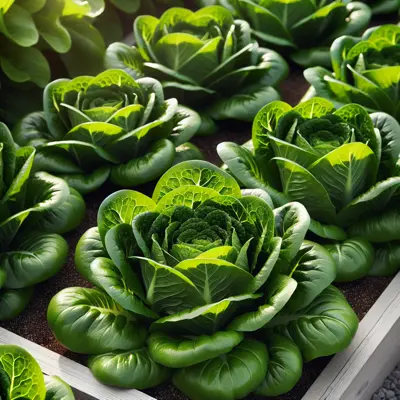
A premium romaine variety bred for exceptional crispness and sweet flavor, living up to its name with refreshingly tender leaves that stay crisp even in summer heat. This modern hybrid combines the best traits of traditional romaine with improved bolt resistance and uniform head formation. The compact size makes it perfect for small gardens while delivering restaurant-quality lettuce for gourmet salads.
Harvest
55-65d
Days to harvest
Sun
Full sun to partial shade
Zones
2–11
USDA hardiness
Height
6-12 inches
Planting Timeline
Showing dates for Crisp Mint Romaine in USDA Zone 7
All Zone 7 lettuce →Zone Map
Click a state to update dates
Crisp Mint Romaine · Zones 2–11
Growing Details
Succession Planting
Crisp Mint bolts once daytime temperatures hold above 75–80°F, so succession planting is the whole game with this variety. In zone 7, direct sow every 14 days starting March 1 and keep going through late April — that's 3–4 staggered sowings before the heat shuts things down. Pick back up with a fall run starting around August 15. Soil temps above 75°F will suppress germination at that point, so if seeds are slow to sprout, start them indoors in a cool room and transplant out at 3–4 weeks old. The fall window typically runs through early November before hard frost ends it.
Don't try to push a late-May or June sowing hoping to beat the clock. At 55–65 days to maturity, a May 15 direct sow won't be ready until mid-July at the earliest — and Crisp Mint will be sending up a seed stalk well before that in Georgia heat. Cut the spring succession off at the end of April and move that bed to sweet potatoes or summer squash until the fall window opens.
Complete Growing Guide
This hybrid romaine thrives in cool-season conditions and reaches peak quality in spring or fall rather than summer, despite its heat tolerance claim; plant in early spring for a 55–65 day harvest before late-season bolting, or use succession planting every two weeks through mid-summer for continuous harvests. Crisp Mint performs best with consistent moisture and rich, well-draining soil, as irregular watering compromises its signature crispness and sweetness. While generally disease-resistant, this cultivar is prone to tipburn in calcium-deficient soil, so maintain steady moisture and calcium levels rather than allowing dry-wet cycles. Watch for aphids in early growth stages, which can cluster on tender new leaves. The compact, uniform heads mature reliably without excessive stretching common in leggy romaine types, but ensure 6–8 inches of spacing to prevent crowding and fungal issues. A practical tip: harvest outer leaves regularly once heads reach 6 inches tall to extend productivity and maintain tenderness, rather than waiting for full-sized heads.
Light: Full sun (6 or more hours of direct sunlight a day), Partial Shade (Direct sunlight only part of the day, 2-6 hours). Soil: High Organic Matter. Soil pH: Neutral (6.0-8.0). Drainage: Good Drainage, Moist. Height: 0 ft. 6 in. - 1 ft. 0 in.. Spread: 0 ft. 6 in. - 1 ft. 0 in.. Spacing: Less than 12 inches. Growth rate: Rapid. Maintenance: Medium. Propagation: Seed. Regions: Coastal, Mountains, Piedmont.
Harvesting
Harvest Crisp Mint Romaine when the heads reach 6-12 inches tall with tightly formed, uniformly colored leaves displaying a vibrant mint-green hue and crisp texture that snaps cleanly when bent. The cultivar is ready when the outer leaves feel firm and cool to the touch, indicating optimal crispness and sugar content. For continuous harvests, remove outer leaves individually once the plant reaches mature size, allowing the center to produce new growth for multiple pickings over several weeks. Alternatively, cut entire heads at soil level for a single harvest. Timing matters significantly with this variety: harvest in early morning after the dew has dried but before afternoon heat, as this is when the leaves maintain maximum crispness and sweetness. Regular harvesting encourages denser leaf production and prevents premature bolting.
Tiny seeds with a dandelion-like tuft (pappus) to aid in wind dispersal.
Color: Brown/Copper. Type: Achene. Length: < 1 inch. Width: < 1 inch.
Harvest time: Summer
Edibility: Leaves can be used raw or cooked in salads, sandwiches, and other dishes. Head lettuce can be stored for 2-3 weeks while leaf and butterhead store for 1-2 weeks.
Storage & Preservation
Store freshly harvested Crisp Mint Romaine in the refrigerator immediately after harvest for maximum shelf life of 7-10 days. Wrap unwashed heads loosely in damp paper towels, then place in perforated plastic bags in the crisper drawer. The ideal storage temperature is 32-36°F with high humidity around 95%.
For longer storage, separate outer leaves and wash thoroughly, then dry completely using a salad spinner. Store clean, dry leaves in airtight containers lined with paper towels, replacing towels as they become damp. This method maintains crispness for up to two weeks.
While romaine doesn't freeze or dry well due to high water content, you can preserve excess harvest by making and freezing pesto-style sauces with the outer leaves, or fermenting whole small heads in saltwater brine for a tangy preserved vegetable that keeps for months in cold storage.
History & Origin
While specific breeder attribution and introduction date for 'Crisp Mint Romaine' are not well documented in readily available sources, this variety represents modern romaine breeding efforts focused on heat tolerance and compact plant architecture. It belongs to the broader lineage of improved romaine hybrids developed by commercial seed companies over the past two decades, continuing a tradition of selecting for superior crispness and bolt resistance in warm climates. The variety embodies conventional breeding objectives that emerged prominently in the early 2000s, when seed companies prioritized uniform head formation and extended harvest windows for market gardeners. Without confirmed documentation of its specific origin, 'Crisp Mint Romaine' should be understood as a contemporary commercial introduction reflecting current horticultural priorities rather than a heritage or university-developed cultivar.
Origin: Mediterranean to Siberia
Advantages
- +Exceptional crispness and sweet flavor make it ideal for gourmet salads
- +Improved bolt resistance allows successful growing even during hot summer months
- +Compact size perfect for small garden spaces with limited room
- +Fast 55-65 day harvest provides quick returns on planting investment
- +Uniform head formation ensures consistent, restaurant-quality lettuce production
Considerations
- -Susceptible to tipburn in inconsistent watering or low-calcium soil conditions
- -Multiple pest vulnerabilities including aphids, thrips, and cabbage loopers
- -Requires moderate growing difficulty and attention to environmental conditions
- -Prone to lettuce drop disease in warm, humid growing environments
Companion Plants
Radishes are the most practical thing you can sow alongside Crisp Mint. They germinate in 5–7 days — fast enough to mark the lettuce row while it's still getting started — and leafminers will preferentially lay eggs on radish foliage, pulling pressure off the lettuce. Think of them as a working sacrificial crop rather than just a space-filler. Chives and garlic planted at the bed corners do something similar with aphids: both emit sulfur compounds that disrupt aphid colonies, though they won't stop a heavy infestation on their own. You still need to check leaf undersides every few days and knock colonies off with a hard stream of water.
Carrots are an easy fit because they root at 6–18 inches, well below where lettuce feeds, so there's no real competition. Spinach makes sense for the same irrigation zone since its pH preference (6.2–6.8) lines up exactly with Crisp Mint's. Nasturtiums are worth tucking in at the bed edges — they pull aphids as a trap crop and attract predatory wasps that go after cabbage loopers, which will chew through a romaine head fast if a population builds up in late spring.
Fennel is the plant to exclude entirely. Its roots release allelopathic compounds that visibly stunt lettuce — head size can drop by a third in close proximity. Broccoli competes hard for nitrogen and throws more shade than most people expect once it sizes up. In our zone 7 Georgia garden, both problems get worse fast in April when everything hits a growth surge simultaneously, so keep brassicas and lettuce at least 18–24 inches apart if you're running them in the same bed.
Plant Together
Chives
Repels aphids and improves lettuce flavor while attracting beneficial insects
Carrots
Deep roots don't compete with shallow lettuce roots, provides ground coverage
Radishes
Fast-growing, helps break up soil and can be harvested before lettuce needs space
Marigolds
Natural pest deterrent, repels nematodes and aphids that damage lettuce
Garlic
Strong scent deters slugs, snails, and aphids that commonly attack lettuce
Spinach
Similar growing requirements and root depth, good succession planting companion
Nasturtiums
Acts as trap crop for aphids and cucumber beetles, draws pests away from lettuce
Dill
Attracts beneficial insects like ladybugs and parasitic wasps that control lettuce pests
Keep Apart
Broccoli
Large leaves create too much shade and compete for nutrients with lettuce
Sunflowers
Allelopathic compounds inhibit lettuce germination and growth
Fennel
Strong allelopathic effects inhibit growth of lettuce and most other vegetables
Nutrition Facts
Per 100g serving. % Daily Value based on 2,000 calorie diet. Source: USDA FoodData Central (FDC #169247)
Pests & Disease Resistance
Resistance
Excellent bolt resistance, good downy mildew tolerance
Common Pests
Aphids, thrips, leafminers, cabbage loopers
Diseases
Tipburn, lettuce drop, bacterial leaf spot
Troubleshooting Crisp Mint Romaine
What you'll see, why it happens, and what to do about it.
Seedlings collapse at soil level within the first 1–2 weeks after planting — stem looks pinched or rotted right at the base
Likely Causes
- Damping off — typically Pythium spp. or Rhizoctonia solani, both soil-borne fungi that thrive in wet, poorly-drained conditions
- Reusing the same bed for lettuce 3+ consecutive years without rotation, which lets pathogen populations build up
What to Do
- 1.Don't replant lettuce into the same raised bed spot where you've had losses — rotate to a fresh bed and give that soil at least one season off
- 2.Let the top inch of soil dry slightly between waterings right after transplant; seedlings don't need as much water as you think
- 3.If you're starting seeds indoors, use a sterile seed-starting mix — never reuse potting soil from a previous season for germination
Leaf edges turn brown and papery — not from the outside in, but starting on the inner, younger leaves near the tip
Likely Causes
- Tipburn — a calcium translocation failure, not necessarily low soil calcium; fast growth, low airflow, and inconsistent watering all contribute
- Heat stress pushing growth rate past what the plant can sustain, common once daytime temps climb above 75°F
What to Do
- 1.Water consistently — 1 to 1.5 inches per week; uneven moisture is one of the main tipburn triggers
- 2.Plant Crisp Mint in partial shade (4–5 hours of direct sun) during the tail end of spring to slow growth rate and cut tipburn incidence
- 3.If tipburn keeps showing up, harvest heads a few days earlier — younger heads are less affected
Outer leaves developing water-soaked patches that turn slimy and brown; plant may collapse from the base upward
Likely Causes
- Lettuce drop — caused by Sclerotinia sclerotiorum, a fungus that overwinters as hard black structures (sclerotia) in the soil
- Dense planting with poor airflow, or overhead irrigation that keeps foliage wet for extended periods
What to Do
- 1.Space plants at least 8 inches apart — 10 is better — and don't crowd them to compensate for losses
- 2.Pull and bag (don't compost) any infected plants immediately; Sclerotinia sclerotia can persist in soil for 5–8 years
- 3.Switch to drip irrigation or water at soil level in the morning so leaves dry before nightfall
Small tan or brown angular spots on leaves, sometimes with a water-soaked border; spots don't follow a neat pattern like tipburn
Likely Causes
- Bacterial leaf spot — Xanthomonas campestris pv. vitians, which spreads via infected seed or rain splash
- Overhead watering combined with warm nights (above 60°F) speeds up bacterial spread considerably
What to Do
- 1.Remove and discard affected outer leaves as soon as you see spots; don't let them decompose in the bed
- 2.Avoid wetting foliage — drip tape or a soaker hose at the base keeps the canopy dry and cuts transmission
- 3.Rotate lettuce out of the bed for at least one full season; the bacterium can survive on plant debris left in the soil
Frequently Asked Questions
How long does Crisp Mint Romaine take to grow from seed to harvest?▼
Can you grow Crisp Mint Romaine in containers?▼
Is Crisp Mint Romaine good for beginners?▼
What does Crisp Mint Romaine taste like compared to regular romaine?▼
When should I plant Crisp Mint Romaine for fall harvest?▼
Why are my Crisp Mint Romaine leaves getting brown tips?▼
Zone-by-Zone Planting Calendar
| Zone | Indoor Start | Transplant | Direct Sow | Harvest |
|---|---|---|---|---|
| Zone 3 | — | — | May – June | July – October |
| Zone 4 | — | — | April – June | June – October |
| Zone 5 | — | — | April – May | June – November |
| Zone 6 | — | — | April – May | June – November |
| Zone 7 | — | — | March – May | May – November |
| Zone 8 | — | — | March – April | May – December |
| Zone 9 | — | — | February – March | April – December |
| Zone 10 | — | — | January – March | March – December |
| Zone 1 | — | — | June – July | August – September |
| Zone 2 | — | — | May – July | July – September |
| Zone 11 | — | — | January – February | February – December |
| Zone 12 | — | — | January – February | February – December |
| Zone 13 | — | — | January – February | February – December |
Growing Guides from Wind River Greens
Sources & References
External authority sources used in compiling this guide.
See the Methodology page for how this data is sourced, what's AI-assisted, and known limitations.