Clodia
Cichorium endivia
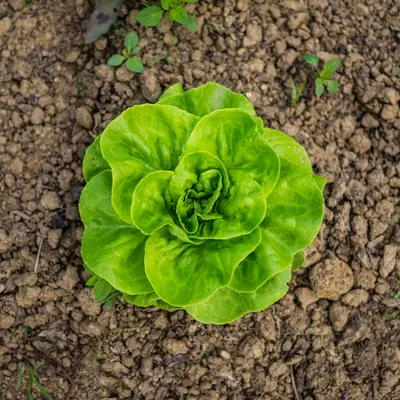
Plants are upright and leaves stay narrow for a long harvest window. Strap leaves with ruffled margins add loft and mildly bitter flavor to salad mixes. For baby leaf only.
Harvest
29d
Days to harvest
Sun
Full sun to partial shade
Zones
4–9
USDA hardiness
Height
10-24 inches
Planting Timeline
Showing dates for Clodia in USDA Zone 7
All Zone 7 lettuce →Zone Map
Click a state to update dates
Clodia · Zones 4–9
Growing Details
Succession Planting
Direct sow every 14–21 days starting March 1 in zone 7, and keep going through early May. Clodia matures in 29 days, so a mid-March sowing lands you April harvests before heat becomes a problem. Resume sowing in late August once daytime highs drop back below 80°F — endive handles light frost and actually sweetens up after a night in the 28–32°F range. Stop the fall run by early October in zone 7; seedlings started after that won't size up before hard freezes arrive.
Complete Growing Guide
Light: Full sun (6 or more hours of direct sunlight a day), Partial Shade (Direct sunlight only part of the day, 2-6 hours). Soil: Clay, Loam (Silt), Sand. Soil pH: Acid (<6.0), Alkaline (>8.0), Neutral (6.0-8.0). Drainage: Good Drainage, Moist. Height: 0 ft. 10 in. - 2 ft. 0 in.. Spread: 0 ft. 10 in. - 1 ft. 6 in.. Spacing: 12 inches-3 feet. Growth rate: Rapid. Maintenance: High. Propagation: Seed. Regions: Coastal, Mountains, Piedmont.
Harvesting
The fruit is obovoid to cylindrical in shape and slightly ribbed.
Color: Brown/Copper, Cream/Tan. Type: Achene. Length: < 1 inch. Width: < 1 inch.
Harvest time: Summer
Edibility: Leaves are edible raw or cooked. Blue flowers are used raw in a salad, as a garnish or pickled.
Storage & Preservation
Harvest Clodia endive at peak tenderness and store unwashed heads in a perforated plastic bag in the refrigerator's crisper drawer, maintaining 32–35°F and 90–95% humidity. Fresh heads remain crisp for 7–10 days under these conditions. For longer preservation, blanching followed by freezing works well: briefly immerse whole or chopped leaves in boiling water for 2–3 minutes, cool in ice water, drain thoroughly, and freeze in airtight containers for up to eight months. Fermentation is also effective—finely shred the leaves, salt generously (about 2% by weight), pack tightly in a jar, and allow 1–2 weeks of fermentation at room temperature before refrigerating. Clodia's slightly bitter, nutty character deepens pleasantly through fermentation. Note that endive's tender, fine-textured leaves are prone to bruising; handle gently during harvest and storage to minimize browning at cut surfaces.
History & Origin
Origin: Eastern Mediterranean, India
Advantages
- +Edible: Leaves are edible raw or cooked. Blue flowers are used raw in a salad, as a garnish or pickled.
- +Fast-growing
Considerations
- -Toxic (Sap/Juice): Low severity
- -High maintenance
Companion Plants
Radishes and carrots are the most practical neighbors for Clodia. Radishes germinate in 5–7 days and act as a quick trap crop for flea beetles, which will chew on endive given the chance. Carrots occupy a deeper root zone than endive's shallow system, so they're genuinely non-competing rather than just tolerated — two plants pulling from different soil layers don't fight over the same moisture. Marigolds (Tagetes spp.) along the bed edge earn their spot by deterring aphids through volatile scent compounds, and they give you a clean visual border that's easy to walk and scout.
Broccoli is the one to plant elsewhere. It feeds aggressively in the top 12 inches — exactly where Clodia's roots sit — and as brassica residue breaks down it releases glucosinolate-derived compounds that can suppress germination of nearby plants. That's a real problem if you're succession sowing every few weeks. Put at least 18 inches between them, or better, different beds entirely.
Plant Together
Chives
Repels aphids and other pests while improving lettuce flavor
Carrots
Deep roots don't compete with shallow lettuce roots, maximizes garden space
Radishes
Fast-growing radishes help loosen soil and can be harvested before lettuce needs the space
Marigolds
Natural pest deterrent that repels nematodes and aphids
Garlic
Strong scent deters slugs, snails, and aphids that commonly attack lettuce
Spinach
Similar growing requirements and can provide mutual shade in hot weather
Nasturtiums
Act as trap crop for aphids and cucumber beetles, protecting lettuce
Dill
Attracts beneficial insects like ladybugs that prey on lettuce pests
Keep Apart
Broccoli
Heavy feeder that competes for nutrients and can overshadow lettuce
Parsley
Can attract carrot flies and may stunt lettuce growth through root competition
Sunflowers
Allelopathic compounds inhibit lettuce germination and growth
Nutrition Facts
Per 100g serving. % Daily Value based on 2,000 calorie diet. Source: USDA FoodData Central (FDC #2346388)
Pests & Disease Resistance
Common Pests
Aphids, slugs, snails, flea beetles
Diseases
Downy mildew, powdery mildew, Botrytis (gray mold) in humid conditions
Troubleshooting Clodia
What you'll see, why it happens, and what to do about it.
Seedlings collapse at soil level within the first 7–10 days after planting, sometimes with fuzzy white mold visible on the soil surface
Likely Causes
- Damping off — a fungal complex (commonly Pythium or Rhizoctonia) that thrives in cold, wet, poorly drained soil
- Replanting the same bed with lettuce year after year without rotation, which allows pathogen load to build
What to Do
- 1.Hold off on watering until the top inch of soil is dry — overwatering accelerates this faster than anything else
- 2.If starting indoors, use a sterile seed-starting mix, not garden soil pulled from the bed where this happened
- 3.Rotate lettuce out of that bed for at least one season; NC State's IPM guidance specifically flags repeated lettuce plantings in the same spot as a risk factor
Leaves develop a grayish-purple fuzzy coating on the undersides, with yellow patches on the upper surface
Likely Causes
- Downy mildew (Bremia lactucae) — spreads fast in cool, humid conditions with poor airflow
- Crowded spacing below the 6-inch minimum, trapping moisture between plants
What to Do
- 1.Pull and trash affected outer leaves immediately — don't compost them
- 2.Space plants at least 6–8 inches apart and switch to drip or base watering to keep foliage dry
- 3.If the problem recurs in the same bed, source a Bremia-resistant endive selection for that spot going forward
Frequently Asked Questions
How long does Clodia lettuce take to grow?▼
Can you grow Clodia lettuce in containers?▼
What does Clodia lettuce taste like?▼
Is Clodia lettuce good for beginners?▼
When should you plant Clodia lettuce?▼
How much space does Clodia lettuce need?▼
Zone-by-Zone Planting Calendar
| Zone | Indoor Start | Transplant | Direct Sow | Harvest |
|---|---|---|---|---|
| Zone 1 | — | — | June – July | June – September |
| Zone 2 | — | — | May – July | June – September |
| Zone 11 | — | — | January – February | January – December |
| Zone 12 | — | — | January – February | January – December |
| Zone 13 | — | — | January – February | January – December |
| Zone 3 | — | — | May – June | May – October |
| Zone 4 | — | — | April – June | May – October |
| Zone 5 | — | — | April – May | May – November |
| Zone 6 | — | — | April – May | April – November |
| Zone 7 | — | — | March – May | April – November |
| Zone 8 | — | — | March – April | March – December |
| Zone 9 | — | — | February – March | February – December |
| Zone 10 | — | — | January – March | February – December |
Growing Guides from Wind River Greens
Sources & References
External authority sources used in compiling this guide.
- ExtensionNC State Extension
- BreederJohnny's Selected Seeds
- USDAUSDA FoodData Central
See the Methodology page for how this data is sourced, what's AI-assisted, and known limitations.