Canasta
Lactuca sativa 'Canasta'
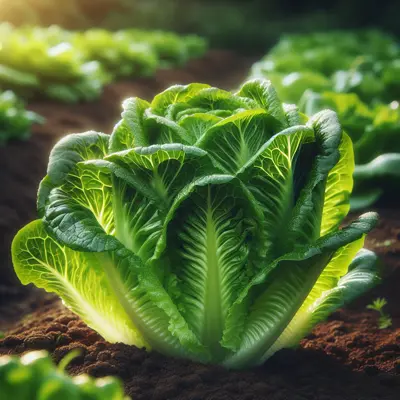
A premium romaine lettuce bred for exceptional sweetness and crisp texture, with thick, sturdy leaves perfect for Caesar salads. This variety forms tall, upright heads with excellent heart formation and superior bolt resistance. Professional chefs and home gardeners alike prize Canasta for its consistent quality and outstanding flavor that rivals the best restaurant lettuce.
Harvest
65-75d
Days to harvest
Sun
Full sun to partial shade
Zones
2–11
USDA hardiness
Height
6-12 inches
Planting Timeline
Showing dates for Canasta in USDA Zone 7
All Zone 7 lettuce →Zone Map
Click a state to update dates
Canasta · Zones 2–11
Growing Details
Succession Planting
Direct sow Canasta every 14 days starting March 1 in zone 7, and keep that cadence through late April. Once daytime highs are consistently above 80°F — usually by mid-May — germination gets spotty and plants rush to bolt; stop spring sowings by May 1. Pick back up in late August through mid-September for a fall run, and Canasta will hold well into November before hard frost finishes it.
Each sowing runs 65-75 days to a full head, so count backwards from your first expected frost (mid-November across most of north Georgia) to set your last fall sow date. A single layer of row cover over September plantings buys another 2-3 weeks of harvest at either end of the season.
Complete Growing Guide
Canasta's exceptional bolt resistance allows extended harvest windows compared to standard romaines, making it ideal for succession planting every two weeks through spring and early fall. This cultivar performs best in consistently cool conditions between 60–70°F; heat above 75°F can trigger premature bolting despite its improved genetics. Plant in rich, well-draining soil with steady moisture—Canasta's thick leaves demand reliable water to maintain crispness and sweetness. While generally pest-resistant, monitor for aphids and slugs, which target the dense heart formation. The key to maximizing flavor: harvest in the morning when heads are fully hydrated, and cut outer leaves selectively to encourage continued production rather than harvesting entire heads at once.
Light: Full sun (6 or more hours of direct sunlight a day), Partial Shade (Direct sunlight only part of the day, 2-6 hours). Soil: High Organic Matter. Soil pH: Neutral (6.0-8.0). Drainage: Good Drainage, Moist. Height: 0 ft. 6 in. - 1 ft. 0 in.. Spread: 0 ft. 6 in. - 1 ft. 0 in.. Spacing: Less than 12 inches. Growth rate: Rapid. Maintenance: Medium. Propagation: Seed. Regions: Coastal, Mountains, Piedmont.
Harvesting
Canasta reaches peak harvest readiness when heads achieve 6 to 12 inches in height with tightly packed, uniformly green leaves and a firm heart that resists gentle pressure. Visual maturity typically occurs around 65 to 75 days, indicated by dense, upright formation and leaves that have deepened to a rich, vibrant green. For maximum sweetness and crispness, harvest in early morning when leaves are fully hydrated and cool. You can employ either single-harvest removal of entire heads or continuous harvesting by picking outer leaves while allowing the center to develop further, though Canasta's superior bolt resistance makes it forgiving if harvesting is delayed slightly. Cut heads at the base with a sharp knife rather than pulling to preserve plant integrity.
Tiny seeds with a dandelion-like tuft (pappus) to aid in wind dispersal.
Color: Brown/Copper. Type: Achene. Length: < 1 inch. Width: < 1 inch.
Harvest time: Summer
Edibility: Leaves can be used raw or cooked in salads, sandwiches, and other dishes. Head lettuce can be stored for 2-3 weeks while leaf and butterhead store for 1-2 weeks.
Storage & Preservation
Store freshly harvested Canasta in the refrigerator immediately after cutting. Wrap heads in damp paper towels, then place in perforated plastic bags to maintain humidity while allowing air circulation. Properly stored heads remain crisp and sweet for 10-14 days at 32-35°F.
For maximum freshness, don't wash heads until ready to use. If leaves begin wilting, revive them with a 10-minute ice water bath before serving.
Canasta's sturdy leaves freeze well for cooked applications. Blanch whole leaves for 2 minutes, shock in ice water, then freeze in portions for adding to soups and stir-fries. The thick ribs also work excellently for fermenting – chop and add to kimchi or sauerkraut for extra crunch and mild flavor.
History & Origin
Canasta romaine lettuce was developed by Rijk Zwaan, a prominent Dutch seed company with a long history of vegetable breeding, as part of their ongoing improvement of romaine varieties for commercial and home garden cultivation. The variety emerged from selective breeding programs focused on enhancing sweetness, crispness, and bolt resistance—traits increasingly demanded by both professional chefs and discerning gardeners. While precise breeding records and the specific year of introduction are not widely documented in public agricultural databases, Canasta reflects Rijk Zwaan's commitment to combining heirloom romaine quality with modern agronomic performance. The variety represents the culmination of decades of Dutch breeding expertise in cool-season crops.
Origin: Mediterranean to Siberia
Advantages
- +Exceptional sweetness and crispness make Canasta ideal for premium Caesar salads.
- +Tall upright heads with excellent heart formation ensure consistent, restaurant-quality harvests.
- +Superior bolt resistance means longer harvest windows and more reliable production.
- +Easy to moderate difficulty makes Canasta accessible to most home gardeners.
- +Sturdy thick leaves withstand handling and storage better than delicate varieties.
Considerations
- -Susceptible to downy mildew in humid or cool, wet growing conditions.
- -Prone to tip burn when soil moisture and calcium levels fluctuate unpredictably.
- -Aphids and slugs frequently damage leaves, requiring vigilant pest management practices.
- -Requires 65-75 days to mature, making it slower than quick-harvest lettuce varieties.
Companion Plants
Radishes are the most practical companion for Canasta — direct sow them 4-6 inches apart between lettuce rows and they're out of the ground in 25-30 days before the lettuce needs the space, and their scent confuses root maggot flies in the process. Chives and garlic at the bed edges help hold aphid pressure down, which matters in our zone 7 Georgia springs when April warms up faster than you'd like and aphid populations build on the soft new growth. Tagetes patula marigolds at the border add some nematode deterrence worth having in any bed that's grown lettuce two or three years running. Broccoli and other brassicas should stay at least 3 feet away — they pull from the same shallow moisture zone and lettuce simply can't compete; sunflowers cast too much shade and release allelopathic compounds that slow lettuce germination in their root zone.
Plant Together
Chives
Repels aphids and other pests while improving lettuce flavor
Carrots
Loose deep roots don't compete with shallow lettuce roots, maximizes space usage
Radishes
Quick-growing companion that breaks up soil and deters flea beetles
Marigolds
Repels nematodes, aphids, and other harmful insects naturally
Garlic
Strong scent deters slugs, snails, and aphids that commonly attack lettuce
Spinach
Similar growing requirements and helps shade soil to retain moisture
Dill
Attracts beneficial insects like ladybugs that control aphids
Nasturtiums
Acts as trap crop for aphids and cucumber beetles, drawing pests away
Keep Apart
Broccoli
Large leaves create excessive shade and compete heavily for nutrients
Parsley
Can attract carrot flies and competes for similar soil nutrients
Sunflowers
Allelopathic effects inhibit lettuce germination and growth
Nutrition Facts
Per 100g serving. % Daily Value based on 2,000 calorie diet. Source: USDA FoodData Central (FDC #2346388)
Pests & Disease Resistance
Resistance
Excellent bolt resistance and tip burn tolerance. Good downy mildew resistance.
Common Pests
Aphids, slugs, snails, cabbage loopers
Diseases
Downy mildew, bottom rot, tip burn, lettuce drop
Troubleshooting Canasta
What you'll see, why it happens, and what to do about it.
Seedlings collapse at the soil line within the first 7-10 days after transplanting or germination, sometimes with a fuzzy whitish mold visible on the soil surface
Likely Causes
- Damping off — typically Pythium or Rhizoctonia fungi — favored by cold, wet soil and poor drainage
- Overwatering or planting into heavy clay that stays saturated
What to Do
- 1.Pull the dead seedlings and check roots for brown, mushy tissue to confirm fungal damping off rather than a pest
- 2.Don't replant into the same spot until you amend drainage — work in 2-3 inches of compost and let the bed dry out for a week
- 3.Start fresh seed in a new location or a sterilized tray; water from below to keep the soil surface drier
Gray-purple fuzzy coating on the undersides of outer leaves, with pale yellow patches on the upper surface
Likely Causes
- Downy mildew (Bremia lactucae) — a water mold that spreads in cool, humid conditions, especially when nights stay below 60°F and leaves stay wet
What to Do
- 1.Pick off and trash (not compost) any affected leaves immediately
- 2.Water in the morning at the base of plants so foliage dries before nightfall
- 3.Space plants the full 8-10 inches apart — crowding makes this worse fast
Brown, slimy rot starting at the base of the head, spreading inward — outer wrapper leaves collapse against the soil
Likely Causes
- Bottom rot (Rhizoctonia solani) — a soil-borne fungus that attacks wherever the plant touches wet ground
- Mulch or soil piled up against the stem
What to Do
- 1.Pull mulch back an inch from the crown of each plant
- 2.Rotate this bed out of lettuce for at least one season — R. solani persists in soil
- 3.Improve drainage with raised rows or additional compost; standing water after rain is the main trigger
Brown, papery burn on the tips and margins of inner leaves — no visible insects, no mold, just dead tissue at the leaf edges
Likely Causes
- Tip burn — a calcium distribution problem caused by rapid growth outpacing the plant's ability to move calcium to new tissue, often worsened by heat spikes or inconsistent watering
- Irregular irrigation: letting the soil dry out completely between waterings disrupts calcium uptake even if soil calcium levels are fine
What to Do
- 1.Water consistently at 1 to 1.5 inches per week — no dry spells followed by heavy soaks
- 2.Cut heads a few days early once daytime temps push past 80°F; tip burn accelerates quickly above that threshold
- 3.Back off nitrogen fertilizer mid-season — pushing fast, lush growth is part of what drives the problem
Frequently Asked Questions
How long does Canasta lettuce take to grow?▼
Can you grow Canasta lettuce in containers?▼
Is Canasta lettuce good for beginners?▼
What does Canasta lettuce taste like?▼
When should I plant Canasta lettuce?▼
Canasta vs regular romaine lettuce - what's the difference?▼
Zone-by-Zone Planting Calendar
| Zone | Indoor Start | Transplant | Direct Sow | Harvest |
|---|---|---|---|---|
| Zone 3 | — | — | May – June | July – October |
| Zone 4 | — | — | April – June | July – October |
| Zone 5 | — | — | April – May | June – November |
| Zone 6 | — | — | April – May | June – November |
| Zone 7 | — | — | March – May | May – November |
| Zone 8 | — | — | March – April | May – December |
| Zone 9 | — | — | February – March | April – December |
| Zone 10 | — | — | January – March | March – December |
| Zone 1 | — | — | June – July | August – September |
| Zone 2 | — | — | May – July | July – September |
| Zone 11 | — | — | January – February | February – December |
| Zone 12 | — | — | January – February | February – December |
| Zone 13 | — | — | January – February | February – December |
Growing Guides from Wind River Greens
Sources & References
External authority sources used in compiling this guide.
See the Methodology page for how this data is sourced, what's AI-assisted, and known limitations.