Spider Plant
Chlorophytum comosum
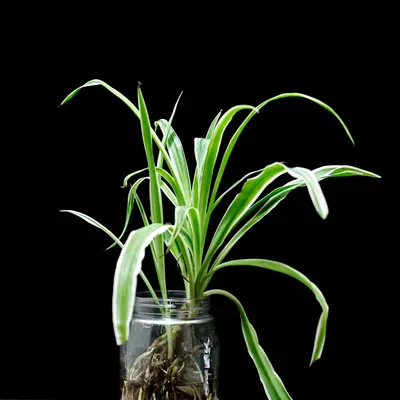
A cheerful, fast-growing houseplant famous for producing adorable baby plantlets that dangle like spiders from long, arching stems. This virtually indestructible green companion features striking variegated leaves with cream or white stripes and adapts to almost any indoor condition with grace. It's the perfect plant for propagation enthusiasts who love sharing plant babies with friends and family.
Sun
Full shade
Zones
9–11
USDA hardiness
Height
12-18 inches
Complete Growing Guide
Light: Dappled Sunlight (Shade through upper canopy all day), Deep shade (Less than 2 hours to no direct sunlight). Soil: Loam (Silt). Soil pH: Neutral (6.0-8.0). Drainage: Good Drainage, Moist. Height: 1 ft. 0 in. - 1 ft. 6 in.. Spread: 1 ft. 0 in. - 2 ft. 0 in.. Spacing: 12 inches-3 feet. Growth rate: Medium. Maintenance: Medium. Propagation: Division. Regions: Coastal.
Harvesting
Small capsule after flowering.
Type: Capsule. Length: < 1 inch. Width: < 1 inch.
Storage & Preservation
Spider plants are living houseplants, not food items requiring traditional storage or preservation. Keep plants in a bright, indirect light location with temperatures between 65-75°F and humidity of 40-60% to maintain optimal health. Well-draining potting soil prevents root rot. Propagation is the primary "preservation" method—detach plantlets (spiderettes) with aerial roots and root them in water or moist soil for 1-2 weeks before potting. Division of mature plants every 2-3 years refreshes growth. Proper watering (when soil surface is dry) extends plant lifespan indefinitely, with specimens thriving for 20+ years.
History & Origin
Origin: W. Tropical Africa to Cameroon, Ethiopia to S. Africa
Advantages
- +Disease resistance: Drought, Dry Soil, Heavy Shade
Companion Plants
Spider plants do well grouped with other low-to-medium light tropicals that share their water schedule. Pothos, Philodendron, and Peace Lily all want soil that dries slightly between waterings, and setting them within a foot or two of each other raises ambient humidity by a few percentage points through combined transpiration — a real benefit during dry winters when the furnace is running. Boston Fern adds even more moisture to the air, and Snake Plant (Sansevieria trifasciata) fills out the group without competing for resources, since its roots stay contained and it tolerates the same irregular watering cadence without complaint.
The problem companions are mostly about conflicting water needs. Cacti need to go bone-dry between waterings — the opposite of what a spider plant wants — so sharing a tray or pot with one means you're always managing toward the wrong target for at least one of them. Fiddle Leaf Fig (Ficus lyrata) is a different kind of mismatch: it drops leaves if moved even a few feet, which makes it a poor candidate for the kind of seasonal rearranging you'll naturally do when shuffling plants toward better light in winter.
Plant Together
Pothos
Similar water and light requirements, compatible growth habits
Peace Lily
Both thrive in moderate light and help purify indoor air
Boston Fern
Similar humidity preferences and non-competitive root systems
Rubber Plant
Compatible light requirements and both are easy-care houseplants
Philodendron
Similar watering needs and both tolerate indirect light well
Snake Plant
Complementary care schedules - snake plant needs less water
ZZ Plant
Both are low-maintenance and tolerate similar indoor conditions
English Ivy
Similar trailing growth habit and compatible light preferences
Keep Apart
Fiddle Leaf Fig
Requires much brighter light and can overshadow smaller plants
Cactus
Opposite watering needs - cacti need dry conditions while spider plants need consistent moisture
Orchid
Requires specialized potting medium and different humidity levels
Pests & Disease Resistance
Resistance
Very disease resistant, occasional leaf tip browning from water quality
Common Pests
Spider mites, aphids, scale insects, whiteflies
Diseases
Root rot from overwatering, leaf tip burn from fluoride in water
Troubleshooting Spider Plant
What you'll see, why it happens, and what to do about it.
Brown, crispy leaf tips on otherwise healthy-looking foliage
Likely Causes
- Fluoride toxicity — municipal tap water accumulates fluoride salts in the leaf margins over time
- Low humidity, especially near heating or air conditioning vents
- Overfertilizing with a phosphorus-heavy fertilizer, which interferes with fluoride processing in the tissue
What to Do
- 1.Switch to distilled or rainwater for your next several waterings and see if new growth comes in clean
- 2.Move the pot at least 3 feet away from any floor vent or radiator
- 3.Trim the browned tips with clean scissors at a slight angle — it doesn't fix the underlying problem but keeps the plant presentable while you sort it out
Leaves yellowing and going mushy at the base, with a faint sour smell from the soil
Likely Causes
- Root rot — most commonly Pythium or Fusarium species — caused by soil staying waterlogged for more than a few days at a stretch
- Pot without drainage holes trapping standing water at the bottom
What to Do
- 1.Unpot the plant and cut away any black or brown mushy roots with sterile scissors; healthy roots should be white or pale tan
- 2.Repot into fresh, well-draining potting mix and a container with at least one drainage hole
- 3.Hold off watering for 5-7 days after repotting to let the root system stabilize
Fine webbing on the undersides of leaves, with tiny moving specks and pale stippling across the leaf surface
Likely Causes
- Spider mites (Tetranychus urticae) — they thrive when indoor humidity drops below 40% and air is stagnant
- Bringing in a plant from outside or from a store without quarantining it first
What to Do
- 1.Blast the leaves — top and bottom — with a firm stream of water in the shower; repeat every 3 days for 2 weeks to break the mite life cycle
- 2.Apply insecticidal soap, coating all leaf surfaces, especially the undersides where mites cluster
- 3.Quarantine any newly acquired houseplants for at least 2 weeks before setting them near your spider plant
Pale, washed-out foliage with leaves losing their white or yellow variegation stripes, new growth coming in uniformly green
Likely Causes
- Insufficient light — fewer than 2 hours of indirect light daily pushes the plant toward solid green as it tries to maximize chlorophyll production
- Placing a variegated cultivar like 'Vittatum' or 'Variegatum' too deep in a north-facing room with no supplemental light
What to Do
- 1.Move the pot to a brighter spot — a few feet back from an east- or west-facing window works well; direct afternoon sun will scorch the leaves, so keep some distance
- 2.If natural light isn't available, a standard grow light on a 12-hour timer placed 12-18 inches above the plant will bring the variegation back within a few months
Frequently Asked Questions
Is spider plant good for beginners?▼
How do I propagate spider plant babies?▼
Can spider plants grow in low light?▼
What causes brown tips on spider plants?▼
How often should I water my spider plant?▼
Can I keep spider plants in a hanging basket?▼
Growing Guides from Wind River Greens
Sources & References
External authority sources used in compiling this guide.
- ExtensionNC State Extension
See the Methodology page for how this data is sourced, what's AI-assisted, and known limitations.