Alocasia Polly
Alocasia x amazonica 'Polly'
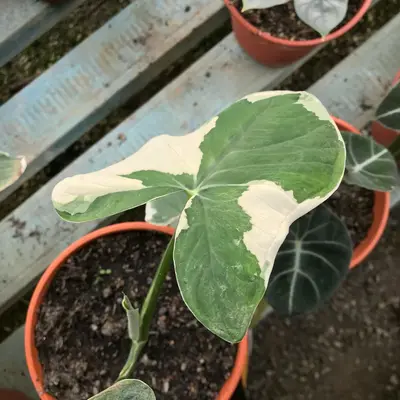
This compact elephant ear variety delivers maximum drama with its striking arrow-shaped leaves featuring bold white veins against deep green, almost black foliage. Often called the African Mask Plant, its sculptural beauty and manageable size make it perfect for adding exotic tropical flair to modern interiors.
Sun
Partial shade
Zones
10–12
USDA hardiness
Height
2-10 feet
Complete Growing Guide
Alocasia Polly rewards attentive growers with show-stopping foliage, but it punishes neglect and overwatering quickly. Start by choosing the right pot: a snug container only 1-2 inches wider than the rhizome, with multiple drainage holes. Polly actually prefers being slightly root-bound, and oversized pots hold excess moisture that leads directly to root rot.
Mix your own substrate rather than using straight potting soil. A blend of 40% high-quality potting mix, 30% perlite or pumice, 20% orchid bark, and 10% coco coir creates the airy, fast-draining structure these tropical rhizomes evolved for. The mix should feel light and fluffy, never dense.
Place your plant in bright, indirect light — an east-facing window is ideal, or a few feet back from a south or west window. Direct afternoon sun scorches the leaves within hours, while deep shade causes leggy growth and dull color. If you're growing under lights, aim for 200-400 µmol PPFD for 12-14 hours daily.
Water only when the top 2 inches of soil feel dry. Then water thoroughly until it drains from the bottom, and empty the saucer immediately. In winter, reduce frequency significantly — Polly often enters dormancy and may drop leaves, which is normal, not death. Keep the rhizome barely moist and warm (above 60°F) until new growth appears in spring.
Humidity is non-negotiable. Aim for 60-70%. A pebble tray helps marginally, but a small humidifier is the real solution. Crispy brown leaf edges almost always signal low humidity or inconsistent watering.
Feed every 4 weeks during active growth (spring through early fall) with a balanced liquid fertilizer diluted to half strength. Skip feeding entirely in winter. Polly is sensitive to fertilizer salt buildup, so flush the soil with plain water every 2-3 months.
The most common mistakes: watering on a schedule instead of by feel, using dense peat-heavy soil, repotting too often, and panicking during dormancy. If your Polly drops every leaf, don't toss it — unpot, check the rhizome (it should be firm, not mushy), repot in fresh dry-ish mix, and wait. New shoots typically emerge within 4-8 weeks.
For outdoor growing, Polly only thrives outside in USDA zones 10-11. Elsewhere, treat it strictly as a houseplant or move it outdoors to a shaded patio in summer once nights stay above 60°F, bringing it back inside well before fall temperatures drop.
Propagate by carefully separating rhizome offsets in spring when repotting. Each division needs at least one growth point and several roots to establish successfully.
Harvesting
Alocasia Polly is ornamental and not harvested for food — all parts contain insoluble calcium oxalate crystals that cause severe mouth and throat irritation. However, you'll regularly 'harvest' tired leaves and offsets as part of routine care. Remove yellowing or browning leaves by cutting the petiole at its base with sterilized scissors, ideally in the morning when the plant is fully hydrated. Never tug — Alocasia stems are watery and tear easily, leaving open wounds that invite bacterial infection. For propagation harvest, wait until spring when the plant is actively growing. Unpot gently, shake away loose soil, and look for small bulb-like corms or offsets attached to the main rhizome. These detach with light finger pressure or a clean cut. Each offset should have visible roots or at minimum a firm white growth point. Harvest cut foliage for arrangements sparingly — leaves wilt within hours and don't hold up in vases. Always wear gloves; the sap irritates skin.
Storage & Preservation
Since Alocasia Polly is ornamental, traditional food storage doesn't apply. However, you can store dormant rhizomes and offsets through winter if you're overwintering tubers from outdoor pots or pausing growth. After foliage dies back, lift the rhizome, brush off soil (don't wash), and let it cure in a warm dry spot for 2-3 days. Wrap in dry sphagnum moss or store in barely-moist coco coir inside a paper bag or ventilated box. Keep at 55-65°F in a dark closet. Check monthly — discard any pieces that turn soft or moldy. Stored properly, rhizomes remain viable for 3-4 months until spring repotting. Cut leaves don't preserve well; they wilt within 24 hours and aren't suited to drying or pressing due to their thick, watery structure.
History & Origin
Alocasia Polly is a cultivated hybrid, widely believed to be a compact selection or sport of Alocasia × amazonica, itself a hybrid created in the 1950s at Salt Lake Tropical Gardens (the 'Amazon Nursery') in Miami, Florida — despite the name, the plant has no Amazonian origin. The original cross is generally attributed to Alocasia longiloba and Alocasia sanderiana, both native to Southeast Asia, particularly the Philippines and Borneo. Polly emerged commercially as a more compact, houseplant-friendly version, better suited to indoor conditions than its larger parent. The 'African Mask Plant' nickname references the leaves' resemblance to tribal ceremonial masks, though it's botanically misleading since the genus Alocasia is Asian, not African. Since the 2010s, Polly has become a fixture of the houseplant boom, championed on social media for its sculptural form. Its parent species Alocasia sanderiana is now critically endangered in the wild, making cultivated hybrids like Polly important for keeping the lineage's striking foliage accessible to growers.
Advantages
- +Compact 16-24 inch size fits shelves, desks, and small apartments where larger Alocasias overwhelm
- +Striking white-veined near-black foliage offers more visual contrast than most tropical houseplants
- +Tolerates lower light better than full-sized Alocasia varieties
- +Propagates readily from rhizome offsets, so one plant becomes many
- +Sculptural arrow-shaped leaves photograph beautifully and elevate modern interiors
- +Stays manageable indoors year-round without aggressive pruning
Considerations
- -Highly susceptible to root rot if overwatered or planted in dense soil
- -Demands consistent 60%+ humidity — struggles badly in dry winter homes
- -Frequently drops all leaves and enters dormancy from stress, alarming new owners
- -Toxic to pets and children due to calcium oxalate crystals throughout the plant
- -Spider mites are a persistent problem, especially in low humidity
Companion Plants
Alocasia Polly groups well with other tropical foliage plants that share its actual requirements: indirect light, consistent moisture, and higher humidity. Boston Fern and Calathea are natural fits — both prefer a soil pH in the 5.5-6.5 range, and neither will muscle in on root space at an 18-24 inch spread. Clustering them physically raises ambient humidity for all of them, which matters here in the Southeast, where we run air conditioning from May through October and indoor air dries out faster than most people expect. Peace Lily and Pothos fill out the same grouping without any care conflicts.
Succulents and cacti are the wrong neighbors — not because of any chemical antagonism, but because the watering schedules are flatly incompatible. Succulents need soil to dry completely between drinks; Alocasia needs it to stay lightly moist. Put them in the same corner and you'll be consistently failing one of them. Fiddle Leaf Fig creates a different version of the same problem: it's sensitive to any shift in routine, and its needs will constantly pull against Alocasia's in terms of placement and watering frequency.
Plant Together
Boston Fern
Similar humidity requirements and creates beneficial microclimate
Peace Lily
Compatible watering needs and both thrive in indirect light
Philodendron
Similar tropical care requirements and humidity preferences
Pothos
Helps maintain ambient humidity and has complementary growth habits
Calathea
Shares preference for consistent moisture and bright indirect light
Monstera
Compatible light and humidity needs, both are tropical aroids
Spider Plant
Helps purify air and tolerates similar light conditions
ZZ Plant
Contrasting watering needs provide backup during care lapses
Keep Apart
Fiddle Leaf Fig
Requires different watering schedule and may compete for light
Succulent varieties
Conflicting water requirements - succulents prefer dry conditions
Cactus
Opposite humidity and watering needs will stress both plants
Pests & Disease Resistance
Resistance
Susceptible to root rot and bacterial infections
Common Pests
Spider mites, aphids, scale insects, thrips
Diseases
Root rot, bacterial leaf spot, dormancy from stress
Troubleshooting Alocasia Polly
What you'll see, why it happens, and what to do about it.
Leaf edges browning and curling, with fine webbing visible on the undersides of leaves
Likely Causes
- Spider mite infestation — thrives in low humidity, common in heated or air-conditioned indoor spaces
- Chronic underwatering, which stresses the plant and makes it more attractive to spider mites
What to Do
- 1.Wipe down both sides of every leaf with a damp cloth, then spray with insecticidal soap every 5-7 days for 3 weeks
- 2.Set the pot on a pebble tray with water, or run a humidifier nearby — spider mites struggle to reproduce above 50% relative humidity
- 3.Check your watering cadence; soil should stay lightly moist, not go completely dry between waterings
Stems going soft and mushy at the base, lower leaves yellowing and collapsing without any pest activity
Likely Causes
- Root rot (Pythium or Phytophthora spp.) — almost always triggered by overwatering or a pot with no drainage hole
- Soil staying saturated for more than 5-7 days, especially in a low-light spot where the mix dries slowly
What to Do
- 1.Unpot immediately, cut off any black or brown mushy roots with clean scissors, and let the root ball air-dry for an hour before repotting
- 2.Use a fresh, well-draining mix — peat or coco coir cut with 20-30% perlite — in a pot that has at least one drainage hole
- 3.Skip watering for a full week after repotting, and move the plant closer to a window so the soil doesn't just sit wet in the dark
Frequently Asked Questions
Is Alocasia Polly good for beginners?▼
Why is my Alocasia Polly dropping leaves?▼
How often should I water Alocasia Polly?▼
Can you grow Alocasia Polly in a pot indoors?▼
What's the difference between Alocasia Polly and Alocasia Amazonica?▼
How do I increase humidity for my Alocasia Polly?▼
Growing Guides from Wind River Greens
Sources & References
External authority sources used in compiling this guide.
- ExtensionNC State Extension
See the Methodology page for how this data is sourced, what's AI-assisted, and known limitations.