Dracaena Marginata
Dracaena marginata
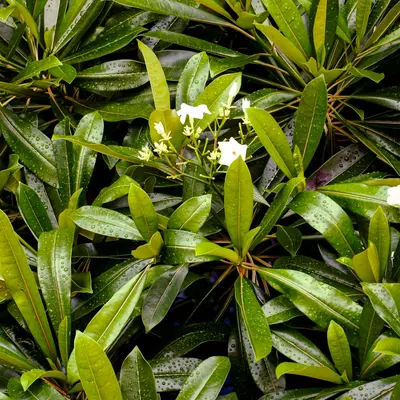
Also known as the Dragon Tree, this striking Madagascar native features thin, sword-like leaves with red edges that create an architectural statement in any room. Incredibly resilient and tolerant of neglect, it's perfect for beginners who want a tall, dramatic plant that requires minimal fuss. The slender trunk and spiky foliage give it an almost sculptural quality that complements modern decor beautifully.
Sun
Partial shade
Zones
10–12
USDA hardiness
Height
2-50 feet
Complete Growing Guide
Light: Partial Shade (Direct sunlight only part of the day, 2-6 hours). Soil: Loam (Silt), Sand. Soil pH: Acid (<6.0). Drainage: Good Drainage, Moist. Height: 2 ft. 0 in. - 50 ft. 0 in.. Spread: 1 ft. 0 in. - 10 ft. 0 in.. Maintenance: Low. Propagation: Stem Cutting.
Harvesting
Some species may produce berries. Houseplants rarely produce fruit.
Type: Berry.
Storage & Preservation
Dracaena marginata is a permanent indoor houseplant requiring no post-harvest storage. However, if propagating from cuttings, store them properly before planting. Keep stem cuttings in a cool (60-70°F), dark place in a sealed plastic bag with slightly moist paper towels for up to 48 hours—longer storage reduces rooting success. For long-term propagation, root cuttings in water or moist perlite for 2-3 weeks until roots develop, then pot into soil. Store rooted cuttings in a warm (70-75°F), bright, indirect-light location until established (4-6 weeks), then acclimate to normal growing conditions. Foliage harvested for arrangement lasts 1-2 weeks in water; change water every 2-3 days and recut stem ends at an angle. Remove lower leaves below the waterline to prevent bacterial growth.
History & Origin
Origin: Tropics and Subtropics
Advantages
- +Low maintenance
Considerations
- -Toxic (Fruits, Leaves, Sap/Juice): Low severity
Companion Plants
Dracaena marginata groups well with Snake Plant, ZZ Plant, and Pothos because all three share the same low-frequency watering schedule — none will pressure you into watering more than the Dracaena wants, and they're all comfortable in the 40-60% humidity range it prefers. Peace Lily and Spider Plant can work too, though Peace Lily will start to droop before the Dracaena's soil is ready for water again, so you'll need to check each pot individually. Skip Boston Fern, Calathea, and Maidenhair Fern entirely — those three need near-constant moisture and humidity above 60%, and matching that for them will rot a Dracaena's roots within a season.
Plant Together
Peace Lily
Both are excellent air purifiers and prefer similar humidity levels
Snake Plant
Similar low-light and watering requirements, both filter indoor air toxins
ZZ Plant
Matching drought tolerance and low-light needs, complementary foliage textures
Pothos
Similar care requirements and both thrive in indirect light with infrequent watering
Rubber Plant
Compatible light and water needs, both remove formaldehyde from indoor air
Spider Plant
Similar tolerance for neglect and both help purify indoor air naturally
Philodendron
Matching preference for bright indirect light and allowing soil to dry between waterings
Aloe Vera
Both prefer infrequent watering and can tolerate lower light conditions
Keep Apart
Boston Fern
Requires consistently moist soil and high humidity, opposite of Dracaena's dry-out preference
Fiddle Leaf Fig
Needs more frequent watering and is sensitive to the dry conditions Dracaena prefers
Calathea
Requires constant moisture and high humidity, while Dracaena needs soil to dry out completely
Maidenhair Fern
Demands consistently moist soil and high humidity, incompatible with Dracaena's drought tolerance
Pests & Disease Resistance
Resistance
Generally disease resistant, susceptible to root rot if overwatered
Common Pests
Spider mites, scale insects, mealybugs
Diseases
Root rot, leaf spot, stem rot from overwatering
Troubleshooting Dracaena Marginata
What you'll see, why it happens, and what to do about it.
Leaf tips turning brown and crispy, starting at the outermost tips and working inward
Likely Causes
- Fluoride toxicity — tap water with fluoride accumulates in Dracaena marginata faster than most houseplants
- Low humidity (below 30%), common in heated or air-conditioned rooms
- Overfertilizing, which salt-burns the root tips and shows up at the leaf tips first
What to Do
- 1.Switch to filtered, distilled, or rainwater — this one change resolves most tip burn cases
- 2.Set the pot on a pebble tray with water, or run a humidifier nearby to bring humidity above 40%
- 3.Flush the soil thoroughly every 3-4 months to push out accumulated salts, then let it drain completely before the next watering
Soft, mushy stem at the base, with yellowing that starts at the lower leaves and moves up
Likely Causes
- Root rot (Phytophthora or Pythium spp.) — almost always triggered by sitting in waterlogged soil
- Pot without drainage holes, or a saucer that isn't emptied after watering
What to Do
- 1.Unpot the plant and cut away any black or mushy roots with clean scissors; dust cut ends with powdered sulfur or cinnamon
- 2.Repot into fresh, well-draining mix (cactus blend works fine) in a pot with drainage holes
- 3.Hold off watering until the top 2 inches of soil are dry — in winter, that might mean watering only every 2-3 weeks
Tiny webbing on the undersides of leaves, with stippled or faded leaf surfaces
Likely Causes
- Spider mites (Tetranychus urticae) — thrive in dry indoor air, especially in winter when heating runs constantly
What to Do
- 1.Wipe down all leaves — top and bottom — with a damp cloth, then spray thoroughly with insecticidal soap or neem oil, hitting the leaf undersides
- 2.Repeat every 5-7 days for 3 weeks to break the egg cycle
- 3.Raise ambient humidity to 40-50%; mites reproduce much more slowly above that threshold
Sticky residue on leaves or nearby surfaces, with small brown or white bumps along the stems
Likely Causes
- Scale insects (soft scale or armored scale) — the bumps are the insects themselves; the stickiness is honeydew they excrete
- Mealybugs (Pseudococcus spp.) — look for cottony white clusters in leaf axils and stem joints
What to Do
- 1.Dab individual scale or mealybug clusters with a cotton swab soaked in 70% isopropyl alcohol
- 2.Follow up with a neem oil spray — 2 tablespoons neem per gallon of water — every 7 days for a month
- 3.Keep the plant away from other houseplants until you've gone 3 full weeks without spotting new insects
Frequently Asked Questions
Is Dracaena marginata good for beginners?▼
How much light does Dracaena marginata need?▼
Why does my Dracaena marginata have brown leaf tips?▼
How often should I water Dracaena marginata?▼
Can you propagate Dracaena marginata from cuttings?▼
What pests affect Dracaena marginata?▼
Growing Guides from Wind River Greens
Sources & References
External authority sources used in compiling this guide.
- ExtensionNC State Extension
See the Methodology page for how this data is sourced, what's AI-assisted, and known limitations.