Fiddle Leaf Fig
Ficus lyrata
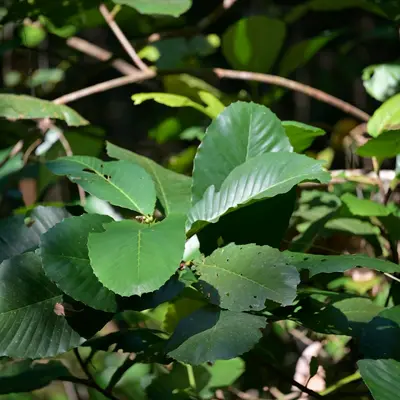
The Instagram-famous houseplant known for its large, violin-shaped leaves that make a dramatic architectural statement in any room. This West African native has become the holy grail of houseplants, transforming living spaces with its sculptural beauty and glossy, deeply veined foliage.
Sun
Partial shade
Zones
10–12
USDA hardiness
Height
4-10 feet
Complete Growing Guide
Light: Partial Shade (Direct sunlight only part of the day, 2-6 hours). Soil: Loam (Silt), Sand. Soil pH: Acid (<6.0). Drainage: Good Drainage, Moist. Growth rate: Medium. Maintenance: Low. Propagation: Stem Cutting.
Harvesting
The fruit is a globose, fleshy fig that is finely pubescent and appears either solitary or in pairs. It is green with white flecks or dots and turns red upon ripening. It is round and measures 0.5 to 1.25 inches in diameter. The fruits are rarely seen when grown as a houseplant. They are present if grown outdoors in their native habitat.
Color: Green, Red/Burgundy, White. Length: < 1 inch. Width: < 1 inch.
Edibility: Toxic if ingested.
Storage & Preservation
Fiddle Leaf Figs are living plants, not harvested produce, so traditional storage doesn't apply. Keep your plant in its pot at room temperature (65-75°F) with moderate humidity (40-50%). Maintain consistent watering and avoid cold drafts. The plant's "shelf life" depends on proper care—healthy Fiddle Leaf Figs can live for decades indoors. For propagation preservation: take stem cuttings and propagate in water or moist potting mix for 2-4 weeks until roots develop, then pot in well-draining soil. Alternatively, air layering branches encourages root development while still attached to the mother plant before separating.
History & Origin
Origin: Tropical Western and Central Africa
Advantages
- +Edible: Toxic if ingested.
- +Low maintenance
Considerations
- -Toxic (Bark, Flowers, Fruits, Leaves, Roots, Sap/Juice, Stems): Low severity
Companion Plants
The best room companions for a fiddle leaf fig share one practical quality: similar care requirements. Snake Plant and ZZ Plant both tolerate 4–6 hours of indirect light and go 10–14 days between waterings without complaint, so grouping them with a fig won't put you in a situation where one plant's needs sabotage another's. Pothos and Philodendron pull slightly more water through their leaves than most tropicals do, which nudges local humidity up a few percentage points — not a dramatic effect, but fiddle leaf figs do prefer 30–65% relative humidity, and every bit helps without running a humidifier full-time. Rubber Plant and Bird of Paradise are large-format tropicals with nearly identical light and temperature tolerances (both struggle below 60°F), so they slot into the same room without requiring a different seasonal routine.
The problem pairings are purely about mismatched care, not any chemical incompatibility. Succulents and cacti need soil to go bone-dry for 10 days or more between waterings and want direct sun — if you're keeping conditions right for a Ficus lyrata, you're already doing the opposite of what those plants need. Boston Fern runs the other direction: it wants soil kept consistently moist and humidity above 50%, which means you'd be overwatering your fig trying to keep the fern from crisping. Sort your plants by watering frequency first, then worry about aesthetics.
Plant Together
Snake Plant
Similar low-light tolerance and infrequent watering needs, helps purify air
Pothos
Thrives in similar bright, indirect light conditions and helps increase humidity
Rubber Plant
Compatible watering schedule and light requirements, both prefer well-draining soil
Peace Lily
Increases ambient humidity which fiddle leaf figs prefer, similar care requirements
Monstera Deliciosa
Both tropical plants with similar humidity and temperature preferences
ZZ Plant
Complementary growth habits and both tolerate similar indoor conditions
Bird of Paradise
Similar bright light needs and both benefit from increased humidity
Philodendron
Compatible light and humidity requirements, helps create tropical microclimate
Keep Apart
Succulents
Require completely different watering schedules - succulents need dry conditions while fiddle leaf figs need consistent moisture
Boston Fern
Requires much higher humidity and more frequent watering than fiddle leaf fig can tolerate
Cactus
Thrives in bright direct sunlight and drought conditions that would stress fiddle leaf figs
Pests & Disease Resistance
Resistance
Susceptible to stress-related issues with inconsistent care
Common Pests
Spider mites, scale insects, mealybugs
Diseases
Root rot, bacterial leaf spot, leaf drop from environmental stress
Troubleshooting Fiddle Leaf Fig
What you'll see, why it happens, and what to do about it.
Leaves developing small yellow stippling or fine webbing on undersides, often with a dusty, dull look to the upper surface
Likely Causes
- Spider mites (Tetranychus urticae) — thrive in dry indoor air, especially in winter when heating runs constantly
- Low humidity below 30–40%
What to Do
- 1.Wipe both sides of every leaf with a damp cloth, then spray with insecticidal soap — repeat every 5–7 days for 3 weeks
- 2.Move the plant away from heating vents and run a humidifier nearby to keep humidity above 40%
- 3.If the infestation is heavy, isolate the plant from other houseplants immediately — spider mites spread fast
Brown, mushy stem base and yellowing lower leaves, with a sour or rotten smell from the soil
Likely Causes
- Root rot caused by Phytophthora or Pythium — almost always triggered by overwatering or a pot with no drainage hole
- Soil staying wet for more than 7–10 days between waterings
What to Do
- 1.Unpot the plant, cut away all black or soft roots with clean scissors, and let the root ball air out for a few hours
- 2.Repot into fresh, well-draining mix (a peat or coco coir base with 20–30% perlite works well) and a pot with drainage
- 3.Hold off watering until the top 1–2 inches of soil are fully dry — in low-light conditions that can stretch to every 10–14 days, not 7
Sudden drop of otherwise green, healthy-looking leaves — sometimes 4–6 in a single week
Likely Causes
- Environmental stress from relocation, a temperature swing below 55°F, or a cold draft from a window or AC vent
- Inconsistent watering immediately after a location change, compounding the shock
What to Do
- 1.Pick a spot and stay there — fiddle leaf figs are notoriously intolerant of being moved, so find your brightest stable window (north- or east-facing tends to give steady indirect light) and don't touch it
- 2.Check that nighttime temps near the plant stay above 60°F; glass can run several degrees colder than what your thermostat reads
- 3.Check the top inch of soil before every watering rather than going by the calendar — consistency matters more than a fixed schedule