Rubber Tree
Ficus elastica
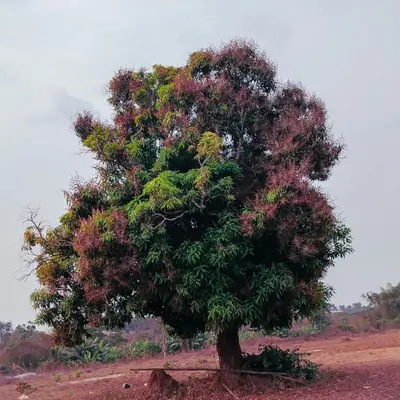
A classic houseplant featuring glossy, deep green oval leaves that create an elegant tree-like silhouette indoors. This robust and forgiving plant grows steadily into an impressive floor specimen, making it perfect for filling empty corners with lush tropical vibes. Popular since Victorian times, its thick, leathery leaves are surprisingly low-maintenance and dust-resistant.
Sun
Partial shade
Zones
9–12
USDA hardiness
Height
50-100 feet
Complete Growing Guide
Light: Dappled Sunlight (Shade through upper canopy all day), Partial Shade (Direct sunlight only part of the day, 2-6 hours). Soil: Clay, Loam (Silt), Sand. Soil pH: Acid (<6.0), Alkaline (>8.0), Neutral (6.0-8.0). Drainage: Good Drainage, Occasionally Dry. Height: 50 ft. 0 in. - 100 ft. 0 in.. Spread: 50 ft. 0 in. - 100 ft. 0 in.. Growth rate: Rapid. Maintenance: Low. Propagation: Layering, Root Cutting, Seed.
Harvesting
Fruiting is rare when grown indoors. Fruit is an oblong fig, sessile, in pairs or crowded, green with darker flecks maturing to yellow, to 1/2 inch long and 1/4 wide. The fruit is barely edible and contains fertile seeds only in areas where the pollinating insect is present.
Color: Gold/Yellow, Green. Length: < 1 inch. Width: < 1 inch.
Storage & Preservation
Rubber tree cuttings require immediate attention for successful preservation and propagation. Fresh cuttings should be processed within an hour of harvesting to prevent the latex sap from completely sealing the cut end, which inhibits root development.
For water propagation storage, place cuttings immediately in room-temperature water and position in bright, indirect light. Change the water every 3-4 days to prevent bacterial growth. Cuttings stored this way remain viable for 4-6 weeks while developing roots.
To preserve cuttings in soil, dip the cut ends in rooting hormone powder and plant in moist potting mix. Cover with a clear plastic bag to maintain humidity and store in warm conditions (70-75°F) away from direct sunlight. These soil-stored cuttings typically root within 4-8 weeks. You can also preserve the parent plant's shape by drying and keeping pruned branches as natural decorative elements, though they have no propagation value once dried.
History & Origin
Origin: Southeast Asia: Nepal to China and Western Malesia
Advantages
- +Fast-growing
- +Low maintenance
Companion Plants
Indoors, the logic behind grouping plants has nothing to do with pest confusion or nitrogen — it's about matching water and light requirements so you're not managing five different schedules in your head. Snake Plant (Sansevieria trifasciata), ZZ Plant, and Pothos all handle the same moderate-to-bright indirect light a Rubber Tree wants, and none of them will punish you for letting the top inch of soil dry before you water again. Put them in the same corner and you've got a coherent group. Philodendron and Monstera slot in the same way — similar humidity tolerance, no meaningful root competition since each plant is in its own container.
The separations matter more than people expect. Cactus needs bone-dry soil between waterings and direct sun; the bright-but-indirect conditions that suit Ficus elastica will leave a cactus sitting in soil that's too damp for too long, which is how you rot one. Boston Fern is the opposite problem — it wants soil that's nearly always moist and humidity above 60%, and trying to keep a Rubber Tree and a Boston Fern happy in the same corner means someone's always losing. Fiddle Leaf Fig (Ficus lyrata) looks like a natural pairing since it's in the same genus, but around here in the southeast, people move both plants to a shaded porch in summer — and Fiddle Leafs sulk hard through that transition, dropping leaves and demanding attention at a rate that has nothing to do with how your Rubber Tree is actually doing. Easier to give them separate spots so one plant's bad week doesn't muddy your read on the other.
Plant Together
Snake Plant
Similar low-light tolerance and watering needs, helps purify air
Pothos
Thrives in similar humidity and light conditions, easy care compatibility
ZZ Plant
Matches drought tolerance and low-light preferences, minimal care overlap
Philodendron
Similar tropical origin, complementary humidity and temperature requirements
Peace Lily
Adds humidity to environment, benefits from filtered light like rubber tree
Monstera
Compatible tropical care needs and similar growth patterns
Spider Plant
Tolerates similar light conditions, adds textural contrast
Dracaena
Similar watering schedule and light requirements, architectural compatibility
Keep Apart
Fiddle Leaf Fig
Requires brighter light and more frequent watering than rubber tree prefers
Boston Fern
Needs consistently moist soil and high humidity, conflicting with rubber tree's drought tolerance
Cactus
Requires bright direct light and minimal water, opposite of rubber tree's filtered light preference
African Violet
Needs bright indirect light and consistently moist soil, incompatible care requirements
Pests & Disease Resistance
Resistance
Generally resistant to most diseases
Common Pests
Spider mites, scale insects, mealybugs
Diseases
Root rot from overwatering, leaf drop from stress
Troubleshooting Rubber Tree
What you'll see, why it happens, and what to do about it.
Tiny webbing on leaf undersides, with dusty speckling or bronzing across the leaf surface
Likely Causes
- Spider mites (Tetranychus urticae) — thrive in low-humidity indoor air, especially in winter when heating systems dry everything out
- Overcrowded placement against a wall with no airflow
What to Do
- 1.Wipe both sides of every leaf with a damp cloth, then follow up with neem oil solution (2 tsp neem per quart of water, plus a drop of dish soap) — repeat every 5-7 days for 3 weeks
- 2.Move the plant away from heat vents and set a small humidifier nearby, or group it with other tropicals to raise local humidity above 50%
- 3.Isolate the plant from other houseplants immediately — spider mites spread fast
Leaves yellowing and dropping, soil staying wet for more than 7-10 days after watering
Likely Causes
- Root rot from overwatering — Ficus elastica roots suffocate and begin to decay in consistently saturated soil
- Pot without drainage holes, or a pot much too large for the root ball (excess soil holds water the roots never reach)
What to Do
- 1.Unpot the plant and inspect the roots — trim any black or mushy sections with clean scissors, then dust the cuts with powdered cinnamon or sulfur as a mild antifungal
- 2.Repot into fresh, well-draining mix (50% potting soil, 50% perlite works well) in a pot with drainage that's only 1-2 inches wider than the root ball
- 3.Hold off watering until the top 1 inch of soil is dry — in a typical heated home this usually means every 10-14 days in winter
Sticky residue on leaves and nearby surfaces, with small brown bumps along stems or leaf veins, or cottony white clusters in leaf axils
Likely Causes
- Scale insects (various Coccidae) — the brown bumps are the armored shell of adult scale feeding on plant sap
- Mealybugs (Pseudococcus spp.) — the white cottony masses, often hiding where leaves meet the stem
What to Do
- 1.For light infestations, dab individual scale or mealybug clusters directly with a cotton swab soaked in 70% isopropyl alcohol — kills on contact
- 2.For heavier infestations, apply insecticidal soap spray (follow label rate) to all leaf surfaces and stem joints, repeating every 5 days for 3 applications
- 3.Keep the plant away from other houseplants until you've had two clean inspections a week apart
Frequently Asked Questions
How long does it take for a rubber tree to grow tall?▼
Is rubber tree good for beginners?▼
Can you grow rubber tree in pots?▼
Why is my rubber tree dropping leaves?▼
When should I repot my rubber tree?▼
How do I make my rubber tree bushy instead of tall?▼
Growing Guides from Wind River Greens
Sources & References
External authority sources used in compiling this guide.
- ExtensionNC State Extension
See the Methodology page for how this data is sourced, what's AI-assisted, and known limitations.