Philodendron Micans
Philodendron hederaceum var. hederaceum
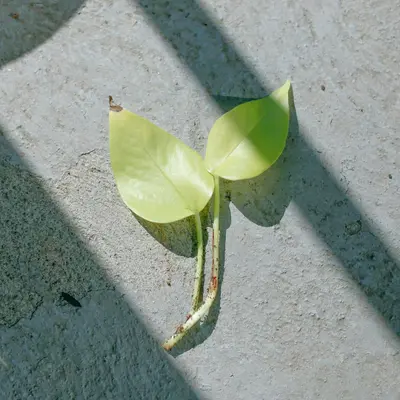
A velvety-leafed trailing philodendron with stunning bronze and copper tones that shimmer in the light. This fast-growing beauty is incredibly forgiving and produces cascading vines perfect for hanging baskets or shelves, making it ideal for both beginners and collectors.
Sun
Partial shade
Zones
11–12
USDA hardiness
Height
0-6 feet
Complete Growing Guide
This velvety-leafed cultivar thrives in bright, indirect light but uniquely develops its signature bronze and copper shimmer only with adequate illumination—insufficient light causes the leaves to fade to plain green. Unlike standard philodendrons, Micans is particularly prone to stretching between nodes when grown in low light, so position it near an east or west-facing window for optimal foliage coloration. Water when the top inch of soil feels dry, but reduce frequency in winter when growth naturally slows. This fast-growing variety rarely faces serious pest issues, though spider mites occasionally target the velvety leaves in dry environments—misting weekly prevents infestations while maintaining the foliage's lustrous appearance. One practical advantage: propagation is exceptionally easy; simply snip vine sections with at least one node and root them in water within two weeks, making it ideal for sharing or creating fuller baskets quickly.
Light: Deep shade (Less than 2 hours to no direct sunlight), Partial Shade (Direct sunlight only part of the day, 2-6 hours). Drainage: Good Drainage, Moist. Height: 0 ft. 4 in. - 6 ft. 0 in.. Spread: 0 ft. 6 in. - 6 ft. 0 in.. Spacing: 3 feet-6 feet. Growth rate: Rapid. Maintenance: Low. Propagation: Stem Cutting.
Harvesting
Philodendron Micans reaches peak harvest readiness when mature stems display their signature bronze-copper sheen and feel firm yet flexible, typically at six inches or longer. Pinch or cut just above a node to encourage bushier growth and continuous production of new velvety foliage rather than pursuing a single harvest approach. For optimal results, harvest during active growing season (spring through summer) when the plant's metabolic rate is highest, ensuring faster regrowth and minimized stress. Remove no more than one-third of the plant at a time to maintain vigor and allow uninterrupted nutrient cycling throughout the cascading vines.
Fruits are white or orange to red berries.
Color: Orange, Red/Burgundy, White. Type: Berry.
Storage & Preservation
Philodendron Micans doesn't require traditional storage since it's a living houseplant. Keep the plant in a warm location (65-80°F) with moderate humidity (50-60%). Store on shelves or hanging baskets away from direct sunlight and cold drafts. The plant remains viable indefinitely with proper care—water when soil is partially dry and fertilize monthly during growing season. For propagation preservation, stem cuttings can be stored in water indefinitely until roots develop (2-3 weeks), then transferred to soil. Alternatively, propagate by layering stems in moist perlite or sphagnum moss to encourage root formation before separation.
History & Origin
Philodendron hederaceum var. hederaceum, commonly known as Philodendron Micans, originates from Central and South America, though detailed documentation on its specific breeder, introduction year, or regional discovery remains sparse in readily available horticultural literature. The variety belongs to the larger Philodendron hederaceum lineage, a species prized for centuries by plant collectors. The "Micans" designation refers to the distinctive iridescent, velvety quality of its foliage—a trait that emerged within cultivation rather than from a formally documented breeding program. While seed companies and nurseries have propagated and distributed this cultivar widely since at least the mid-twentieth century, tracing its exact origin to a specific breeder or institution proves difficult. Its popularity in the houseplant trade has solidified its status as a classic variety despite these historical gaps.
Origin: Mexico to Tropical America
Advantages
- +Stunning velvety bronze and copper leaves shimmer beautifully in indirect light
- +Fast-growing trailing vines perfect for hanging baskets and shelf displays
- +Incredibly forgiving and low-maintenance, ideal for beginner plant parents
- +Tolerates a wide range of indoor light conditions reasonably well
- +Produces cascading growth naturally without requiring frequent pruning or training
Considerations
- -Vulnerable to spider mites and mealybugs, especially in dry indoor environments
- -Prone to root rot if soil stays consistently wet or drains poorly
- -Requires well-draining potting mix to prevent bacterial leaf spot issues
- -Can become leggy or sparse if not given adequate bright indirect light
Companion Plants
Philodendron Micans does well grouped with other moderate-light, humidity-loving tropicals. Pothos and Heartleaf Philodendron share nearly identical care requirements — same watering cadence, same 60–80°F comfort range, same preference for indirect light — so keeping them together simplifies your maintenance routine and the collective transpiration around the group nudges ambient humidity a few points higher, which cuts down on spider mite pressure. Boston Fern and Peace Lily pull similar duty: both are steady transpirers that help buffer the air moisture your Micans wants year-round indoors.
The harmful companions are mostly a clash of needs. Succulents and Snake Plants want their soil bone-dry between waterings — often 10 to 14 days or more — while Micans needs water every 5 to 7 days depending on light and pot size. Grouping them pushes you toward a compromise that works for neither. Fiddle Leaf Fig is a separate headache: it drops leaves when moved even a few feet, so it tends to drag you into rearranging your whole shelf setup in ways that stress everything around it.
Plant Together
Pothos
Similar light and water requirements, both thrive in bright indirect light
Peace Lily
Compatible humidity needs and both prefer consistently moist soil
Monstera Deliciosa
Same family (Araceae) with identical care requirements and humidity preferences
ZZ Plant
Complementary watering schedules - ZZ plant's drought tolerance balances Micans' moisture needs
Spider Plant
Both are excellent air purifiers and thrive in similar indirect light conditions
Rubber Tree
Compatible light requirements and both benefit from regular leaf cleaning
Boston Fern
Creates beneficial microclimate with increased humidity that Micans loves
Heartleaf Philodendron
Same genus with identical care needs and growth patterns
Keep Apart
Fiddle Leaf Fig
Requires much brighter light and less frequent watering, creating conflicting care schedules
Succulent Plants
Opposite watering needs - succulents prefer dry conditions while Micans needs consistent moisture
Snake Plant
Prefers dry soil and infrequent watering, incompatible with Micans' humidity requirements
Pests & Disease Resistance
Resistance
Very hardy and disease resistant
Common Pests
Aphids, spider mites, mealybugs
Diseases
Root rot from overwatering, bacterial leaf spot
Troubleshooting Philodendron Micans
What you'll see, why it happens, and what to do about it.
Leaves losing their velvety sheen and developing fine webbing on the undersides, often with tiny moving dots visible
Likely Causes
- Spider mites (Tetranychus urticae) — thrive in dry indoor air, especially in winter when heating systems drop humidity below 40%
- Underwatering stress, which weakens the plant and makes it more susceptible
What to Do
- 1.Wipe both sides of every leaf with a damp cloth, then spray the whole plant with insecticidal soap — repeat every 5 to 7 days for 3 rounds
- 2.Move the pot away from heating vents and set it on a pebble tray with water to raise local humidity above 50%
- 3.Isolate the plant immediately so mites don't spread to neighboring pots
Stems turning soft and brown at the base, lower leaves yellowing and wilting despite the soil feeling wet
Likely Causes
- Root rot caused by Pythium or Phytophthora — both are water molds that colonize roots sitting in saturated, poorly drained soil
- Pot without drainage holes, or a pot too large for the root mass (excess soil stays wet too long)
What to Do
- 1.Unpot the plant, cut away all black or mushy roots with clean scissors, and let the root ball air-dry for 30 minutes before repotting into fresh mix with perlite at 20–30% by volume
- 2.Switch to a terracotta pot with a drainage hole — terra cotta wicks moisture and dries measurably faster than plastic or glazed ceramic
- 3.Water only when the top inch of soil is dry, and never let the pot sit in standing water in a saucer