Peace Lily
Spathiphyllum wallisii
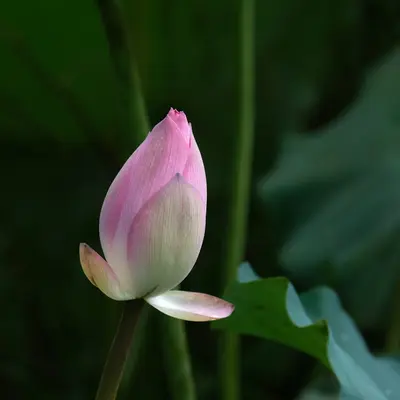
An elegant houseplant that combines lush, tropical foliage with stunning white blooms that seem to glow against the dark green leaves. Known for its air-purifying qualities and ability to tell you when it needs water by dramatically drooping, making it perfect for busy plant parents. This graceful beauty thrives in low light conditions where other flowering plants struggle.
Sun
Partial shade
Zones
11–12
USDA hardiness
Height
1-6 feet
Complete Growing Guide
Light: Deep shade (Less than 2 hours to no direct sunlight), Partial Shade (Direct sunlight only part of the day, 2-6 hours). Soil: High Organic Matter. Soil pH: Acid (<6.0). Drainage: Good Drainage, Moist. Height: 1 ft. 0 in. - 6 ft. 0 in.. Spread: 1 ft. 0 in. - 5 ft. 0 in.. Spacing: 12 inches-3 feet, 3 feet-6 feet. Maintenance: Low. Propagation: Division.
Harvesting
Edibility: Leaves poisonous if eaten in large quantities.
Storage & Preservation
Fresh peace lily flowers last longest when cut stems are immediately placed in lukewarm water and displayed away from direct sunlight and heat sources. Change water daily and recut stems under running water to extend vase life to one week.
For propagation storage, freshly divided plants can be temporarily stored in slightly moist potting mix for up to a week in a shaded location if you can't plant immediately. Keep divisions consistently moist but not soggy.
While peace lilies aren't preserved like herbs or vegetables, you can press the flowers between heavy books for 2-3 weeks to create lasting botanical art. Place flowers between absorbent paper, change the paper after 48 hours, then press for an additional 2-3 weeks.
Preserve leaf cuttings for propagation by placing them in water or moist vermiculite, though success rates are lower than division. Remember that all parts of peace lilies are toxic if ingested, so handle and store away from children and pets.
History & Origin
Origin: Mexico, Tropical America, Malesia, and Western Pacific
Advantages
- +Edible: Leaves poisonous if eaten in large quantities.
- +Low maintenance
Considerations
- -Toxic (Leaves): Medium severity
Companion Plants
Peace lilies do well grouped with other low-to-medium light tropical foliage plants — not because of any chemical interaction, but because shared environmental needs make maintenance much simpler. Snake plant (Sansevieria trifasciata), ZZ plant (Zamioculcas zamiifolia), and Chinese evergreen (Aglaonema) all tolerate the same 4-6 hours of indirect light and similar watering rhythms, so you're not juggling a drought-tolerant plant next to one that wants consistently moist soil. Clustering tropical foliage together also nudges local humidity upward through transpiration, which directly benefits the peace lily — a practical payoff, not an incidental one. Boston fern pulls the same humidity trick, though it's thirstier and needs slightly more attention to avoid drying out. Pothos and philodendron are easygoing enough to sit nearby without creating problems, and their trailing habits fill vertical space the peace lily ignores.
The bad fits fail for distinct reasons. Cactus needs near-dry soil and high direct light — the opposite of what a peace lily wants — so any shared care routine ends up shortchanging one of them. Eucalyptus releases volatile organic compounds, including 1,8-cineole, that have documented allelopathic effects on nearby plants; it also belongs outdoors, full stop. Fiddle leaf fig (Ficus lyrata) is finicky about drafts and drops leaves when moved, so placing it next to a peace lily that genuinely benefits from occasional airflow around the foliage creates competing demands that aren't worth managing.
Plant Together
Snake Plant
Both thrive in low to medium light and help purify indoor air together
Pothos
Similar humidity and watering needs, creates lush tropical display
ZZ Plant
Compatible low-light requirements and both tolerate irregular watering
Philodendron
Enjoys same humid conditions and filtered light as Peace Lily
Boston Fern
Both love high humidity and can share humid microclimate when grouped
Chinese Evergreen
Similar low-light tolerance and watering schedule preferences
Rubber Plant
Both prefer consistent moisture and bright, indirect light conditions
Monstera
Shares preference for humid environment and filtered sunlight
Keep Apart
Fiddle Leaf Fig
Requires much brighter light and drier soil, conflicting care needs
Cactus
Needs dry conditions and bright light, opposite of Peace Lily's humid, low-light needs
Eucalyptus
Requires full sun and dry soil, completely incompatible growing conditions
Pests & Disease Resistance
Resistance
Moderate resistance to most diseases
Common Pests
Spider mites, aphids, mealybugs, scale
Diseases
Root rot, leaf spot, brown leaf tips from low humidity
Troubleshooting Peace Lily
What you'll see, why it happens, and what to do about it.
Leaf tips and edges turning brown and crispy, especially on newer growth
Likely Causes
- Low relative humidity — peace lilies want 50% or higher, and most heated or air-conditioned rooms run 30-40%
- Fluoride or chlorine toxicity from tap water, which accumulates in leaf tissue over time
- Overfertilizing with a high-phosphorus formula, causing salt buildup at the root zone
What to Do
- 1.Set the pot on a tray filled with pebbles and water (keep the pot bottom above the waterline) to raise local humidity
- 2.Switch to filtered water or let tap water sit uncovered overnight before watering
- 3.Flush the pot thoroughly with plain water every 2-3 months to push accumulated salts out the drainage hole
Leaves yellowing and wilting even though the soil is wet — possibly a foul smell from the pot
Likely Causes
- Root rot (Phytophthora or Pythium spp.) caused by sitting in waterlogged soil, often in a pot without drainage or in a saucer that never gets emptied
- Pot too large — excess soil volume stays wet far longer than the roots can use
What to Do
- 1.Unpot the plant and inspect the roots; cut off any black or mushy sections with clean scissors, then dust cuts with powdered cinnamon (a mild antifungal) before repotting
- 2.Repot into fresh, well-draining mix — a standard potting mix cut with 20-25% perlite works fine — and into a pot only 1-2 inches larger than the root ball
- 3.Water only when the top inch of soil is dry, and empty saucers within 30 minutes of watering
Tiny webbing on leaf undersides, or sticky residue on leaves with small brown or white bumps along the stems
Likely Causes
- Spider mites (Tetranychus urticae) — thrive in hot, dry indoor air, especially in winter when heating runs constantly
- Mealybugs or scale insects — both cluster near stem nodes and leaf axils and excrete honeydew, which causes the stickiness
What to Do
- 1.Wipe down leaves and stems with a cotton ball soaked in 70% isopropyl alcohol to kill visible insects on contact
- 2.Follow up with an insecticidal soap spray (1 tablespoon per quart of water) applied to all leaf surfaces, top and bottom, every 5-7 days for 3 weeks
- 3.Isolate the affected plant immediately — spider mites especially will spread to neighboring plants within days
Frequently Asked Questions
How often should I water my peace lily?▼
Why are my peace lily leaves turning brown at the tips?▼
Can peace lilies bloom indoors?▼
Is peace lily toxic to cats and dogs?▼
How do I propagate peace lily plants?▼
Why won't my peace lily flower?▼
Growing Guides from Wind River Greens
Sources & References
External authority sources used in compiling this guide.
- ExtensionNC State Extension
See the Methodology page for how this data is sourced, what's AI-assisted, and known limitations.