Fiddle Leaf Fig Bambino
Ficus lyrata 'Bambino'
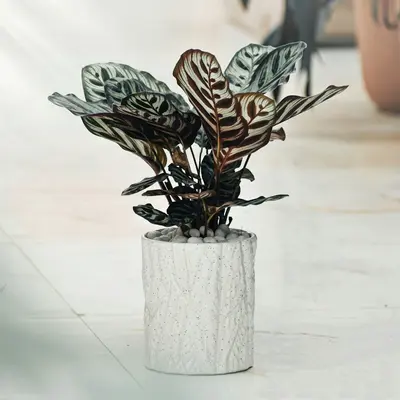
The compact cousin of the beloved fiddle leaf fig, perfect for smaller spaces without sacrificing that iconic violin-shaped foliage. This dwarf variety maintains the same stunning architectural leaves but stays manageable at 2-3 feet tall. Ideal for plant lovers who want fiddle leaf fig style in apartments or offices.
Sun
Partial shade
Zones
10–12
USDA hardiness
Height
2-3 feet
Complete Growing Guide
The Fiddle Leaf Fig Bambino thrives in bright, indirect light near an east or west-facing window, where it receives consistent illumination without harsh afternoon sun that can scorch its distinctive leaves. Unlike its larger parent plant, this compact cultivar is less prone to severe leaf drop when environmental conditions shift, though it still demands stable temperatures between 65–75°F and moderate humidity of 40–60%. Water when the top inch of soil feels dry—typically every 7–10 days during growing season—but reduce frequency in winter to prevent root rot, a common issue in overly moist conditions. Watch for spider mites and scale insects, which target fiddle leaf figs indoors; inspect leaf undersides monthly and treat infestations promptly with neem oil. One critical advantage of the Bambino is its resistance to the leggy, stretched growth that plagues larger varieties in low light, making it genuinely suitable for office environments. Rotate the plant a quarter turn weekly to ensure even, compact growth and prevent it from leaning toward its light source.
Light: Partial Shade (Direct sunlight only part of the day, 2-6 hours). Soil: Loam (Silt), Sand. Soil pH: Acid (<6.0). Drainage: Good Drainage, Moist. Growth rate: Medium. Maintenance: Low. Propagation: Stem Cutting.
Harvesting
The Fiddle Leaf Fig Bambino doesn't produce a harvestable fruit crop, so traditional harvesting focuses on leaf maintenance and propagation. Prune away dead or yellowing leaves as soon as they appear—healthy leaves should display deep green color and firm texture. For propagation, harvest mature leaf cuttings during the active growing season (spring through early summer) when new growth appears vigorous, as this timing ensures better rooting success. Remove only one or two leaves at a time to avoid stressing the compact plant, allowing for continuous leaf renewal rather than aggressive single harvests. Cut cleanly at the base where the leaf meets the stem, and inspect for pest damage before propagating to ensure quality plant material.
The fruit is a globose, fleshy fig that is finely pubescent and appears either solitary or in pairs. It is green with white flecks or dots and turns red upon ripening. It is round and measures 0.5 to 1.25 inches in diameter. The fruits are rarely seen when grown as a houseplant. They are present if grown outdoors in their native habitat.
Color: Green, Red/Burgundy, White. Length: < 1 inch. Width: < 1 inch.
Edibility: Toxic if ingested.
Storage & Preservation
As a houseplant, the Fiddle Leaf Fig Bambino requires proper indoor placement rather than storage. Keep the plant in a bright location with indirect light at temperatures between 65-75°F and moderate humidity (40-60%). Avoid cold drafts and sudden temperature changes. For long-term care, repot every 1-2 years in fresh potting mix. Propagation is possible through leaf cuttings or air layering to preserve the variety. Dust leaves monthly with a soft cloth to maintain foliage health and photosynthetic efficiency. The plant's longevity extends years when provided consistent care, light, and appropriate watering.
History & Origin
The Fiddle Leaf Fig Bambino represents a modern dwarf selection bred from Ficus lyrata, the West African native species prized for its dramatic violin-shaped leaves. While comprehensive documentation of its specific breeder and introduction date remains limited in public horticultural records, this cultivar emerged within the broader trend of developing compact houseplant varieties to suit contemporary living spaces. The Bambino likely arose through selective breeding or spontaneous mutation propagation within the commercial ornamental plant industry, following the surge in fiddle leaf fig popularity during the early 2000s. As a miniaturized cultivar, it maintains the architectural appeal of its full-sized parent while accommodating space-conscious growers, though detailed breeding lineage specifics remain largely undocumented in peer-reviewed sources.
Origin: Tropical Western and Central Africa
Advantages
- +Compact 2-3 feet height fits perfectly in apartments and small offices
- +Iconic violin-shaped leaves provide dramatic architectural interest without sprawling
- +Maintains fiddle leaf fig's stunning aesthetic in a more manageable dwarf form
- +Architectural foliage works as statement piece in modern or minimalist décor
Considerations
- -Susceptible to root rot from overwatering despite moderate care difficulty
- -Scale insects, mealybugs, and spider mites frequently infest this variety
- -Requires consistently bright, indirect light or leaves will drop noticeably
Companion Plants
Snake Plant, Pothos, ZZ Plant, and Rubber Tree all make sensible neighbors for a Bambino because they share the same care logic — indirect light, infrequent watering, no strong humidity demands. You're not creating a microclimate that helps one plant at another's expense. Grouping the Bambino loosely with Monstera or Philodendron (2–3 feet apart) can nudge ambient humidity up a few percentage points through transpiration, which takes a little pressure off in dry heated or air-conditioned rooms.
The plants to keep separate are the full-size Ficus lyrata, succulents, and ferns — each for a different reason. A standard Fiddle Leaf Fig will shade the Bambino out as it grows; putting a compact cultivar next to its full-size parent is a losing proposition from the start. Succulents need to dry out completely between waterings, so any shared schedule will either starve the succulent of drainage or push the Bambino toward the root rot it's already prone to. Ferns pull in the opposite direction — they want consistently moist soil and high humidity, conditions that work directly against what the Bambino needs.
Plant Together
Snake Plant
Similar low-light tolerance and drought resistance, helps purify air
Pothos
Complementary growth habits and similar watering needs, adds visual contrast
ZZ Plant
Shares preference for bright indirect light and infrequent watering
Rubber Tree
Similar care requirements and native habitat, creates cohesive tropical display
Monstera Deliciosa
Compatible humidity and light needs, both benefit from similar fertilizer schedule
Peace Lily
Helps indicate watering needs and adds contrasting foliage texture
Philodendron
Similar tropical origins and care requirements, creates layered canopy effect
Spider Plant
Helps increase local humidity through transpiration, easy care companion
Keep Apart
Fiddle Leaf Fig (full-size)
Competition for same resources and potential pest sharing between varieties
Succulents
Drastically different watering needs can lead to overwatering or underwatering issues
Ferns
Require consistently moist soil while Bambino prefers to dry between waterings
Pests & Disease Resistance
Resistance
Moderate resistance with proper care
Common Pests
Scale insects, mealybugs, spider mites
Diseases
Root rot, leaf spot, bacterial infections from overwatering
Troubleshooting Fiddle Leaf Fig Bambino
What you'll see, why it happens, and what to do about it.
Leaves dropping suddenly — multiple leaves falling within a few days, often still green
Likely Causes
- Relocation shock — Ficus lyrata is notoriously sensitive to being moved even a few feet
- Cold drafts or temperature swings below 55°F near windows, vents, or exterior doors
What to Do
- 1.Pick a bright spot with indirect light and leave it there — stop moving it around
- 2.Keep the plant away from heating/cooling vents and any window that lets in cold drafts in winter
- 3.If you just brought it home, give it 4–6 weeks to acclimate before assuming something is wrong
Brown spots or patches on leaves — edges, centers, or large blotches that spread over days
Likely Causes
- Root rot from overwatering — Bambino's compact root system saturates fast in oversized pots
- Bacterial leaf spot from water sitting on leaves or chronic overwatering
- Sunburn from direct afternoon sun through a south- or west-facing window
What to Do
- 1.Check the root ball — if roots are dark brown and mushy, unpot, trim the rotten roots with clean scissors, and repot in fresh well-draining mix with added perlite
- 2.Water only when the top inch of soil is dry; in winter, that interval can stretch to 10–14 days in most indoor conditions
- 3.Pull the plant back from any window where direct sun hits the leaves for more than an hour at a stretch
Sticky residue on leaves or nearby surfaces, sometimes with yellowing or distorted new growth
Likely Causes
- Scale insects — look for small brown bumps along stems and leaf undersides
- Mealybugs — white cottony clusters, usually tucked into leaf axils
- Spider mites — fine webbing on leaf undersides, more common when indoor humidity drops below 40%
What to Do
- 1.Wipe scale and mealybugs off manually with a cotton ball soaked in 70% isopropyl alcohol, then follow up with neem oil every 7 days for 3 weeks
- 2.For spider mites, spray leaf undersides with insecticidal soap and set a pebble tray filled with water beneath the pot to bring humidity up
- 3.Quarantine any new plant for at least 2 weeks before placing it near your Bambino — that's how most infestations start indoors