Dracaena Fragrans
Dracaena fragrans 'Massangeana'
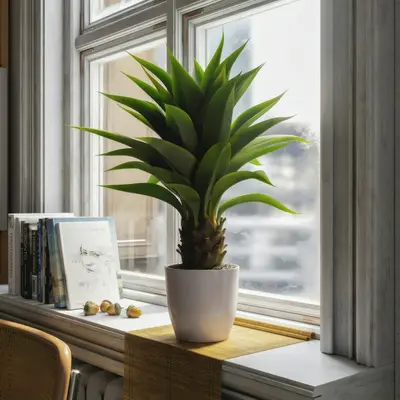
The classic corn plant that has graced offices and homes for decades with its bold yellow-striped leaves and tree-like growth habit. This nearly indestructible beauty tolerates low light and neglect while providing tropical drama, making it perfect for beginning plant parents or anyone wanting reliable greenery.
Sun
Partial shade
Zones
10–11
USDA hardiness
Height
3-14 feet
Complete Growing Guide
Light: Dappled Sunlight (Shade through upper canopy all day), Deep shade (Less than 2 hours to no direct sunlight), Partial Shade (Direct sunlight only part of the day, 2-6 hours). Soil: Loam (Silt). Drainage: Good Drainage, Moist. Height: 3 ft. 0 in. - 14 ft. 6 in.. Spread: 1 ft. 0 in. - 3 ft. 0 in.. Spacing: 3 feet-6 feet, 6-feet-12 feet. Growth rate: Slow. Maintenance: Low. Propagation: Stem Cutting.
Harvesting
The fruit is a small orange-red berry. Rarely blooms or fruits as a house plant.
Color: Orange, Red/Burgundy. Type: Berry. Length: < 1 inch. Width: < 1 inch.
Storage & Preservation
Dracaena Fragrans is a living houseplant, not a consumable, so traditional storage and shelf life don't apply. Keep the plant in its container at room temperature (65-75°F) with moderate humidity (30-50%). In healthy conditions, Dracaena Fragrans can live 10+ years indoors. Preservation methods include: (1) Regular watering when soil is dry to the touch, allowing roots to establish; (2) Propagation via stem cuttings placed in water or moist soil for 3-4 weeks to create new plants; (3) Repotting every 2-3 years into fresh potting mix to refresh nutrients and prevent root-bound conditions.
History & Origin
Native to tropical West Africa, Dracaena fragrans has been cultivated for centuries in its native range before becoming a global houseplant staple. The 'Massangeana' cultivar, characterized by its distinctive yellow central stripe, emerged through horticultural selection rather than formal breeding documentation, likely developed in European nurseries during the nineteenth or early twentieth century. The exact breeder and introduction year remain undocumented in readily available sources, though the cultivar's widespread popularity by mid-twentieth century suggests it was already well-established in commercial cultivation. This selection represents one of several variegated forms that arose through natural or deliberate propagation within the species, capitalizing on the plant's inherent appeal as an indoor specimen.
Origin: Tropical Africa
Advantages
- +Tolerates low light conditions better than most tropical houseplants
- +Nearly indestructible and forgiving of irregular watering and neglect
- +Bold yellow-striped foliage provides dramatic visual interest year-round
- +Grows tree-like with minimal pruning required for attractive form
- +Perfect beginner plant that builds confidence and plant care skills
Considerations
- -Susceptible to root rot if soil stays wet too long
- -Prone to leaf tip burn from fluoride in tap water
- -Vulnerable to scale insects, mealybugs, and spider mites infestations
- -Slow growing habit means it takes years to reach full size
Companion Plants
Dracaena fragrans groups well with low-to-medium light tropicals that share its watering rhythm — Pothos, Peace Lily, Spider Plant, and Philodendron all want consistent moisture and tolerate the same 4–6 hours of indirect light without crowding each other's roots. Planted close together, they nudge the local humidity up a few points, which helps everyone. Succulents are the obvious mismatch: a watering schedule that keeps the Dracaena's soil consistently moist will kill a succulent's roots inside a month. Fiddle Leaf Fig needs substantially more light to stay healthy, so pairing it with a Dracaena means at least one of them ends up compromised — and the Fiddle Leaf is unforgiving about it.
Plant Together
Pothos
Similar light and water requirements, creates lush layered display
Peace Lily
Complementary watering needs and both thrive in bright indirect light
Spider Plant
Similar humidity preferences and both are excellent air purifiers
Rubber Plant
Compatible light requirements and both prefer well-draining soil
ZZ Plant
Both tolerate low light and similar watering schedules
Philodendron
Matching humidity and indirect light needs, creates tropical grouping
Snake Plant
Both are low-maintenance with similar light tolerance ranges
Boston Fern
Increases humidity levels which benefits Dracaena growth
Keep Apart
Fiddle Leaf Fig
Requires much brighter light and more frequent watering than Dracaena
Succulents
Opposite watering needs - succulents need dry conditions while Dracaena prefers consistent moisture
Calathea
Requires much higher humidity and more frequent watering than Dracaena tolerates
Pests & Disease Resistance
Resistance
Very hardy, resistant to most diseases
Common Pests
Scale insects, mealybugs, spider mites
Diseases
Root rot, leaf spot, tip burn from fluoride in water
Troubleshooting Dracaena Fragrans
What you'll see, why it happens, and what to do about it.
Leaf tips and margins turning brown and crispy, especially on newer growth
Likely Causes
- Fluoride toxicity — municipal tap water contains fluoride levels that accumulate in Dracaena tissue over time
- Low humidity, typically below 40%, causing moisture loss through leaf edges
What to Do
- 1.Switch to filtered water or rainwater, or let tap water sit uncovered overnight before watering
- 2.Move the pot away from heating and AC vents, which strip humidity fast
- 3.Set the pot on a pebble tray with standing water beneath the drainage hole, or run a small humidifier nearby during dry months
Soft, mushy stem at the base with yellowing lower leaves and a faint sour smell from the soil
Likely Causes
- Root rot caused by Phytophthora or Pythium spp. — almost always triggered by overwatering or a pot with no drainage hole
- Dense, water-retentive potting mix; standard garden soil is the usual culprit when someone uses it indoors
What to Do
- 1.Unpot the plant and cut away any black or brown mushy roots with clean scissors; dust cut ends with powdered sulfur or cinnamon
- 2.Repot into fresh, well-draining mix — a coco coir base with perlite at roughly 3:1 — in a pot with drainage holes
- 3.Hold off watering for 7–10 days after repotting, then resume only when the top 2 inches of soil are dry
Frequently Asked Questions
Is Dracaena Fragrans good for beginners?▼
How long does Dracaena Fragrans live?▼
Can you grow Dracaena Fragrans in low light?▼
How often should I water Dracaena Fragrans?▼
What pests affect Dracaena Fragrans?▼
Can you propagate Dracaena Fragrans from cuttings?▼
Growing Guides from Wind River Greens
Sources & References
External authority sources used in compiling this guide.
- ExtensionNC State Extension
See the Methodology page for how this data is sourced, what's AI-assisted, and known limitations.