Alocasia Silver Dragon
Alocasia baginda 'Silver Dragon'
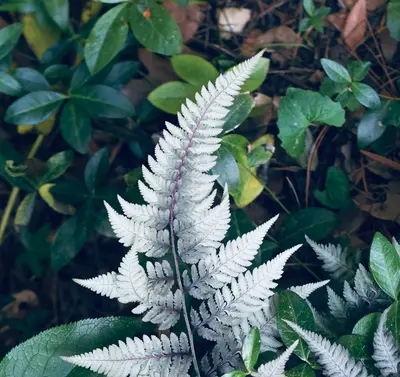
A compact jewel alocasia with thick, silvery leaves that have an almost metallic sheen and deep green veining creating a dragon scale-like pattern. This Southeast Asian beauty stays relatively small compared to other alocasias, making it perfect for collectors who want maximum visual impact in a manageable size.
Sun
Partial shade
Zones
10–12
USDA hardiness
Height
2-10 feet
Complete Growing Guide
The Alocasia Silver Dragon demands consistently warm temperatures between 65–80°F and humidity above 60%, as this Southeast Asian native struggles more than standard houseplants with dry air and cold drafts. Unlike hardier alocasias, this cultivar exhibits dramatic leaf drop when exposed to sudden temperature shifts or inconsistent watering schedules, so establish a routine and stick to it. Water when the top inch of soil dries but never allow complete desiccation, as the shallow root system is prone to both root rot and rapid stress. The silvery foliage attracts spider mites and mealybugs with particular intensity, requiring weekly leaf inspections and occasional neem oil applications. Position your plant in bright, indirect light away from direct sun, which fades the metallic sheen; conversely, insufficient light causes leaf stretch and loss of the prized dragon-scale pattern. A practical tip: repot only every 18–24 months into well-draining aroid mix, as frequent disturbance stresses this finicky variety more than others.
Light: Dappled Sunlight (Shade through upper canopy all day), Partial Shade (Direct sunlight only part of the day, 2-6 hours). Soil: Clay, Loam (Silt), Sand. Soil pH: Acid (<6.0), Neutral (6.0-8.0). Drainage: Good Drainage, Moist. Height: 2 ft. 0 in. - 10 ft. 0 in.. Spread: 2 ft. 0 in. - 10 ft. 0 in.. Spacing: 6-feet-12 feet. Growth rate: Rapid. Maintenance: Low. Propagation: Division.
Harvesting
The Alocasia Silver Dragon doesn't produce harvestable foliage in the traditional sense, but you can propagate or divide it when mature leaves reach their full metallic silver coloration with prominent deep green veining, typically when the plant is 12-18 months old. Mature leaves should feel thick and leathery to the touch, indicating they've developed sufficient structural integrity for propagation. Rather than continuous harvesting, work with a single-harvest division model by waiting until your plant has established at least 3-4 healthy corms or offsets before separating them. The optimal timing window is late spring when the plant enters active growth, as newly separated divisions root faster and recover more successfully than those divided during dormancy or slower winter periods.
Edibility: The corm and stem can be eaten but must be thoroughly cooked to destroy the calcium oxalate crystals. Once cooked, it can be used as a cooked vegetable added to soups and stews.
Storage & Preservation
Alocasia Silver Dragon is a living houseplant and does not require traditional food storage. However, it thrives best when kept indoors at 65-75°F with 60-80% humidity. Maintain consistent moisture without waterlogging. For long-term preservation, propagate via rhizome division to create backup plants, or propagate from stem cuttings in water or moist substrate to ensure plant continuity. Store any spare rhizomes in barely-moist sphagnum moss in a cool location (55-65°F). Maintain good air circulation to prevent fungal issues during storage.
History & Origin
The Alocasia Silver Dragon represents a relatively recent cultivar selection within the Alocasia baginda species complex, though specific breeder attribution and introduction year remain poorly documented in horticultural literature. This compact variety likely emerged from Southeast Asian nurseries or Western houseplant breeding programs during the surge of tropical houseplant interest in the early 2000s, capitalizing on the ornamental appeal of A. baginda's naturally patterned foliage. The "Silver Dragon" name reflects its most distinctive trait—the striking silvery, metallic leaf surface contrasting with deep venation. While comprehensive breeding records are scarce, the cultivar appears to belong to the broader wave of specialty Alocasia selections targeting the indoor plant market, though its exact parentage and development remain largely undocumented.
Origin: Tropical and Subtropical Asia To Eastern Australia
Advantages
- +Stunning metallic silver leaves with dragon scale patterns create striking visual impact
- +Compact size makes it ideal for small spaces and plant collectors
- +Unique Southeast Asian heritage appeals to serious houseplant enthusiasts
- +Thick, durable foliage resists casual damage better than delicate varieties
Considerations
- -Requires precise watering to prevent root rot and crown rot issues
- -Susceptible to spider mites and thrips, demanding regular pest monitoring
- -Moderate to advanced care difficulty makes it challenging for beginners
Companion Plants
Silver Dragon groups well with other humidity-lovers that don't compete for light or root space — Boston Fern, Calathea, and Peace Lily are the strongest picks because all three want the same indirect light and the same 5.5–6.5 pH range, and clustering them raises local humidity without anyone fighting for resources. Pothos and Philodendron slot in easily; their shallow roots stay out of the way. Skip Fiddle Leaf Fig — around here in the southeast, people overwinter both indoors together, but Ficus is a humidity drain in low-light conditions and creates exactly the dry-air environment that invites spider mites onto your Alocasia. Succulents and cacti are a flat no: one shared saucer or a watering schedule compromised toward their drought preference will rot your Silver Dragon's roots before you notice anything is wrong.
Plant Together
Boston Fern
Similar humidity requirements and helps maintain moisture levels around the Alocasia
Pothos
Compatible light and water needs, helps increase ambient humidity
Peace Lily
Shares preference for bright indirect light and consistent moisture
Philodendron
Similar tropical care requirements and humidity preferences
Calathea
Both prefer high humidity and filtered light, creating ideal microclimate together
Spider Plant
Easy care companion that thrives in similar indirect light conditions
Monstera Deliciosa
Compatible watering schedule and both benefit from high humidity environments
ZZ Plant
Tolerates same light conditions and provides structural contrast
Keep Apart
Fiddle Leaf Fig
Requires much brighter light and less humidity, can create conflicting care requirements
Succulent plants
Opposite water and humidity needs will lead to overwatering issues for succulents
Cacti
Conflicting care requirements - cacti need dry conditions while Alocasia needs consistent moisture
Pests & Disease Resistance
Resistance
Prone to fungal issues if overwatered
Common Pests
Spider mites, thrips, mealybugs
Diseases
Root rot, leaf spot, crown rot from excessive moisture
Troubleshooting Alocasia Silver Dragon
What you'll see, why it happens, and what to do about it.
Fine webbing on leaf undersides with stippled, dusty-looking upper leaf surfaces, especially in winter
Likely Causes
- Spider mites (Tetranychus urticae) — thrive in dry indoor air, which gets brutal when the heat runs all winter
- Low humidity below 40%, which Silver Dragon is particularly sensitive to
What to Do
- 1.Blast the undersides of leaves with a strong stream of water in the shower — do this weekly until the mites clear
- 2.Apply insecticidal soap or neem oil to all leaf surfaces, hitting the undersides, every 5-7 days for 3 weeks
- 3.Set the pot on a pebble tray with water, or run a humidifier nearby to keep ambient humidity above 50%
Mushy, dark-brown stem base and yellowing lower leaves, often with a sour smell from the soil
Likely Causes
- Root rot (Pythium or Phytophthora spp.) from overwatering or a pot without drainage
- Watering on a fixed calendar rather than checking the top inch of soil — Silver Dragon goes semi-dormant in winter and needs far less water than it does in April or May
What to Do
- 1.Unpot immediately, cut all black or mushy roots back to healthy tissue with sterilized scissors, and dust the cuts with powdered sulfur or cinnamon
- 2.Repot into fresh, chunky aroid mix — perlite, orchid bark, and potting soil in roughly equal parts — in a pot with drainage holes
- 3.Hold off watering for 5-7 days after repotting to let cut roots callous, then resume only when the top inch of soil is dry
Silver-streaked or bronzed patches on new leaves, with tiny black specks (frass) visible on leaf surfaces
Likely Causes
- Thrips (Frankliniella occidentalis) — they rasp the leaf surface and target new growth first, which is especially damaging on this variety since the silver patterning is the whole point of growing it
- Bringing in an infested plant from a nursery without quarantining it first
What to Do
- 1.Isolate the plant immediately — thrips move to neighboring plants fast
- 2.Wipe all leaf surfaces with a cloth dampened in 70% isopropyl alcohol, then follow with a spinosad-based spray every 7 days for 4 weeks
- 3.Quarantine any new houseplant for at least 2 weeks before placing it near your Silver Dragon