Alocasia Amazonica
Alocasia × amazonica
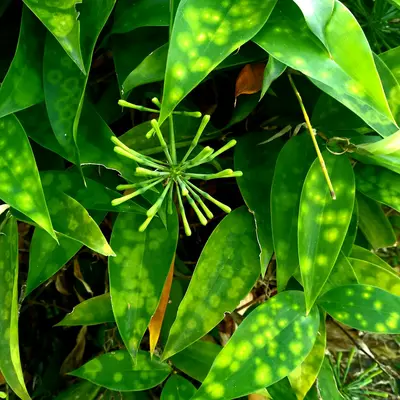
A dramatic statement plant featuring glossy, arrow-shaped leaves with striking white veining that creates a bold contrast against the dark green foliage. This hybrid alocasia brings tropical elegance to any space with its architectural form and eye-catching presence that never fails to impress guests.
Sun
Partial shade
Zones
10–12
USDA hardiness
Height
2-10 feet
Complete Growing Guide
Alocasia Amazonica thrives in bright, indirect light and warm temperatures between 65–75°F, making winter dormancy a critical timing consideration—reduce watering significantly during cooler months to prevent root rot, a primary vulnerability for this hybrid. Unlike hardier houseplants, this cultivar demands consistently high humidity (60–80%) and struggles in dry indoor air, requiring regular misting or pebble-tray placement. The plant's dramatic foliage makes it attractive to spider mites and mealybugs, particularly in low-humidity environments, so inspect leaf undersides weekly during growing season. Alocasia Amazonica tends toward stretching and leggy growth when light is insufficient, compromising its prized architectural form. Repot only in spring using fast-draining, aroid-specific potting mix rich in bark and perlite, as the cultivar's sensitive roots are highly susceptible to soggy conditions. A practical tip: rotate the plant weekly toward its light source to encourage symmetrical, compact growth rather than one-sided stretching.
Light: Dappled Sunlight (Shade through upper canopy all day), Partial Shade (Direct sunlight only part of the day, 2-6 hours). Soil: Clay, Loam (Silt), Sand. Soil pH: Acid (<6.0), Neutral (6.0-8.0). Drainage: Good Drainage, Moist. Height: 2 ft. 0 in. - 10 ft. 0 in.. Spread: 2 ft. 0 in. - 10 ft. 0 in.. Spacing: 6-feet-12 feet. Growth rate: Rapid. Maintenance: Low. Propagation: Division.
Harvesting
Alocasia Amazonica is not typically harvested for edible or usable plant parts since it is purely ornamental foliage. Instead, "harvesting" refers to leaf removal for propagation or plant maintenance. Mature leaves display full white venation contrast and reach their maximum size of 12-18 inches; they should feel firm and waxy rather than soft. Remove individual mature leaves at the petiole base using clean cuts rather than pulling, which damages the plant. Single-harvest patterns work best for this cultivar—remove only 1-2 leaves per month to maintain the plant's vigor and architectural silhouette. Timing your leaf removal during the active growing season in spring and summer accelerates recovery and promotes healthier new growth compared to harvesting during dormancy.
Edibility: The corm and stem can be eaten but must be thoroughly cooked to destroy the calcium oxalate crystals. Once cooked, it can be used as a cooked vegetable added to soups and stews.
Storage & Preservation
Alocasia Amazonica is a living houseplant and does not require traditional food storage. Keep the plant in its pot on a bright shelf, side table, or plant stand at room temperature (65-75°F) with 50-60% humidity. As a perennial houseplant, it has no shelf life but can thrive for years with proper care. Preservation methods: (1) Propagation via rhizome division during spring repotting to create backup plants; (2) Regular stem cuttings in water to propagate new plants if the main plant declines; (3) Dormancy management—reduce watering in winter months to preserve energy and prevent root rot.
History & Origin
Despite its "Amazonica" epithet, this hybrid alocasia's exact origins remain poorly documented in horticultural records. The plant is a man-made cross involving Alocasia longifolium and Alocasia sanderiana, likely developed during the mid-20th century by commercial growers seeking a more compact, visually striking houseplant than wild Amazonian species. The precise breeder and year of introduction are unclear, though the variety gained prominence through the tropical plant trade rather than through formal academic breeding programs. Its popularity surged in the late twentieth century as houseplant enthusiasm expanded, cementing its status as a modern cultivar rather than a traditionally bred heirloom.
Origin: Tropical and Subtropical Asia To Eastern Australia
Advantages
- +Stunning white-veined arrow leaves create dramatic visual impact in any room
- +Glossy foliage reflects light and adds tropical elegance to modern spaces
- +Compact growth habit fits well on shelves or plant stands
- +Bold architectural form makes it an impressive statement plant for guests
Considerations
- -Highly susceptible to spider mites and scale insects without proper humidity
- -Requires consistently moist but well-draining soil or develops root rot quickly
- -Prone to leaf spot and powdery mildew in humid conditions
- -Moderate to challenging care demands frequent monitoring and adjustment
Companion Plants
Boston Fern, Calathea, Peace Lily, and Pothos all make good shelf-mates because they share Alocasia's actual requirements: indirect light, consistent moisture, and humidity above 50%. Grouping plants raises ambient humidity a few percentage points through shared transpiration — not dramatic, but measurable. None of these compete aggressively for root space in separate pots, and the pest risk from proximity is no different from putting any two plants side by side.
Cactus, Lavender, and Rosemary are a poor match for a different reason than most people assume — it's not toxicity or allelopathy, it's flat incompatibility in care conditions. All three want dry soil, direct sun, and low humidity, with a preferred pH well above Alocasia's 5.5–6.5 range. Every time you water to keep the Alocasia happy, you're pushing the drought-lovers toward root rot. Keep them in separate rooms and don't try to split the difference.
Plant Together
Boston Fern
Similar humidity and light requirements, helps maintain moisture in the air
Pothos
Thrives in similar indirect light conditions and helps purify air
Peace Lily
Enjoys high humidity and filtered light, creates complementary tropical environment
Philodendron
Compatible moisture and temperature needs, both prefer consistently moist soil
Calathea
Similar humidity requirements and shade tolerance, creates lush tropical grouping
Monstera Deliciosa
Complementary growth habits and identical care requirements for tropical conditions
Spider Plant
Helps increase local humidity through transpiration, tolerates similar light conditions
ZZ Plant
Low maintenance companion that thrives in similar indirect light without competing for resources
Keep Apart
Cactus
Requires dry conditions that conflict with Alocasia's high humidity needs
Lavender
Prefers dry, well-draining soil and low humidity, opposite of Alocasia requirements
Rosemary
Mediterranean herb requiring dry conditions and full sun, incompatible with tropical humidity needs
Pests & Disease Resistance
Resistance
Susceptible to root rot and fungal issues in poor conditions
Common Pests
Spider mites, aphids, scale insects
Diseases
Root rot, crown rot, leaf spot, powdery mildew
Troubleshooting Alocasia Amazonica
What you'll see, why it happens, and what to do about it.
Leaf edges and tips turning brown and crispy, often with yellowing around the margins
Likely Causes
- Low humidity — Alocasia wants 60%+ relative humidity and most homes run 30-50%
- Fluoride or chlorine toxicity from tap water accumulating in the soil over time
What to Do
- 1.Run a humidifier nearby or set the pot on a tray filled with pebbles and water (keep the pot bottom above the waterline)
- 2.Switch to filtered, rainwater, or distilled water — let tap water sit out 24 hours at minimum to off-gas chlorine
- 3.Flush the soil thoroughly every 2-3 months to push out accumulated mineral salts
Stems going soft and mushy at the base, lower leaves yellowing and collapsing, soil staying wet days after watering
Likely Causes
- Root rot caused by Pythium or Phytophthora — both thrive when drainage is poor and soil stays saturated
- Pot without drainage holes, or a pot that's oversized relative to the root ball
What to Do
- 1.Unpot immediately, cut off any brown or black mushy roots with clean scissors, and let the root ball air out for an hour
- 2.Repot into fresh, well-draining mix — a 50/50 blend of standard potting mix and perlite works — in a pot no more than 2 inches wider than the root ball
- 3.Hold off watering until the top 2 inches of soil are dry; pull that back to the top 3-4 inches during winter dormancy